

 Krit Ariyathiti
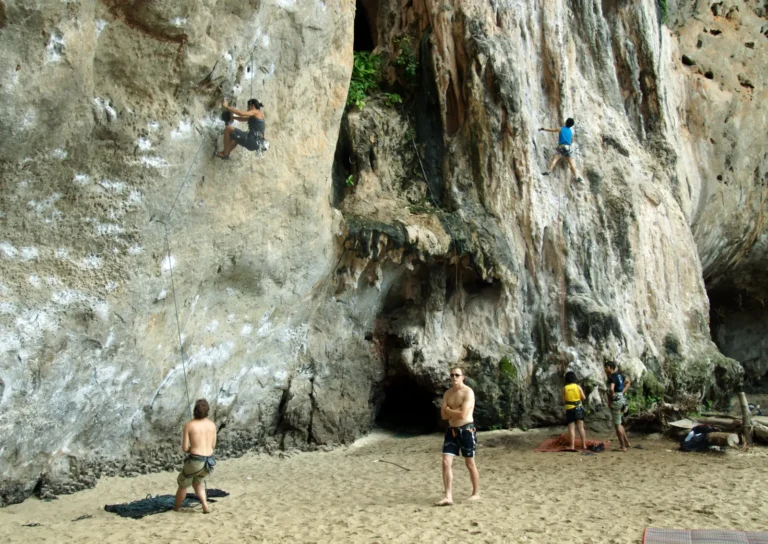
Rock climbing Krabi style means steep limestone cliffs, tropical beaches and routes for every level, from your first climb to hard overhangs. Most of the action is at Railay and Tonsai, two beaches you reach by boat. This guide covers Tonsai climbing, deep water soloing Krabi trips, beginner rock climbing Thailand courses and the best Krabi climbing season.
Quick answer: The centre of rock climbing in Krabi is the Railay peninsula, including Railay, Phra Nang and Tonsai beaches. One operator says the area has over 1,000 routes. Beginners can join half-day courses, which one guide lists at about 1,500 baht per person, with full-day courses at around 2,600 baht. The best season is roughly November to April, when the rock is drier.
Why is rock climbing Krabi so popular?
Krabi is known for its karst landscape: tall limestone towers rising from the sea and the forest. As a result, the rock is full of pockets, ridges and hanging formations that are fun to climb. Moreover, the Railay peninsula has no road access from the mainland, so you arrive by longtail boat and climb a few steps from the sand.
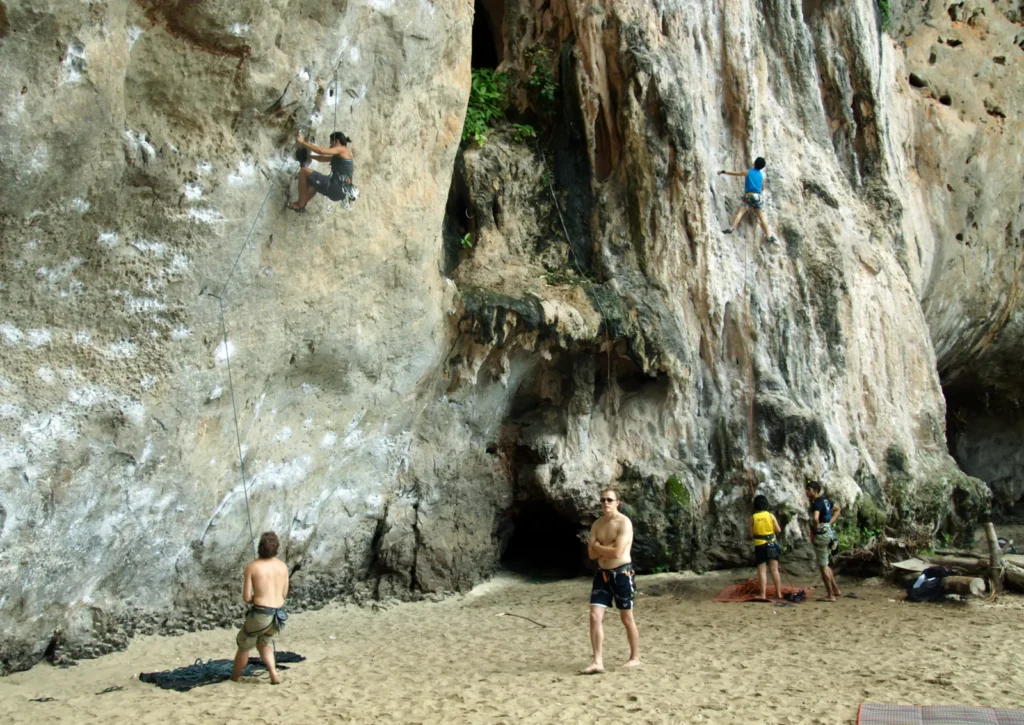
Climbers come from all over the world for rock climbing Krabi trips. Still, the area also welcomes complete beginners, since many schools run short courses with all the gear included.
Railay and Phra Nang: where most people start
Railay East, Railay West and Phra Nang beach have many walls close together. Therefore, it is easy to try several routes in one day and walk back for lunch. Phra Nang, with its cave and white sand, is one of the most photographed climbing spots in Thailand. For boats, beaches and viewpoints, read our Railay Beach guide.
Tonsai climbing
Tonsai is the next beach north of Railay West. It is more laid-back and has long been popular with climbers. Tonsai climbing is known for steep walls and big roofs, such as the overhang often called Ton Sai Roof. In addition, you can walk between Tonsai and Railay at low tide or over a short path, depending on conditions.
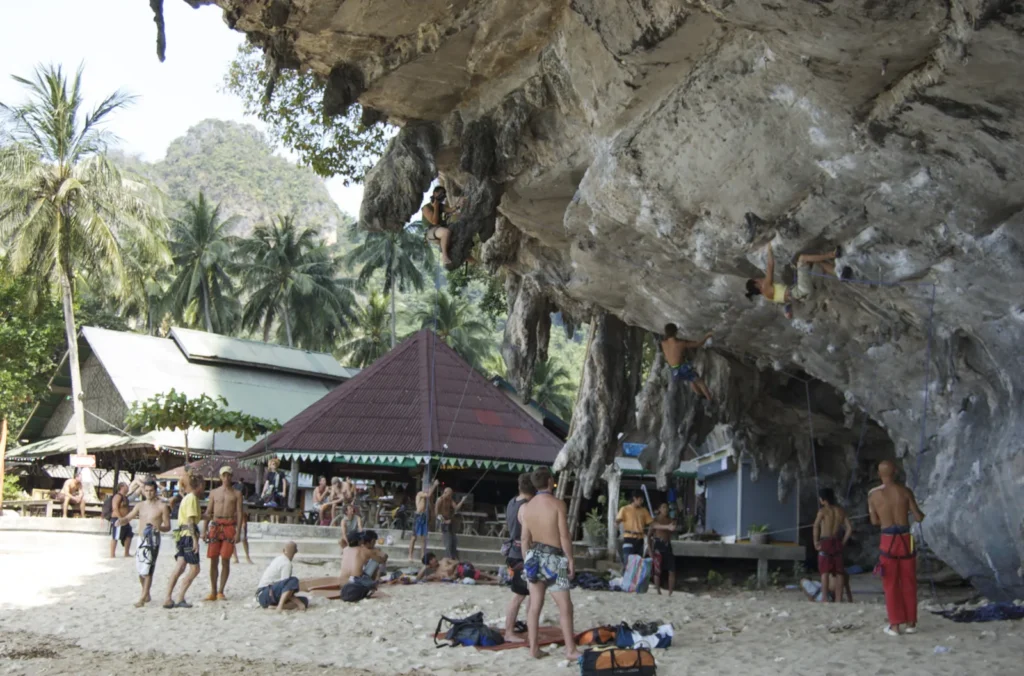
Because many walls here are steeper, Tonsai suits climbers with some experience. However, beginner routes exist too, so ask your school which walls fit your level.
Beginner rock climbing Thailand: what a course includes
Beginner rock climbing Thailand courses on Railay usually follow the same pattern:
| Course | Typical length | What you learn |
|---|---|---|
| Half day | About 3 to 4 hours | Knots, belaying basics and a few easy top-rope routes |
| Full day | A full day with a break | More routes and more practice |
| Multi-day | Two or three days | Lead climbing basics, for those who want to continue |
As for price, one travel guide lists a half-day course at about 1,500 baht per person and a full day at about 2,600 baht. However, booking sites show a wide range, especially for private sessions. So, compare what is included, such as shoes, harness, chalk, water and the guide-to-climber ratio.
You do not need to be very strong for rock climbing Krabi routes at this level. Instead, good balance and footwork matter more than arm strength on most beginner routes.
Deep water soloing Krabi
Deep water soloing means climbing sea cliffs without ropes, then dropping into deep water. Deep water soloing Krabi trips usually leave Railay or Tonsai by boat and visit cliffs where the water below is deep enough at the right tide. Of course, it is only safe with a guide who knows the tides and the depth. Most trips welcome confident swimmers, but check the minimum age and fitness rules before you book.
When is the Krabi climbing season?
The best Krabi climbing season is roughly November to April. During these months, the rock is drier and the sea is calmer for boats. By contrast, from May to October, rain can make many walls wet and slippery, although some overhangs stay climbable in light rain. Also, the midday sun is strong all year, so most climbers start early and rest after lunch. For weather details, see our guides to the best time to visit Krabi and the Krabi rainy season.
Safety tips for rock climbing Krabi
- Climb with a certified guide if you are new or unsure of the route.
- Check the bolts. Sea air corrodes metal, so ask locally which routes are well maintained.
- Wear a helmet under steep walls, where small rocks can fall.
- Bring plenty of water. The heat and humidity are tiring.
- Watch the tide if you walk between beaches.
- Finally, rest between days. Sharp limestone is hard on fingers.
More to do between climbing days
Climbers often need a rest day. For example, kayak through mangroves on the Tham Lod cave kayaking trip, swim at the Emerald Pool Krabi or climb the steps of the Tiger Cave Temple Krabi for a different kind of workout. For a full overview, see our Krabi travel guide.
Where to stay for rock climbing Krabi trips
Some climbers sleep on the Railay peninsula. Others, however, prefer a quiet mainland base and join Railay by longtail from Ao Nang. Ao Luek, in the north of Krabi, is about an hour from Ao Nang and close to springs and caves for your rest days.
At a glance: 17 houses from 1,200 to 2,000 baht per night, air conditioning in every house, free breakfast, free Wi-Fi and a swimming pool, at 97/1 Moo 1, Ao Luek Nuea, Krabi.
We recommend Ban Kamnan Resort in Ao Luek Nuea. For a climbing couple on a budget, House #5 and #6 each have one 5 ft bed, one bathroom and 28 m², and sleep two for 1,200 baht per night. Like every house, they have air conditioning, a TV, a fridge and a kettle. In addition, guests share the resort's swimming pool, and breakfast of toast, fried eggs and hot coffee is free. Prices match the resort's listing, so check your dates and book on Booking.com.
Frequently asked questions
Yes. Railay has many easy routes and schools that run half-day and full-day courses with all the gear included.
One guide lists about 1,500 baht per person for a half-day course and about 2,600 baht for a full day. Private sessions and booking sites can cost more.
From about November to April, when the rock is drier. In the rainy months, many walls get wet.
It is climbing sea cliffs without ropes and falling into deep water. In Krabi, guided trips leave from Railay and Tonsai and depend on the tide.
Final thoughts
Rock climbing Krabi style combines world-class limestone with beaches and warm water. To sum up: start with a course at Railay, climb early in the day and plan rest days inland. Then recover somewhere quiet. Check availability at Ban Kamnan Resort on Booking.com and plan your climbing trip.