

 Krit Ariyathiti

Thailand digital nomad tax is the part of a long stay that visa guides often skip. A visa lets you live and work remotely, but tax is a separate question. This guide explains when you become a Thai tax resident and how the 180-day rule Thailand applies. It also covers the Thailand remittance tax rules and the foreign income tax Thailand residents may owe, with the official sources. It builds on our digital nomads in Thailand guide. This is general information, not tax, legal or financial advice. Confirm your own case with the Revenue Department or a licensed Thai tax adviser.
Quick answer: As of November 2026, the Revenue Department's English guide says that 180 days in Thailand in the tax year makes you a resident for tax. Revenue Department order Por. 161/2566 says a Thai tax resident must include foreign income in taxable income in the year it is brought into Thailand. Income earned before 2024 is excluded. Under 180 days, however, you are a non-resident. A draft exemption was not law as of late August 2026. Your visa does not change the test, so count days and keep records. Thailand digital nomad tax rules also differ for holders of the Long-Term Resident (LTR) visa.
Thailand digital nomad tax: the short version
Three questions decide your Thailand digital nomad tax position. First, were you in Thailand for 180 days or more in the calendar year, which would make you a Thai tax resident? Second, was the money earned from 2024 onwards? Finally, did you bring it into Thailand? Because each answer changes the result, the order matters.
Also, The Thaiger, in a guide updated on 26 August 2026, calls the residency test "visa blind". In other words, a Destination Thailand Visa (DTV) holder is treated like anyone else. Our Thailand DTV visa guide explains the visa itself, and this page covers the tax side only.
Who is a Thai tax resident?
A Thai tax resident, according to the Revenue Department's English PND 90 guide, stays in Thailand for at least 180 days in total in the tax year. However, someone who stays fewer than 180 days is a non-resident. Residents file a return on income, while non-residents are taxed on income from Thai sources. Also, the tax year is the calendar year.
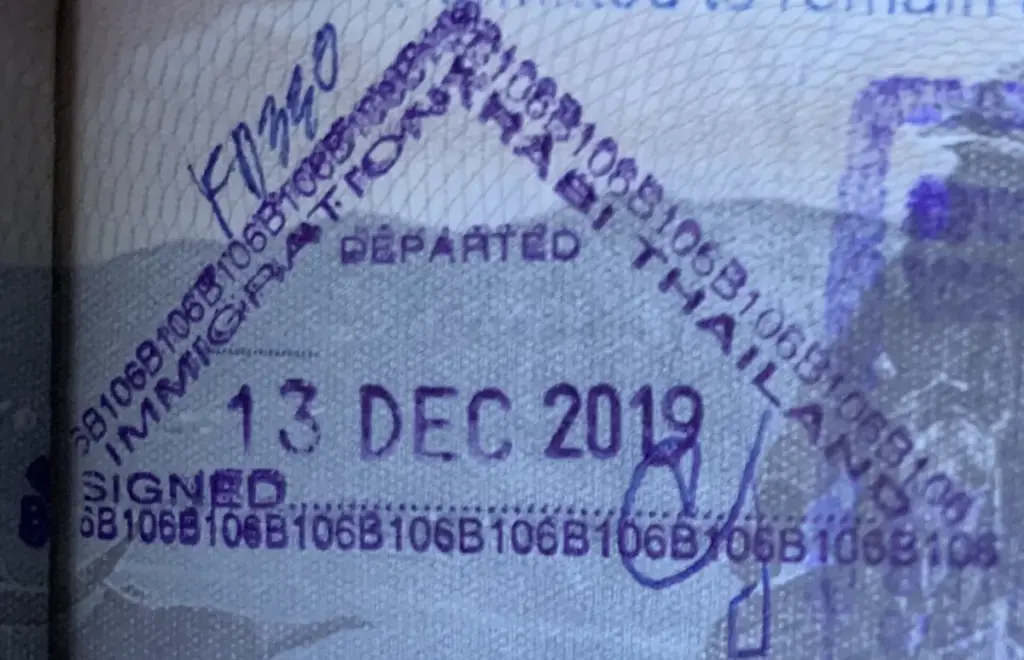
The 180-day rule Thailand uses is a total, not a streak, so the days do not need to be in a row. They are added up across all stays, so several short trips can reach 180 days. So that matters for slow travellers. A DTV allows up to 180 days per entry, so a stay can reach the threshold without feeling long. As a result, many nomads count days with a simple spreadsheet and keep their passport stamps.
The 180-day rule Thailand uses: how to count
The 180-day rule Thailand uses is simple to state and easy to miss. So here is a practical way to track it.
- Start the 180-day rule Thailand count with every entry and exit for the calendar year, using stamps and flight bookings.
- Then add the days inside Thailand across the whole year.
- Check at mid-year, because a long stay in the first half can leave little room later.
- Next, plan exits early if you want to stay below the line.
If you cross the line, you are a Thai tax resident for that year, and a Thai tax resident files a return. If you leave Thailand and want to keep your stay permission, read our Thailand re-entry permit guide. The 180-day rule Thailand uses counts days, not visa type. So the same test applies to a retiree, a student and a remote worker.
Foreign income tax Thailand residents may owe
Foreign income tax Thailand applies to residents in a particular way. Revenue Department order Por. 161/2566, signed on 15 September 2023, sets the rule, and we read its Thai text on rd.go.th. For foreign income tax Thailand residents face, the order covers a Thai tax resident with income from work or property abroad. If that person brings the income into Thailand, it is added to taxable income in the year it is brought in. Por. 162/2566, dated 20 November 2023, adds that this does not apply to income that arose before 1 January 2024. So the Thailand remittance tax starts with the 2024 date, and the order applies to income brought in from that date.
However, sources differ on one detail. As we read the order, residency is tied to the tax year in which the income arose, and one law firm says the same. Another guide, however, frames it by the year of remittance. So ask an adviser which year's residency counts in your case.
Progressive rates for foreign income tax Thailand residents
Foreign income tax Thailand collects follows the normal personal income tax. It is progressive, from 0 to 35 percent, and the first 150,000 baht of net income is exempt, according to the Revenue Department and The Thaiger. Also, both sources agree on the lower bands. The Revenue Department also lists a personal allowance of 30,000 baht.
| Net income per year (baht) | Rate |
|---|---|
| Up to 150,000 | Exempt |
| 150,001 to 300,000 | 5% |
| 300,001 to 500,000 | 10% |
| 500,001 to 750,000 | 15% |
| 750,001 to 1,000,000 | 20% |
| 1,000,001 to 2,000,000 | 25% |
Above 2 million baht the rates keep rising, up to 35 percent. However, the upper bands differ between the Revenue Department page and The Thaiger, so check the current table. Net income also depends on deductions and allowances, so these bands are not a bill.
Thailand remittance tax: what a draft exemption means
The Thailand remittance tax rule is the one nomads watch most. The Thailand remittance tax rule may change, because a draft proposal would exempt foreign income remitted in the year it is earned or the next year. However, it was still a draft as of 26 August 2026, according to The Thaiger. It had not appeared in the Royal Gazette, and a law firm said the same in July 2026. Therefore, plan under the current Thailand remittance tax rule until the law changes.
Tax paid abroad may count against foreign income tax Thailand residents owe. Thailand has 61 double tax agreements, according to The Thaiger. Also, they may allow a credit for foreign tax already paid. The result depends on the treaty with your country, so read that treaty or ask an adviser.
Filing, and how LTR and DTV change Thailand digital nomad tax
A Thai tax resident with income to report files form PND 90, while PND 91 is for employment income only. Paper returns close on 31 March after the tax year, and e-filing gives an eight-day automatic extension, according to the Revenue Department's PND 90 guide. The Thailand remittance tax rule and the foreign income tax Thailand sets both show up on this return. You may also need a Thai tax ID, which you apply for at a local Revenue Department office.
However, the LTR visa is different. Slides from a Revenue Department economist, hosted by the Board of Investment, name three LTR categories. Also, they are exempt from tax on foreign-sourced income. The categories are Wealthy Global Citizens, Wealthy Pensioners and Work-from-Thailand Professionals. The 17 percent flat rate is only for Highly-Skilled Professionals who work for a company in a targeted industry. The DTV guides we read describe the visa but no tax benefit, so treat the DTV as a visa, not a tax regime. In short, Thailand digital nomad tax depends on residency, not on the visa label. If you earn by freelancing, our invoice template for freelancers helps you keep clean records.
A trial slow stay in Krabi
Before you sign a long lease or plan 180 days, test the pace and your Thailand digital nomad tax plan. For a nomad, a trial month shows whether the internet, the quiet and the climate suit your work. Our digital nomad Krabi guide covers the setup, and coworking spaces in Thailand lists the main hubs. Fly to Krabi, and from the airport Ao Luek is about 54 to 71 minutes by road, according to transfer listings.
At a glance: 17 houses from 1,200 to 2,000 baht per night, air conditioning in every house, free breakfast, free Wi-Fi and a swimming pool, at 97/1 Moo 1, Ao Luek Nuea, Krabi.
We recommend Ban Kamnan Resort in Ao Luek Nuea for a trial stay. For one remote worker, House #1 and #2 each have one bedroom with a 5 ft bed, one bathroom and 42 m². They sleep two for 1,800 baht per night. Like every house, they have air conditioning. Guests share the swimming pool, and breakfast of toast, fried eggs and hot coffee is free. Prices match the resort's listing, so check your dates on Booking.com. A short trial also keeps you well under the 180-day rule Thailand uses.
Frequently asked questions
Thailand digital nomad tax depends on residency and on where the income comes from. Staying 180 days or more makes you a Thai tax resident. Foreign income earned from 2024 can then be taxable when you bring it in. Ask an adviser.
The Revenue Department's guide says the 180-day rule Thailand uses is a total of at least 180 days in the tax year. The days can be split across several visits.
Foreign income tax Thailand uses one residency test, which is visa blind, according to The Thaiger. However, LTR categories have their own tax benefits, which the Revenue Department's slides describe.
The Thailand remittance tax rule is current law, and a draft exemption exists, but it was not law as of 26 August 2026. Check the Royal Gazette and the Revenue Department for updates.
A Thai tax resident who must file applies for one at a Revenue Department office, and requirements vary by office, so call ahead.
Final thoughts
Thailand digital nomad tax comes down to days, dates and records. To sum up: count your days against the 180-day rule Thailand uses, note when your income was earned and keep proof of every transfer. Check whether you are a Thai tax resident. Remember that the Thailand remittance tax draft exemption is not law, and that the LTR visa has its own treatment. This is general information, not advice, so check the Revenue Department and a licensed adviser. Then check availability at Ban Kamnan Resort on Booking.com for a trial month in Krabi.