


 Krit Ariyathiti
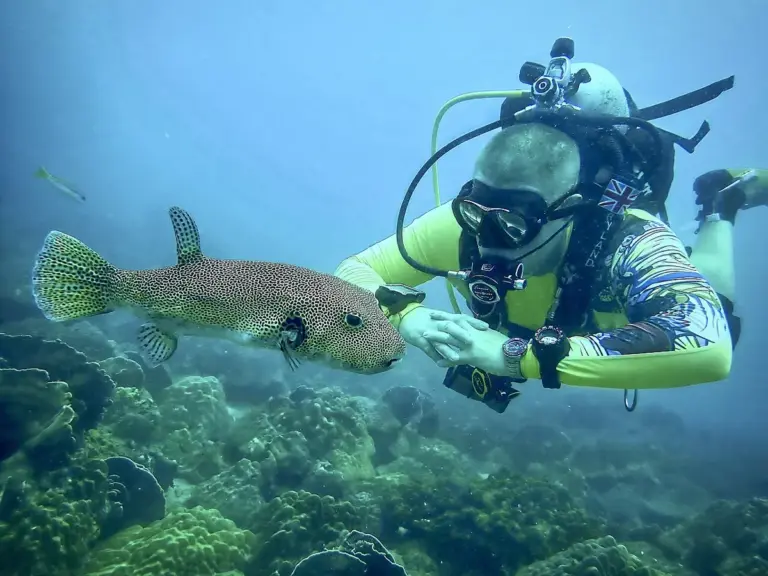
If you want to learn to dive in Thailand, you are in one of the most popular places in the world to start, with warm water, many dive schools and reefs on two different coasts. This guide explains the PADI Open Water course Thailand schools offer, what a discover scuba diving Thailand session involves, how the diving season Thailand follows the two coasts, and the best dive sites in Thailand for new divers, so you can choose where and when to start.
Quick answer: A beginner course such as the PADI Open Water Diver usually takes 3 to 4 days in Thailand. Recent 2026 price guides for Koh Tao put it at roughly 10,000 to 13,000 baht, with some shops advertising lower rates, but check what each price includes. The Gulf of Thailand, with Koh Tao, has diving most of the year, while the Andaman coast, with Krabi, Phuket and the Similan Islands, is best from about November to April. In short, choose a well-reviewed school, ask about group size and gear, and leave a full day after your last dive before you fly.
Why learn to dive in Thailand?
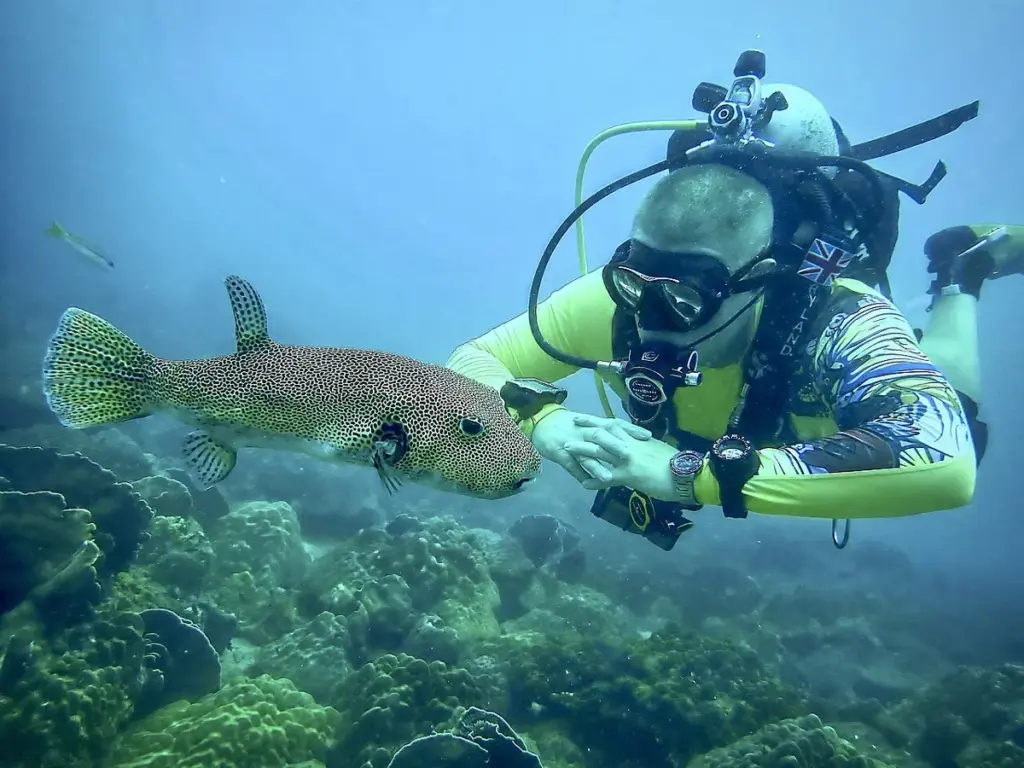
People learn to dive in Thailand because the water is warm and clear for much of the year. As a result, you can learn in a thin wetsuit or a rash guard instead of heavy gear. In addition, there are many dive schools, so you can compare prices, languages and group sizes.
Also, when you learn to dive in Thailand, you get two seas. For example, the Gulf of Thailand on the east coast has sheltered bays that suit beginners, while the Andaman Sea on the west has dramatic limestone islands and larger reefs. So, you can learn on one coast and then explore the other.
PADI Open Water course Thailand: what to expect
The PADI Open Water course Thailand schools teach is the most common first certification. Other agencies, such as SSI, offer similar courses. In both cases, the course has three parts: theory, practice in a pool or shallow water, and open water dives in the sea.
- Theory. You learn about pressure, equipment and safety, often through e-learning or short classes.
- Confined water. You practise skills such as clearing your mask and sharing air in a pool or calm bay.
- Open water dives. You make four dives in the sea with an instructor.
- Certification. After you pass, you can dive with a buddy to a set depth limit anywhere in the world.
If you learn to dive in Thailand, most schools run the course over 3 to 4 days. Also, PADI says students must be at least 10 years old for the junior version. Before you start, you fill in a medical form, and some health conditions need a doctor's approval first. So, read the form early, especially if you have asthma, heart or ear problems.
How much does it cost?
Prices differ by island and by school. For example, a 2026 budget guide from a Koh Tao dive school puts the Open Water course at about 11,000 to 12,500 baht, and booking sites show other courses at about 13,500 baht. Meanwhile, some shops advertise lower prices. Therefore, compare what is included: gear, certification fee, boat dives and sometimes a room.
| Item | What to check |
|---|---|
| — | — |
| Course price | Does it include the certification fee and all gear? |
| Group size | Small groups, such as four students per instructor, give more attention |
| Accommodation | Some schools include a basic room during the course |
| Park fees | Marine park dives may add a separate fee |
| Insurance | Ask whether diving is covered by your travel insurance |
Discover scuba diving Thailand: try it first
If you are unsure, start with a discover scuba diving Thailand session. This is a short, guided experience, usually half a day, with a brief lesson and one or two shallow dives with an instructor at your side. It is not a certification. However, if you like it, many schools let you count parts of it toward the full course.
This option suits families and nervous swimmers. Also, it is a good way to test whether you are comfortable before you commit to four days.
Diving season Thailand: which coast and when?
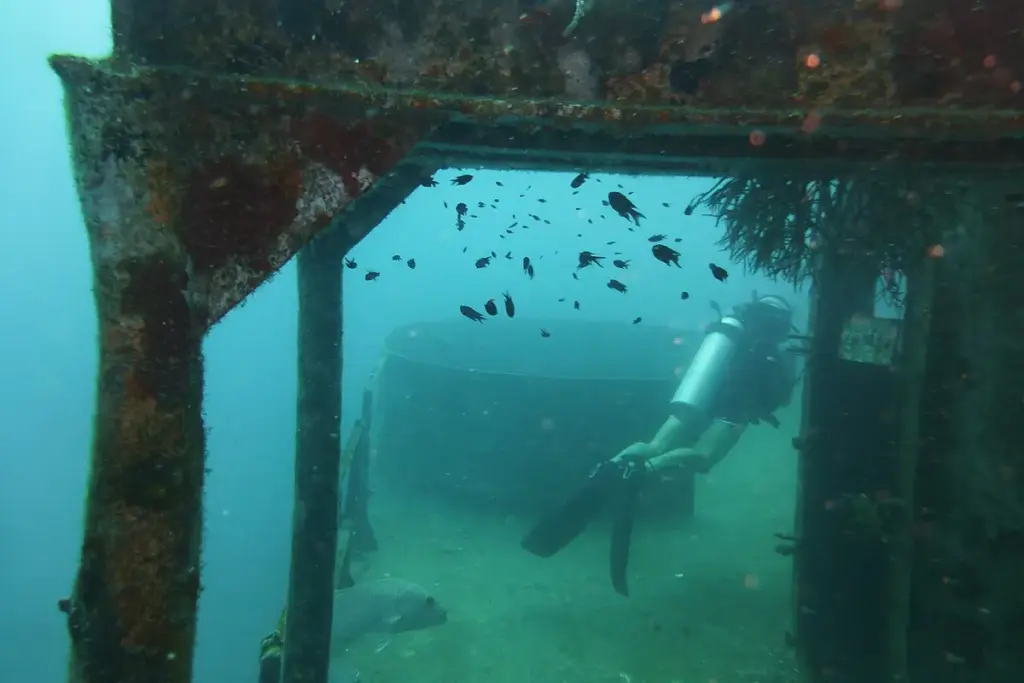
The diving season Thailand offers depends on the coast. In general, each sea has a calm season and a rough season, and they do not fully overlap.
| Coast | Main areas | Best months (roughly) | Notes |
|---|---|---|---|
| — | — | — | — |
| Andaman Sea | Krabi, Phuket, Phi Phi, Similan Islands, Koh Lanta | November to April | Rough seas and some park closures in the monsoon |
| Gulf of Thailand | Koh Tao, Koh Samui, Koh Phangan | Most of the year | Wetter months often around October to December |
So, if you plan to learn to dive in Thailand, choose the coast that is in season. For instance, if you travel in July, the Gulf is usually the safer bet. In contrast, in January both coasts can work, and the Andaman is at its best. For a month-by-month view of the west coast, see Andaman Sea best time to visit.
Best dive sites in Thailand for beginners
Many of the best dive sites in Thailand are open to new divers, because they have calm, shallow sections. Here are the main areas and why beginners choose them.
- Koh Tao. The classic place to learn, with many schools and sheltered training bays. See our Koh Tao guide.
- Krabi and Phi Phi. Limestone walls and reefs a boat ride from Ao Nang. Our Krabi diving guide covers the sites and seasons.
- Phuket. Many day boats and schools, with easy reefs nearby.
- Similan Islands. Famous clear water, usually for more experienced divers on day trips or liveaboards. See the Similan Islands day trip guide.
- Koh Lanta. A quieter base for southern sites in the dry season.
- Koh Lipe. Reefs inside a marine park in the far south. Our sibling guide to Koh Lipe explains the season.
If you are not ready for scuba, snorkelling is a great start. For example, read our Krabi snorkeling guide for easy trips from the beach.
Safety tips for new divers
Diving is safe when you follow the rules. Above all, when you learn to dive in Thailand, choose your school carefully.
- Check reviews and agency status. A registered PADI or SSI centre is easy to verify.
- Ask about the gear. It should fit well and look well maintained.
- Never hold your breath. This is the first rule of scuba.
- Equalise early. Clear your ears often as you descend.
- Leave time before flying. Diving bodies such as DAN advise waiting at least 12 to 18 hours after diving before a flight.
- Get insurance. Many policies need a diving add-on, as our Thailand travel insurance guide explains.
Continue to Krabi after your course
Once you are certified, the Andaman coast is a great place for your first fun dives. Krabi has day boats to the Phi Phi Islands and the reefs off Ao Nang in the dry season. After that, rest on dry land in the quiet district of Ao Luek, about 54 to 71 minutes by road from Krabi airport. There, you can explore mangroves, caves and the pools of Than Bok Khorani National Park.
At a glance: 17 houses from 1,200 to 2,000 baht per night, air conditioning in every house, free breakfast, free Wi-Fi and a swimming pool, at 97/1 Moo 1, Ao Luek Nuea, Krabi.
We recommend Ban Kamnan Resort in Ao Luek Nuea as a calm base between dive days. If you travel with a dive buddy or friends, House #A, #B, #C and #D each have two 5 ft beds, one bathroom and 40 m², sleep four, and cost 1,700 baht per night. Every house has air conditioning, guests share the swimming pool, and breakfast of toast, fried eggs and hot coffee is free. Prices match the resort's listing, so check your dates on Booking.com.
Frequently asked questions
A beginner course such as the PADI Open Water Diver usually takes 3 to 4 days. A discover scuba session takes about half a day.
Recent 2026 guides for Koh Tao put it at roughly 10,000 to 13,000 baht, and some shops advertise less. Check whether gear, certification and boat dives are included.
Koh Tao is the most popular place to learn, because it has many schools and calm training bays. Krabi, Phuket and Koh Lanta are good choices on the Andaman coast in the dry season.
On the Andaman coast, roughly November to April is best. In the Gulf of Thailand, diving runs most of the year, with wetter months often around the end of the year.
Not straight away. Diving bodies such as DAN advise waiting at least 12 to 18 hours after diving before you fly, so plan a free day at the end of your trip.
Final thoughts
To sum up, the decision to learn to dive in Thailand is easy to plan once you match the coast to the season. In short: try a discover dive if you are unsure, book a well-reviewed Open Water course, and keep a free day before you fly. Then enjoy the Andaman coast from a quiet base. Check availability at Ban Kamnan Resort on Booking.com.








