


 Krit Ariyathiti
One of the first questions visitors ask is simple: is tap water safe in Thailand? The honest answer has two parts, because the water that leaves the treatment plant and the water that comes out of an old pipe are not always the same. This guide explains what we know about Bangkok tap water, how to find safe drinking water in Thailand for very little money, whether ice in Thailand is a risk, and where to use water refill stations Thailand towns now offer.
Quick answer: Is tap water safe in Thailand? In Bangkok, the Metropolitan Waterworks Authority says its water meets its own standards and WHO criteria when it leaves the plant. However, old pipes and building tanks can contaminate it, so most residents and travel guides still drink bottled, filtered or boiled water. Outside Bangkok, the advice is firmer: do not drink from the tap. Brushing your teeth with tap water is generally fine, and factory-made ice is widely considered safe.
Is tap water safe in Thailand to drink straight from the tap?
Is tap water safe in Thailand straight from the tap? Usually, the safe answer is no, even though the water is treated. In short, the problem is the last part of the journey. Water travels through mains, then into building tanks and old pipes, and each step can add rust or bacteria. As a result, the quality at your tap depends on your street and your building, not only on the treatment plant.
So, is tap water safe in Thailand for a short holiday? For drinking, most visitors skip it. Bottled water is cheap and sold everywhere, and many hotels give you free bottles each day. In addition, an upset stomach can waste two or three days of a trip, which is a poor trade for saving a few baht.
What about Bangkok tap water?
Bangkok tap water comes from the Metropolitan Waterworks Authority (MWA), which serves Bangkok, Nonthaburi and Samut Prakan. In its 2023 annual water quality report, the MWA states that its water complies with MWA standards and is safe to drink. It also cites a Mahidol University study that found its water meets World Health Organization criteria.
However, the MWA can only control the water up to your property. After that, a condo tank or old plumbing is the owner's job. For that reason, a December 2024 guide from The Thaiger notes that risks often arise in the pipes, especially in older neighbourhoods. Many locals and expats therefore use filters or bottled water at home. Meanwhile, in some dry seasons, sea water pushes up the Chao Phraya River and makes the water taste slightly salty. In those past reports, Thai PBS World and others said the water turned brackish but stayed safe to use.
How do you get safe drinking water in Thailand?
Safe drinking water in Thailand is easy and cheap to find. Here are the main options:
- Bottled water. Every convenience store sells it, often in large bottles that cost less per litre. Check that the seal is intact.
- Hotel water. Many hotels and guesthouses provide free bottles or a filtered dispenser. Ask at reception.
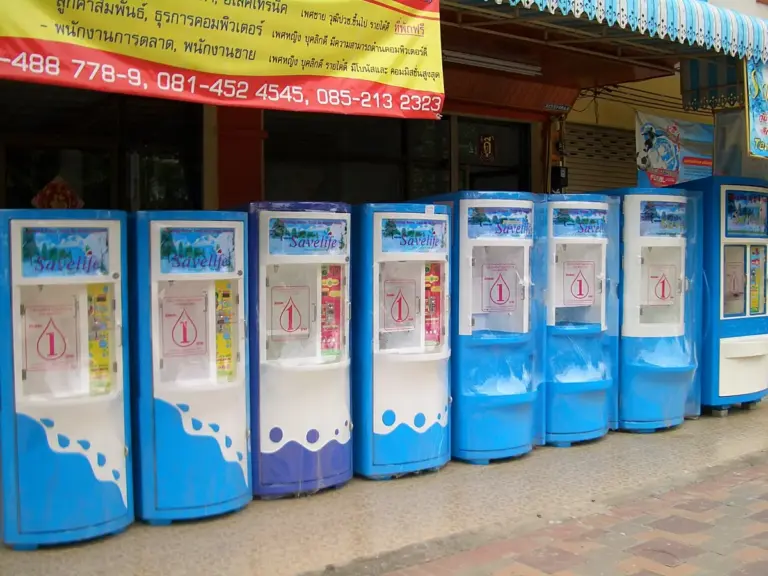
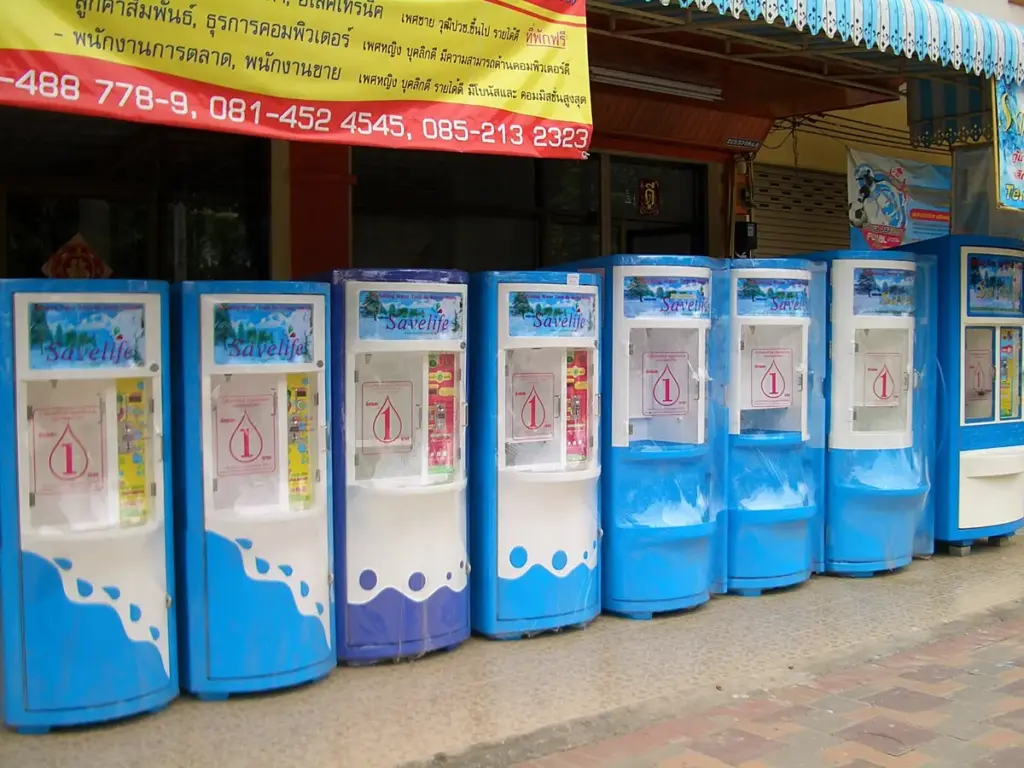
- Refill machines. Coin-operated machines stand on many streets. You bring your own bottle and pay a few baht.
- Boiled water. Boiling kills bacteria, so a kettle in your room works. However, boiling does not remove metals or chemicals from old pipes.
- A filter bottle. A good travel filter cuts plastic waste, but check what it removes before relying on it.
Also, restaurants usually serve filtered water or bottled water with meals. In smaller places, ask for a sealed bottle if you are unsure. Our guide to Thai street food explains how to choose busy, fresh stalls.
Are water refill stations Thailand towns offer safe?
Water refill stations Thailand streets are full of are a cheap way to cut plastic. These blue and white machines filter tap water and sell it by the litre. A 2007 photo description from Pattaya lists 1 baht per litre, and prices are still only a few baht today, according to recent travel guides.
However, quality depends on maintenance. So, look for a machine with a recent service sticker, a clean nozzle and a busy queue of locals. If the machine looks dirty or the date is old, buy a bottle instead. Also, airports such as Suvarnabhumi and Don Mueang have drinking water stations with filtered water, according to The Thaiger, which is handy after a long flight.
Is ice in Thailand safe?
Most travel guides say ice in Thailand is generally safe when it comes from a factory. Most of it does. You will often see ice cubes shaped like short tubes with a hole in the middle, which are typical of commercial production. Likewise, hotel and bar ice machines usually use treated water.
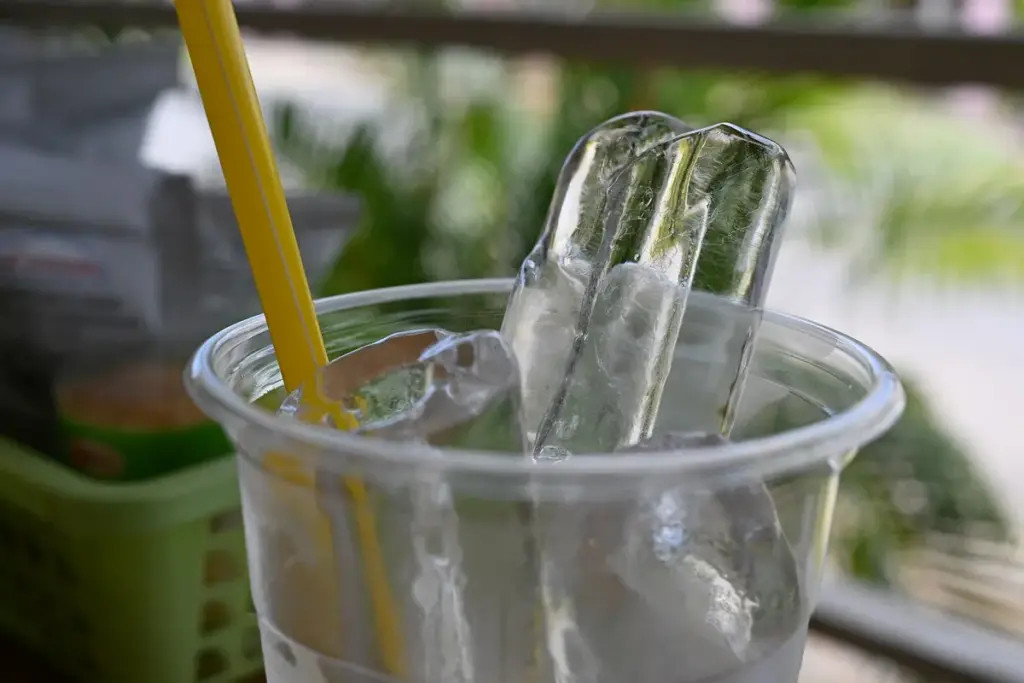
However, the shape is not a guarantee. Some guides advise caution with crushed ice or chunks hacked from a large block, because these are harder to trace. So, at a busy restaurant, a cold drink with tube ice is a normal risk that millions take every day. In a quiet village stall, ask for your drink without ice if your stomach is sensitive.
Can you brush your teeth and shower with tap water?
Yes. Showering is fine everywhere, and brushing your teeth with tap water is generally fine, according to The Thaiger. Just avoid swallowing much of it. Also, wash fruit with bottled water if you peel and eat it in your room.
If you do get an upset stomach, drink plenty of safe water and use oral rehydration salts from a pharmacy. Then, see a doctor if you have a high fever, blood in your stool, or symptoms that last more than a couple of days. Good Thailand travel insurance covers clinic visits, and our guide on whether Thailand is safe covers wider health and road risks.
Is tap water safe in Thailand outside Bangkok?
Outside Bangkok, most areas are served by the Provincial Waterworks Authority or local systems, and quality varies widely. So, is tap water safe in Thailand on the islands or in rural towns? Travel guides say no for drinking. Instead, use bottled or filtered water, especially on islands where water may come from wells or tanks.
For example, around Krabi and Ao Luek, convenience stores and refill machines are easy to find. Our guide to Krabi street food also shows where locals eat, and busy places serve safe water and ice with every meal.
Where to stay in Krabi with easy water and fresh food
Many travellers end a Thailand trip in quiet Ao Luek, north of Krabi. It is roughly 54 to 71 minutes by road from Krabi airport, depending on traffic, and our Krabi airport to Ao Luek guide explains the transfer.
At a glance: 17 houses from 1,200 to 2,000 baht per night, air conditioning in every house, free breakfast, free Wi-Fi and a swimming pool, at 97/1 Moo 1, Ao Luek Nuea, Krabi.
We recommend Ban Kamnan Resort in Ao Luek Nuea. For a small family, House #A, #B, #C or #D has two 5 ft beds, one bathroom and 40 m², and sleeps four for 1,700 baht per night. Every house has air conditioning. In addition, guests share the swimming pool, and breakfast of toast, fried eggs and hot coffee is free. Prices match the resort's listing, so check your dates on Booking.com.
Frequently asked questions
The MWA says its water is safe when it leaves the plant. However, pipes and tanks can contaminate it, so most people drink bottled, filtered or boiled water.
Factory-made ice, often shaped like tubes with a hole, is widely considered safe. Be more careful with crushed ice or block ice at small stalls.
Generally, yes. Just avoid swallowing large amounts.
Bottled water is cheap at every convenience store, and refill machines charge a few baht per litre. Many hotels also provide free bottles.
Boiling kills bacteria and other germs. However, it does not remove metals or chemicals, so a filter or bottled water is better in old buildings.
Final thoughts
So, is tap water safe in Thailand? To sum up: treated water is good at the plant, but pipes vary, so drink bottled, filtered or boiled water, use clean refill machines, and enjoy factory ice in busy places. Brush your teeth as normal and keep oral rehydration salts in your bag. Check availability at Ban Kamnan Resort on Booking.com for a relaxed stay in Ao Luek.








