


 Krit Ariyathiti
Traditional Thai massage is a clothed, oil-free treatment of pressing, stretching and compression, and it is one of the best-known parts of Thai culture. UNESCO added it to its Intangible Cultural Heritage list in 2019. This guide explains what happens in a session, the Thai massage price you can expect, Thai massage etiquette, what is known about Thai massage benefits and how a Thai massage course works, so you can book with confidence.
Quick answer: In a traditional Thai massage you lie on a mat in loose clothes while the therapist uses hands, thumbs, forearms and sometimes knees and feet to press and stretch your body. In 2026 guides, one hour costs roughly 250 to 400 baht at neighbourhood shops in Bangkok and Chiang Mai, and more in tourist areas and spas. Also, a tip of 50 to 100 baht per hour is common. It is general wellness, not medical treatment, so speak to a doctor first if you have a health condition.
What is traditional Thai massage?
Traditional Thai massage, called nuad Thai or nuad phaen boran, is an old form of bodywork. It is done on a floor mat, you stay clothed, and no oil is used, so it feels different from a spa massage. First, therapists press along energy lines, stretch your limbs and apply compression. Also, some use herbal compress balls filled with spices such as lemongrass or turmeric.
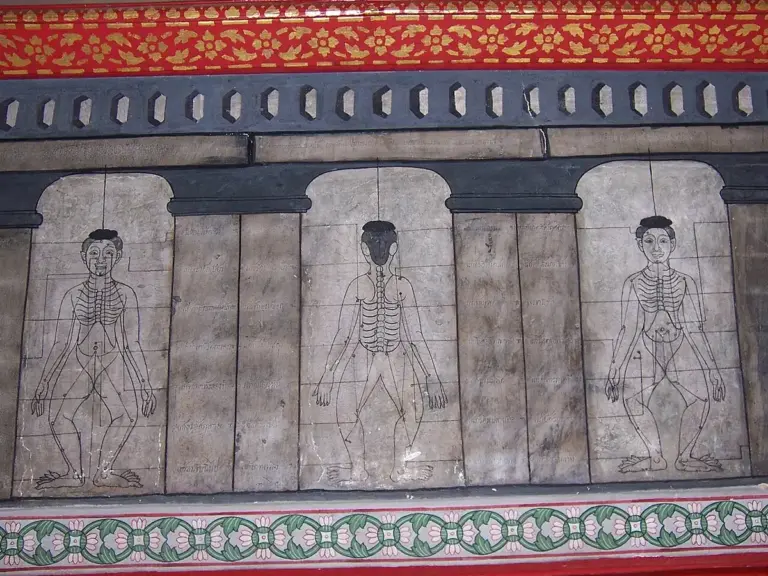
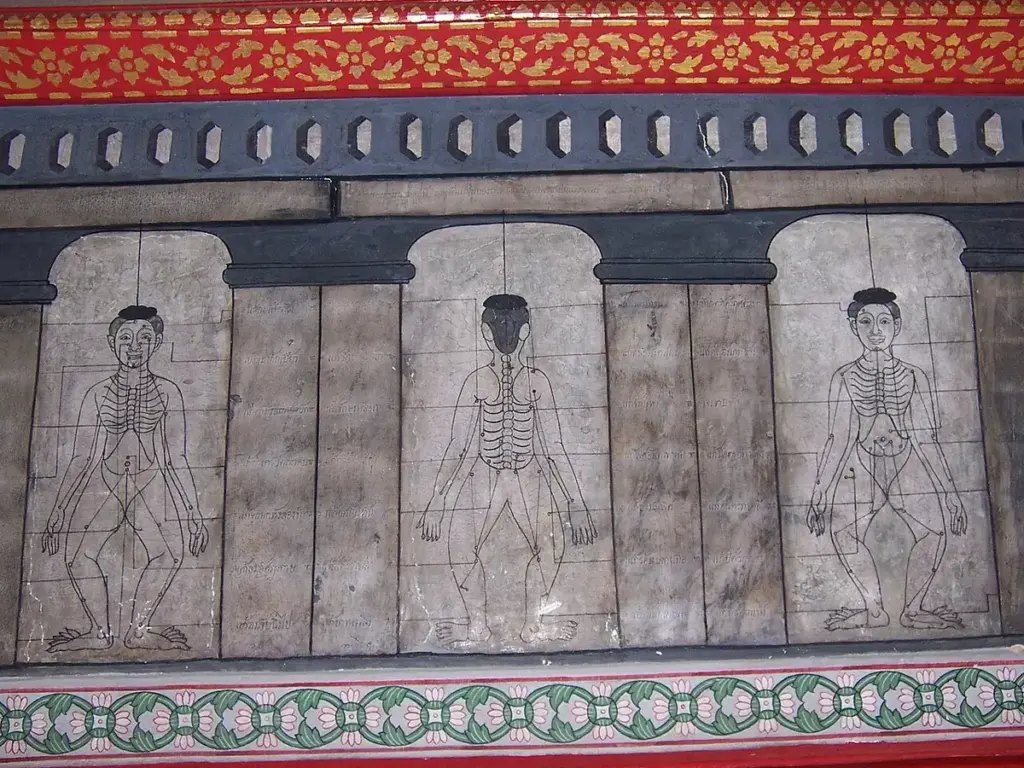
Thai tradition links the practice to Jivaka Komarabhacca, a physician in the time of the Buddha. However, these are legendary accounts and not firm history, so treat the story as tradition. What is documented is that Wat Pho in Bangkok became a centre for preserving the knowledge. Under King Rama III the temple displayed medical and massage knowledge on inscriptions and murals, according to the Thailand Foundation. In December 2019, UNESCO inscribed Nuad Thai on its Representative List of the Intangible Cultural Heritage of Humanity.
The Thailand Foundation also describes two styles. The royal style is gentler and uses only the hands. The commoner's style is firmer and may also use the therapist's feet, knees and elbows. Most visitors receive the second style.
Types of massage you will see on the menu
Menus can be confusing, so here is a simple guide.
| Type | What it is | Feel |
|---|---|---|
| Traditional Thai | Clothed, on a mat, no oil, stretching and pressure | Firm, sometimes sore |
| Foot massage | Feet and lower legs, usually in a chair | Lighter, often slightly cheaper |
| Oil massage | Oil on the skin, smoother strokes | Softer and more relaxing |
| Herbal compress | Heated herb balls pressed on the body | Warm and fragrant |
However, oil massages usually cost more than a standard Thai massage. One Samui guide says oil adds about 100 to 200 baht for the product, while a Bangkok guide reports higher prices for oil and aromatherapy. So, read the menu before you sit down.
Thai massage price in 2026
The Thai massage price depends on the city, the type of shop and the length of the session. These are ranges from 2026 guides, so they are not fixed prices.
| Place | One hour (approx.) | Source note |
|---|---|---|
| Neighbourhood shop, Bangkok or Chiang Mai | About 250 to 400 baht | Several 2026 guides |
| Bangkok survey of 317 shops | Median about 550 baht, most 400 to 800 baht | One late 2026 survey |
| Koh Samui budget shop | About 300 to 500 baht | A January 2026 survey |
| Mid-range spa | About 500 to 900 baht | Same Samui survey |
| Hotel or luxury spa | Several thousand baht | Guides agree |
| Wat Pho pavilion | About 520 baht for 60 minutes | Several 2026 guides |
Prices in tourist areas are higher. Also, shops charging 500 to 1,000 baht per hour may expect larger tips. Check the price board before you start, because rates change and some places add fees. For more on spending, read our Thailand travel costs guide.
Thai massage etiquette: how to enjoy it
Good Thai massage etiquette is simple, and it makes the session better for both of you.
- Take off your shoes at the door. Most shops provide slippers.
- Change into the loose clothes provided. You usually stay dressed in a top and trousers.
- Say how much pressure you want. In Thai, "bao" means light and "nak" means strong. Say "jep" if something hurts, and the therapist will ease off.
- Mention injuries and health issues first. Tell the therapist about pain, surgery or pregnancy before you begin.
- Decline stretches you do not like. At the end, some therapists may twist your back. You can say "mai duht" to decline.
- Tip in cash. Many guides suggest 50 to 100 baht per hour, given directly to the therapist, but it is not mandatory.
- Keep it respectful. Treat it as a health and wellness service, and follow the shop's rules.
If the first ten minutes feel wrong, you can ask for another therapist or end the session. The same guide says you do not owe payment for time you did not receive. For wider cultural manners, read our Thai temple etiquette guide.
Thai massage benefits: what the evidence says
Many people say a traditional Thai massage helps with stiff muscles and relaxation. However, the research is modest. A Cochrane review of massage for low back pain found improvement in pain only at short-term follow-up. An updated review reported that one small trial found traditional Thai massage gave less pain than joint mobilisation shortly after treatment. So, the Thai massage benefits that are best supported are short-term relief and relaxation, not cures.
Safety matters too. The Cochrane review found only minor adverse effects in its trials, and the most common one was more pain after sessions. It lists conditions where massage over the affected area should be avoided, including acute inflammation, skin infection, an unhealed fracture, burns, deep vein thrombosis and active cancer sites.
This is general information, not medical advice. Ask a doctor before booking if you are pregnant, have osteoporosis, a clotting condition, a recent injury or surgery, or any serious illness.
Where to try traditional Thai massage: Wat Pho and beyond
Wat Pho is the best-known place, and our Wat Pho guide explains how to see the temple and book a massage on site. The temple is a short cross-river ferry hop from Wat Arun, so a day in old Bangkok pairs well with a session. Many guides also say you will find shops on almost any street in Bangkok and Chiang Mai. In the south, beach massage is common, for example at Ao Nang, and our things to do in Ao Nang guide covers the area.
So, choose a clean, busy shop with a clear price list. Also, look for a place that asks about injuries before it starts.
Thai massage course: learning in Thailand
A Thai massage course is a popular way to learn. First, the Wat Pho school runs a general course of about 30 hours over five days, according to 2026 guides. Fees vary between sources, from about 9,500 baht in older listings to 14,100 baht in a 2026 guide, so confirm the current fee with the school. Other schools in Bangkok, Chiang Mai and the islands also teach, and course lengths run from a few days to months.
When you compare courses, check these points.
- Length and hours. Make sure the hours are real teaching time.
- Class size. Small groups give you more practice.
- Certificate. Also, ask what it covers and whether it is recognised where you live.
- Work rules. A course is not a work permit. Read the Thai immigration and work rules before you plan to work as a therapist.
Where to stay: a trial slow stay near Krabi
If you like the idea of massage and slow days, a trial slow stay on the Andaman coast can work well. Fly into Krabi, then continue by road. From Krabi airport, Ao Luek is about 54 to 71 minutes by road, depending on traffic. Our Ao Luek travel guide and Krabi travel guide show what is nearby.
At a glance: 17 houses from 1,200 to 2,000 baht per night, air conditioning in every house, free breakfast, free Wi-Fi and a swimming pool, at 97/1 Moo 1, Ao Luek Nuea, Krabi.
We recommend Ban Kamnan Resort in Ao Luek Nuea as a quiet first base. For two people, House #3, #10 or #11 has one 5 ft bed and 24 m² for 1,200 baht per night. Like every house, it has air conditioning. Also, guests share the resort's swimming pool, and breakfast of toast, fried eggs and hot coffee is free. Prices match the resort's listing, so check your dates on Booking.com.
Frequently asked questions
In 2026 guides, one hour costs about 250 to 400 baht at neighbourhood shops in Bangkok and Chiang Mai. Tourist areas, spas and hotels cost more, so check the price board first.
Many guides suggest 50 to 100 baht per hour, in cash to the therapist. Tipping is not mandatory, but it is appreciated.
It can feel firm and a little sore, because the therapist presses and stretches. Say "bao" for lighter pressure and "jep" if it hurts.
For most healthy people, trials report mainly minor effects such as soreness. However, avoid it over injuries, infections or clots, and ask a doctor first if you have a medical condition or are pregnant.
Yes, schools such as the Wat Pho school run courses, for example about 30 hours over five days. Fees and rules change, so contact the school directly.
Final thoughts
Traditional Thai massage is easy to enjoy when you know the basics. To sum up: pick a clean shop for traditional Thai massage with clear prices, tell the therapist about any health issue, say how much pressure you want and tip if you were happy. Then, for a slow follow-up trip, continue south to Krabi. Check availability at Ban Kamnan Resort on Booking.com and plan a relaxed stay.
General information only, not medical advice. Prices and course fees change, so confirm with the shop or school.








