

 Krit Ariyathiti
Thailand in March is hot, sunny and mostly dry, which makes it a strong month for beaches and a poor one for the far north. This guide explains the Thailand weather in March region by region, how bad the Chiang Mai burning season can get, why the Andaman coast and Krabi in March work so well, what to pack and how to plan a trip around the heat. Also, it includes a Thailand in March packing list.
Quick answer: March is the last fully dry month on the Andaman coast, according to Visit Thailand Today, and the Gulf stays dry into April. Typical highs are about 34 to 35 degrees Celsius in Bangkok and Phuket, and Chiang Mai is similar by day but cooler at night. However, March is also the peak of the burning season in the north, when smoke can push Chiang Mai's air quality index above 150. So, most travellers choose the southern beaches and keep city sightseeing for the cooler hours.
Is March a good time to visit Thailand?
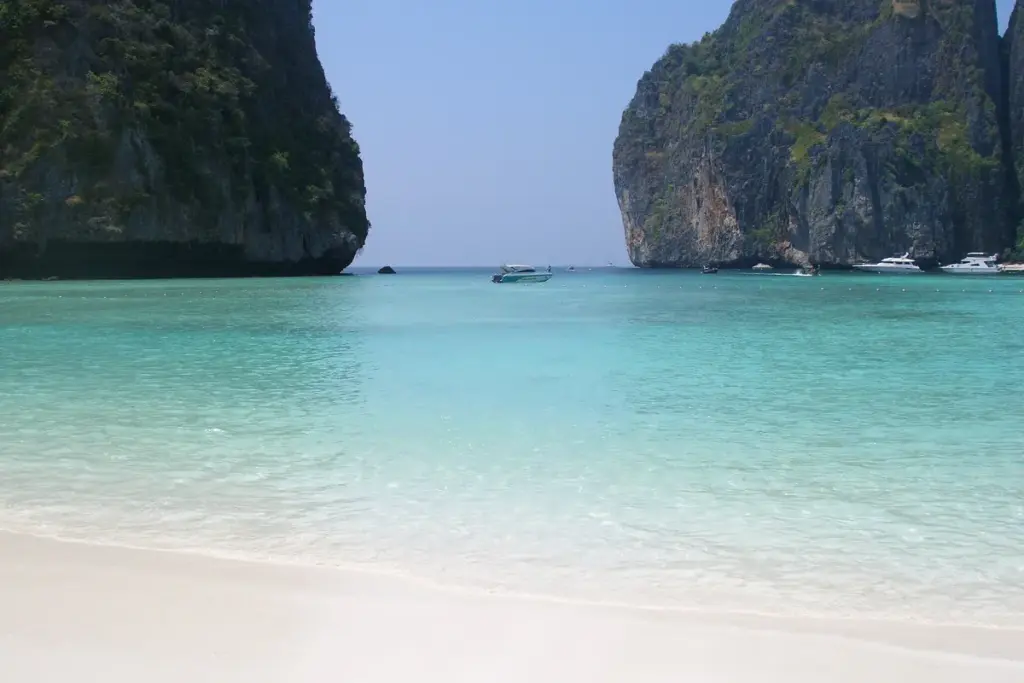
Yes, Thailand in March is a good choice for the right places. March brings sunshine, calm seas and very little rain across most of the country. On the other hand, the heat builds quickly, and the north suffers from haze. As a result, the month suits beach holidays much better than hiking or temple tours.
Here is a quick comparison of the main trade-offs, because the month has clear winners and losers.
| Factor | March in Thailand |
|---|---|
| Weather | Hot and dry, with strong sun |
| Sea | Calm and warm, about 28 to 30 degrees Celsius |
| North | Smoke and haze from burning |
| Crowds | Busy at beaches, quieter than January and February |
| Rain | Rare, though the Gulf and Koh Chang can see showers |
Crowd levels are not officially listed, so treat that row as a general pattern from guides.
What is the Thailand weather in March?
Climate normals from 1991 to 2020, quoted by Visit Thailand Today, give a good picture. Bangkok averages a high of 35 and a low of 26 degrees. Chiang Mai reaches 35 by day but drops to about 20 at night. Phuket sits at 34 and 26, and Koh Samui is a little cooler at 30 and 25.
Rain is light but not zero, since the same page lists about 20 mm in Chiang Mai, about 50 mm in Bangkok, about 81 mm in Phuket and about 116 mm on Koh Samui. However, other guides quote lower totals for Bangkok and Phuket, so sources differ by station and year. In practice, most March days are dry, and the main weather problems are heat and strong UV rather than rain.
What is the Chiang Mai burning season?
Then, the Chiang Mai burning season is a period of heavy smoke from farm burning and forest fires. IQAir says it typically runs from January to April and peaks in March. In 2026, IQAir reported Chiang Mai at the top of its global city ranking on 29 March, with an air quality index of 263. The province also banned open burning from 1 February to 31 May 2026, according to news reports.
What does that mean for a trip?
- Check live air quality. Look at an index such as IQAir before you book or fly.
- Choose another region. Visit Thailand Today suggests skipping Chiang Mai, Pai and Chiang Rai this month.
- Protect your health. People with asthma or heart conditions should talk to a doctor first, and a well-fitted mask rated for fine particles may help.
- Keep dates flexible. Conditions change by week, and by year.
Some reports describe clear days even in March, so the haze is not guaranteed. Still, it is common enough to plan around. Therefore, if you love the north, the cooler months covered in our Thailand in January and Thailand in February guides are a safer choice.
Where should you go in Thailand in March?
For Thailand in March, the south is the easy answer, so here are the strongest options.
- Krabi and Phuket. The Andaman coast has its last fully dry month, with calm water for boat trips. See our Krabi travel guide and best time to visit Krabi.
- Koh Samui and the Gulf. The Gulf stays dry into April, though Samui can still see some rain.
- Bangkok. Hot, but museums, malls and river boats offer shade and air conditioning. Start early.
- Pattaya and Koh Chang. Warm and busy at weekends, though Koh Chang can still get showers.
March is also a good time to sort a longer plan, since many visa and flight deals look better outside peak season. For a one-month route that fits the new 30-day visa-free rule, see our Thailand itinerary 1 month guide.
Krabi in March: why it works
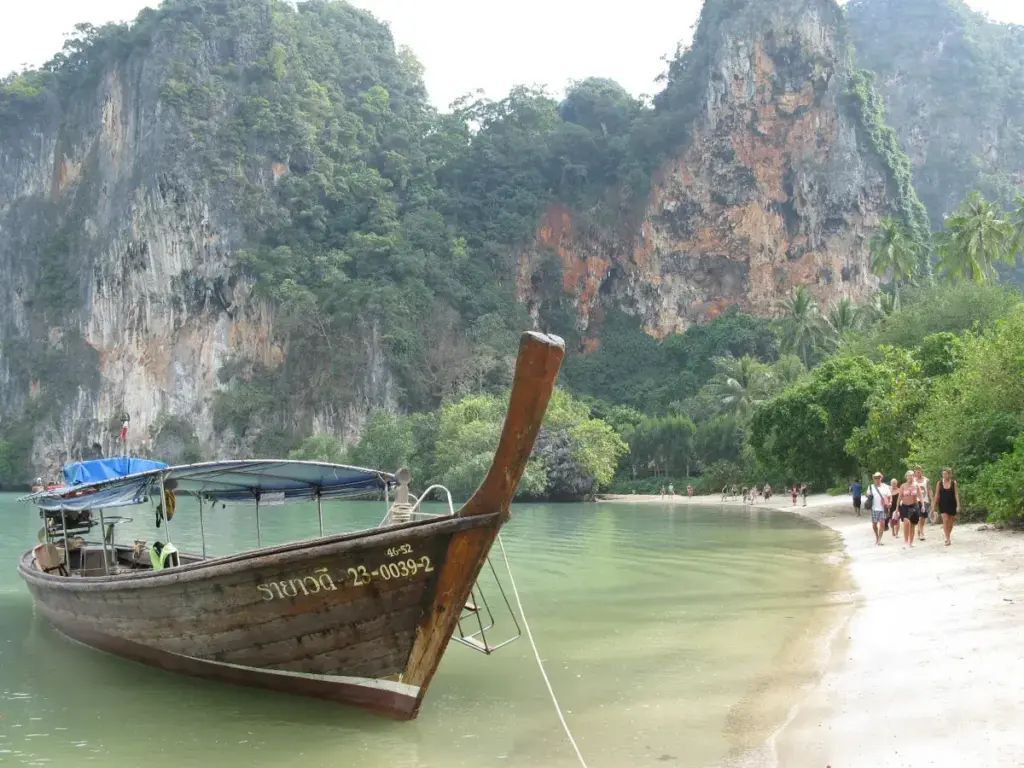
Krabi in March has calm seas, clear skies and long beach days. The limestone cliffs and islands look their best in dry light, and boat trips to the Hong Islands, Phi Phi and Phang Nga Bay run smoothly. For example, our Phang Nga Bay day trip from Krabi and Krabi 4 islands tour posts explain how to book them.
However, midday sun is strong, so book morning departures and bring shade. Also, Ao Nang and Railay stay busy, so many visitors choose quieter Ao Luek and drive to the beaches.
Thailand in March packing list: what to bring
For Thailand in March, pack for heat first, and add one item if you visit the north.
- Light cotton clothes. Loose, breathable fabrics work best.
- Sun protection. Use a hat, sunglasses and a high-SPF sunscreen, preferably reef-safe.
- A scarf or light shirt. You need covered shoulders and knees at temples.
- A refillable bottle. Drink water often, since heat and humidity add up.
- A fine-particle mask if you plan to visit the north.
What festivals happen in Thailand in March?
Thailand in March has no single major nationwide festival, and Songkran follows in mid-April. In 2027, Makha Bucha falls on 21 February, with a substitute holiday on 22 February, so it lands just before March. As a result, March is a calmer month for events. For the big dates, see the Thailand festivals calendar and the Songkran festival guide.
Where to stay in Krabi in March
If you want a calm base for beach days, Ao Luek is a relaxed choice, because it is about 54 to 71 minutes by road from Krabi airport, depending on traffic, and it sits close to the springs, caves and mangroves. Our Krabi airport to Ao Luek guide covers the transfer.
At a glance: 17 houses from 1,200 to 2,000 baht per night, air conditioning in every house, free breakfast, free Wi-Fi and a swimming pool, at 97/1 Moo 1, Ao Luek Nuea, Krabi.
We recommend Ban Kamnan Resort in Ao Luek Nuea. For friends sharing, House #A, #B, #C and #D each have two 5 ft beds, one bathroom and 40 m², and they sleep four for 1,700 baht per night. Like every house, they have air conditioning, which helps in March heat. Also, guests share the swimming pool, and breakfast of toast, fried eggs and hot coffee is free. Prices match the resort's listing, so check your dates on Booking.com.
Frequently asked questions
It is hot, with highs of about 34 to 35 degrees in Bangkok and Phuket. However, the sea is calm, and the beaches stay popular. Plan outdoor sightseeing for early morning.
Rarely. March is dry across most of the country, though the Gulf coast and Koh Chang can see some showers. Rain totals differ by source.
It can be, but the air is often poor. Check live air quality, consider another region and talk to a doctor if you have breathing or heart problems.
It is the tail of the high season on the Andaman coast. Crowds are usually lighter than in January and February, but popular beaches are still busy.
The Andaman coast, including Krabi and Phuket, is described as most comfortable, and the Gulf is also dry. Pick based on your route.
Final thoughts
Thailand in March rewards beach lovers and punishes heat-sensitive city walkers. To sum up: choose the southern coast, avoid the northern burning season, start days early and carry sun protection. Then, settle into a calm base near Krabi. Check availability at Ban Kamnan Resort on Booking.com and enjoy the last dry month on the Andaman coast.
This is general travel and health information, not medical advice. Weather and air quality change, so check live forecasts before you go.