

 Krit Ariyathiti
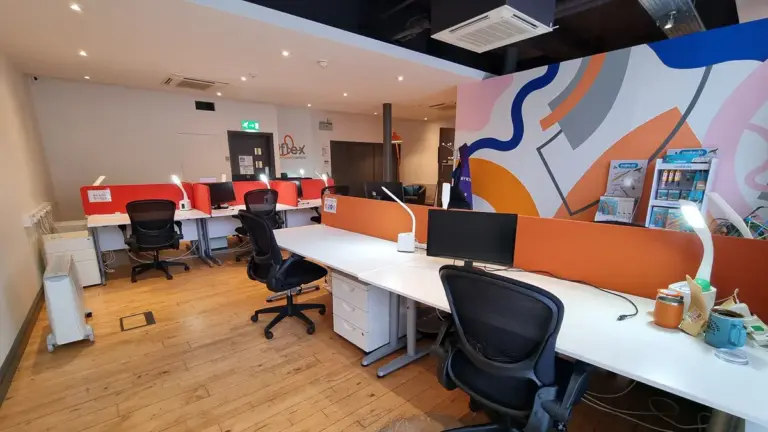
Coworking spaces in Thailand are easy to find in Bangkok, Chiang Mai, Phuket and a few islands, and they usually cost less than in many Western cities. This guide explains the types of desk, typical prices, coworking in Bangkok and coworking in Phuket, how to judge internet speed in Thailand and when to buy a coworking day pass instead of a membership. Prices are ranges from one dated guide, so check each space before you go.
Quick answer: As of November 2026, one March 2026 guide lists Chiang Mai day passes at about 200 to 350 baht and monthly hot desks at about 2,800 to 4,000 baht. For Bangkok it lists day passes of 350 to 800 baht and monthly desks of about 4,000 to 9,000 baht, and for Phuket monthly desks of about 3,500 to 6,500 baht. Try a day pass first, then run your own speed test and keep a backup mobile connection. A coworking membership does not give you a visa, so sort out your stay separately. This is general information, not legal or tax advice.
Types of coworking desks in Thailand
Most coworking spaces in Thailand sell the same few products. So knowing the names saves time.
| Type | What you get | Who it suits |
|---|---|---|
| Day pass | A seat for one day, usually within opening hours | Trying a space, short stays |
| Hot desk | Any free seat, monthly | Most remote workers |
| Dedicated desk | Your own desk, often 24 hours | Long stays, lots of equipment |
| Private office | A lockable room | Small teams |
Also, some malls and phone-company showrooms offer free work areas. One guide lists a Bangkok mall area and a Chiang Mai mall area that are free if you register with a Thai phone number, but they close with the mall. Therefore, a free area is fine for a few hours, but it is not a full coworking space for a work week.
Coworking day pass: try before you commit
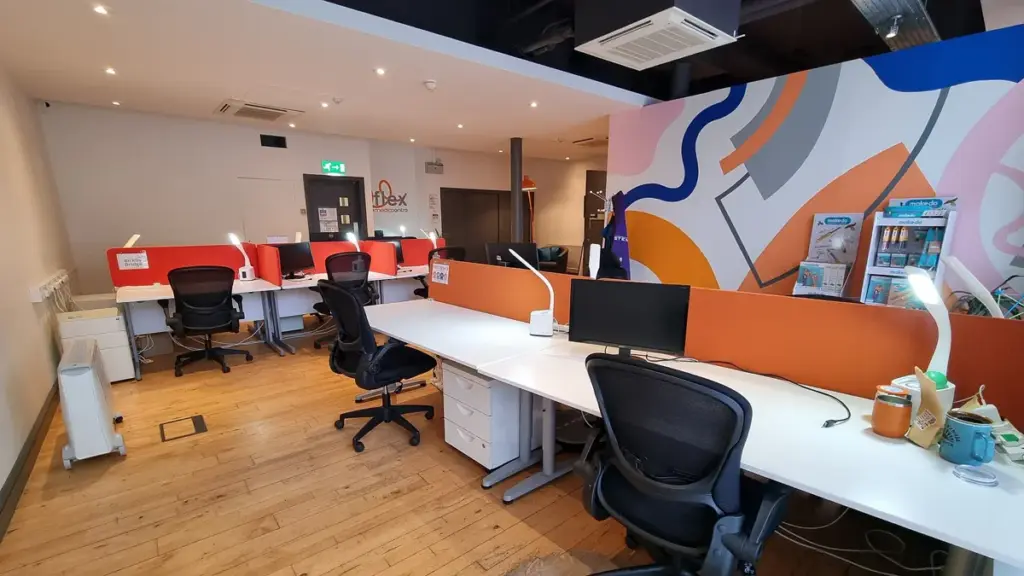
A coworking day pass is the best first purchase. It shows you the real noise level, the real internet speed and the chairs, which photos hide. Some spaces may credit a day pass toward a membership, so ask before you pay.
Ask these questions at the desk of any coworking day pass seller:
- What are the opening hours? Monthly members often get 24-hour access, but day passes usually do not.
- Is there a quiet area or a call room? Video calls in an open room annoy everyone, so ask first.
- Is there backup power or a second internet line? A shared connection can drop, so ask what happens then.
- What is the cancellation rule? Month-to-month is common, but not universal.
Coworking in Bangkok
Coworking in Bangkok has the widest choice, from international chains to local spaces near the BTS and MRT lines. The March 2026 guide lists day passes of 350 to 800 baht and monthly hot desks of about 4,000 to 9,000 baht at the examples it names, such as a large chain with several branches and a space in a tech park. Those are examples, not endorsements, and prices change often.
Because Bangkok is big, pick one of its coworking spaces near your home. Our Bangkok BTS and MRT guide explains how to move around without a car, and where to stay in Bangkok compares areas.
Chiang Mai: low prices and a deep scene
Chiang Mai is the classic base for remote workers, so its coworking spaces in Thailand are among the cheapest. The same guide lists day passes of about 200 to 350 baht and monthly hot desks of about 2,800 to 4,000 baht, with a local chain that has several branches. Our cost of living in Chiang Mai guide shows how that fits into a monthly budget, and Nimmanhaemin Road is the cafe and desk district many people choose.
Coworking in Phuket and the islands
Coworking in Phuket is a little pricier. The guide lists monthly desks of about 3,500 to 6,500 baht across three Phuket examples, from Rawai to Phuket Town and Boat Avenue. On Koh Phangan, it lists day passes of about 300 to 500 baht, and the two spaces it names mention a Starlink backup.
For Koh Samui and Krabi, we could not confirm current listings. So search maps and recent reviews, and read digital nomad Krabi for the Ao Nang options.
Internet speed in Thailand: test, do not trust
Internet speed in Thailand is generally good in cities, where fibre is common. Spaces advertise speeds of 100 Mbps up to 1 Gbps in the guide, but those are the spaces' own figures. But a test on your laptop at your desk tells the truth, so check internet speed in Thailand yourself.
- Run a speed test at the time of day you will work.
- Test upload speed, because video calls need it.
- Keep a backup. A second connection, such as a data eSIM, saves a deadline, because a dropped call costs more than a data plan. Our Thailand eSIM guide explains the choices.
- Ask about the guest network if you share a router with many people, since it can slow the whole room.
Coworking spaces in Thailand and your visa
A coworking membership is not a visa document, so coworking spaces in Thailand cannot replace the paperwork. Then check the rules again before you travel. The Destination Thailand Visa, or DTV, is the route many remote workers look at, and our Thailand DTV visa guide covers it. For the wider picture, including tax residency, read digital nomads in Thailand. Rules change, so confirm every visa point on the official e-Visa site, thaievisa.go.th, or with your embassy.
Where to stay: continue south to Krabi
If your work base is Bangkok or Chiang Mai, a change of scene can help. Fly to Krabi, which is also easy with domestic flights in Thailand, and from the airport Ao Luek is about 54 to 71 minutes by road, according to transfer listings. It is quiet and cheaper than the beach towns, which suits a focused week away.
At a glance: 17 houses from 1,200 to 2,000 baht per night, air conditioning in every house, free breakfast, free Wi-Fi and a swimming pool, at 97/1 Moo 1, Ao Luek Nuea, Krabi.
We recommend Ban Kamnan Resort in Ao Luek Nuea. For one person or a couple, House #E, #F and #G each have one 6 ft bed, one bathroom and 35 m², and they sleep two for 1,350 baht per night. Like every house, they have air conditioning. Free Wi-Fi is included, while guests share the swimming pool, and breakfast of toast, fried eggs and hot coffee is free. Prices match the resort's listing, so check your dates on Booking.com. This is a quiet base, not one of the coworking spaces in Thailand, so keep a backup connection if you must be online.
Frequently asked questions
One March 2026 guide lists Chiang Mai day passes at about 200 to 350 baht and monthly desks at about 2,800 to 4,000 baht, with Bangkok and Phuket higher. Prices change, so check each space.
Yes, as a trial. A coworking day pass shows you the noise, the speed and the seats before you pay for a month.
Often, yes, in cities, because fibre is common. Still, run a speed test at your desk and keep a backup connection for important calls.
No. A coworking membership is not a visa requirement. Check the official e-Visa site for the current rules.
We could not confirm current listings, so search recent maps and reviews. Our digital nomad Krabi guide covers options in Ao Nang.
Final thoughts
Coworking spaces in Thailand are affordable, plentiful and easy to test. To sum up how to choose coworking spaces in Thailand: start with a day pass, check the speed yourself, keep a backup connection and treat visa questions separately. This guide is general information, not legal or tax advice. Then plan a calm week south of the big cities. Check availability at Ban Kamnan Resort on Booking.com and plan your Krabi trip.