
 Krit Ariyathiti
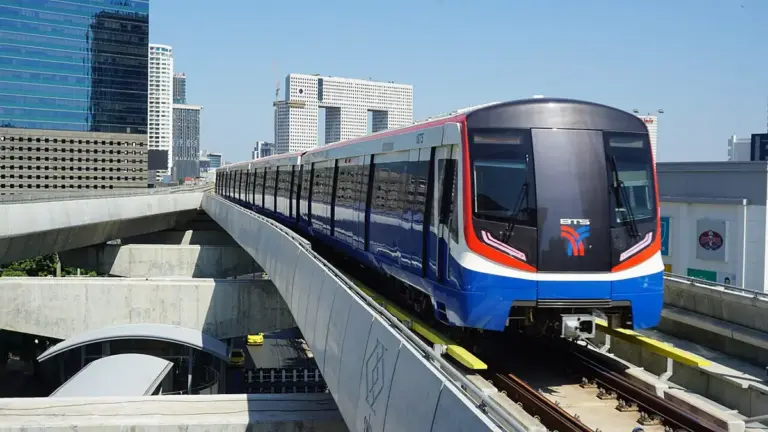
The BTS Skytrain Bangkok network is the fastest way to cross the city above its famous traffic. This guide explains the lines, BTS fares, the Rabbit card and the BTS One-Day Pass, how the BTS connects with the Bangkok MRT and the Airport Rail Link, and the simple habits that make every ride easy.
Quick answer: The BTS has two main lines, Sukhumvit and Silom, which meet at Siam, plus the short Gold Line. In general, fares are distance-based, from about 17 baht up to about 65 baht for the longest rides on the extensions, as of November 2026. Then pay with a single-journey ticket, a Rabbit card (about 200 baht including 100 baht of credit) or a One-Day Pass (about 150 baht). As of late 2026, contactless bank cards work on the MRT and Airport Rail Link but not yet on the BTS, so check the official BTS site before you ride.
What is the BTS Skytrain Bangkok?
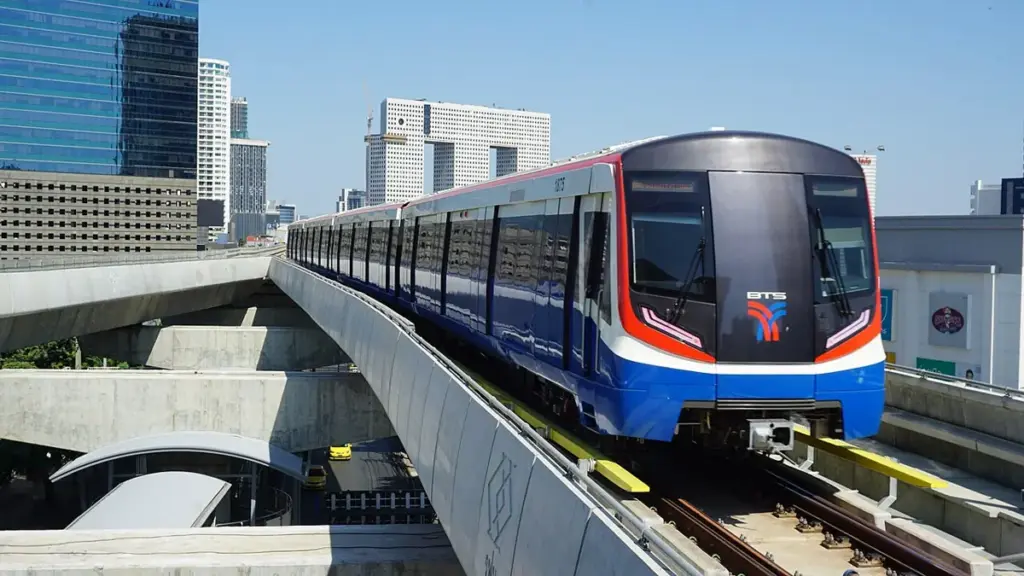
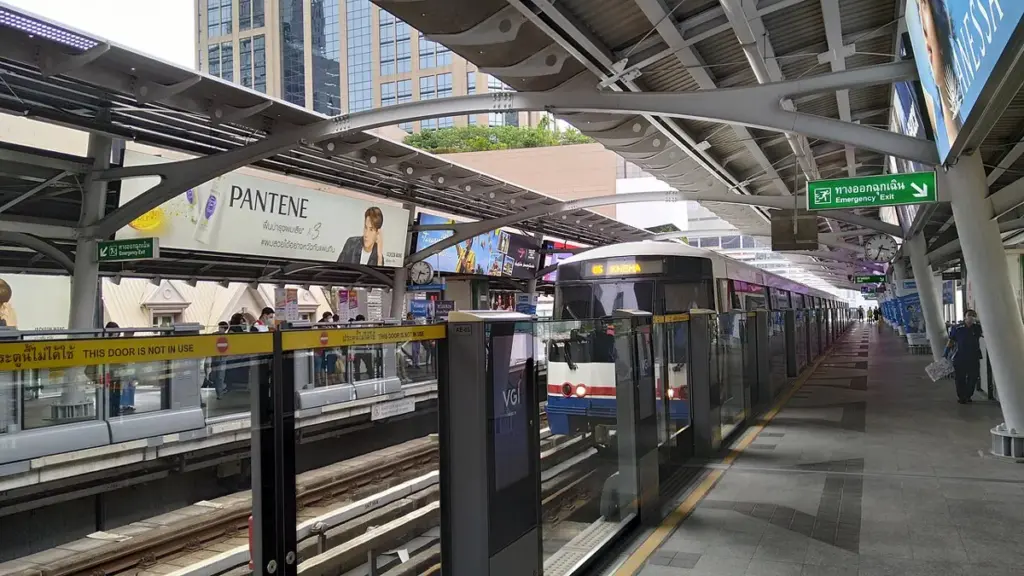
The BTS Skytrain Bangkok is an elevated railway that runs above some of the city's busiest roads. It opened in 1999 as Thailand's first electric mass-transit line, and it has grown steadily since then. Today, its trains also reach shopping districts, business areas, hotels and big markets.
For visitors, the Skytrain matters because Bangkok traffic is slow and hard to predict. In contrast, trains run on a fixed route above the streets, so journey times stay steady. As a result, the BTS often beats a taxi at rush hour, and it costs far less. In fact, our guide to things to do in Bangkok shows how many sights sit near a station.
BTS lines: Sukhumvit, Silom and Gold
In total, the BTS Skytrain Bangkok network has three lines:
- Sukhumvit Line (light green). It runs north to south-east, from the far north through Mo Chit, Victory Monument, Siam and along Sukhumvit Road. For example, stations such as Asok, Phrom Phong and Thong Lo serve hotels, malls and nightlife.
- Silom Line (dark green). It runs from National Stadium through Siam, Sala Daeng and Saphan Taksin, then across the river to the west. Also, Saphan Taksin links to Sathorn Pier for river boats.
- Gold Line. This short automated line connects Krung Thon Buri station with the riverside mall area. So, it is useful mostly for that one district.
The two main lines meet at Siam, where you change trains without leaving the paid area. In other words, a single trip can combine both lines.
BTS fares and tickets
On the BTS Skytrain Bangkok, BTS fares depend on distance. As of November 2026, travel guides list single trips from about 17 baht for one stop up to about 65 baht for the longest rides that use the extensions. However, the Gold Line uses its own low flat fare. Prices change from time to time, so check the fare chart at the station or on the official BTS website.
Here is a simple comparison of the main ways to pay:
| Option | Typical cost (Nov 2026) | Best for |
|---|---|---|
| Single-journey ticket | About 17 to 65 baht per ride | One or two rides |
| Rabbit card | About 200 baht (100 card fee plus 100 credit) | Several days of riding, so most visitors |
| One-Day Pass | About 150 baht | Many rides in one day, especially sightseeing |
First, single-journey tickets come from ticket machines and ticket offices. Many machines now take coins and notes, while some also accept QR payment. However, queues form at busy stations, so a stored-value card saves time.
The Rabbit card
The Rabbit card is a reusable smart card for the BTS. Most sources say it costs about 200 baht in total: about 100 baht for the card, which is not refunded, and about 100 baht of starting credit. Then you top it up with cash at ticket offices.
In short, a Rabbit card works on the Sukhumvit, Silom and Gold lines. However, it does not work on the MRT Blue and Purple lines or on the Airport Rail Link. So, if you plan to ride both systems often, you may still need a second way to pay. Also, bring your passport if you want to register a card in your name, which helps if you lose it.
The BTS One-Day Pass
The BTS One-Day Pass gives unlimited rides on the Sukhumvit and Silom lines for one day. As of November 2026, most sources list it at about 150 baht, so it is cheap. However, sources disagree on whether it runs for the calendar day or for 24 hours, so ask at the ticket office when you buy it.
Is it worth it? Well, only if you ride a lot. For example, four or five medium trips usually cost about the same as the pass. Therefore, it suits a busy sightseeing day, such as a morning at Chatuchak Market, lunch at Siam and an evening on Sukhumvit.
Bangkok MRT: Blue, Purple, Yellow and Pink lines
Next, the Bangkok MRT is a separate network, run by different operators. The Blue Line runs underground through the centre, including Chinatown and Sukhumvit, and loops around much of the city. Meanwhile, the Purple Line serves the north-west, and the newer Yellow and Pink monorails serve the east and north.
As of November 2026, guides list Blue Line fares of about 17 to 44 baht, Purple Line fares of about 14 to 42 baht, and Yellow and Pink line fares of about 15 to 45 baht. These figures may have been revised since, so treat them as a guide. Importantly, contactless Visa and Mastercard cards work at MRT gates. As a result, the MRT is very easy for visitors.
Also, key BTS and MRT interchanges include:
| BTS station | MRT station | Useful for |
|---|---|---|
| Asok | Sukhumvit | Sukhumvit hotels as well as malls |
| Sala Daeng | Si Lom | Silom, Lumphini Park |
| Mo Chit | Chatuchak Park | Chatuchak Market |
| Ha Yaek Lat Phrao | Phahon Yothin | North Bangkok, especially offices |
However, remember that each system charges its own fare. So, a trip that uses both the BTS and the MRT costs two fares. The MRT Blue Line also takes you close to Bangkok Chinatown, and the Bangkok night markets guide lists several markets near MRT stations.
Airport Rail Link
The Airport Rail Link runs from Suvarnabhumi Airport to Phaya Thai, where you change to the BTS Skytrain Bangkok Sukhumvit Line. As of November 2026, the full trip costs about 45 baht, and contactless bank cards work at the gates. However, it does not serve Don Mueang Airport. For Don Mueang, take the SRT Red Line or a taxi instead. Meanwhile, our guide to Grab in Thailand covers ride-hailing from both airports.
BTS hours and tips for riding
Sources give slightly different hours, so allow some margin. In general, trains run from about 6:00 to about midnight, and the first and last trains vary by station. At peak times, trains are frequent but very crowded.
So, follow these tips for an easy ride on the BTS Skytrain Bangkok:
- Avoid rush hours. Trains are packed from about 7:00 to 9:00 and 17:00 to 19:00 on weekdays.
- Stand aside at the doors. Let passengers exit first, then board.
- Keep your bag in front. In crowded carriages, that is safer as well as more polite.
- Do not eat or drink on board. After all, station rules ban it.
- Offer priority seats. Monks, older people, pregnant women and children come first.
- Keep your ticket. Otherwise, you cannot exit the gates.
Our guide to Thailand travel scams lists tricks to avoid around busy stations, and our Bangkok on a budget guide shows how the Skytrain keeps daily costs low.
Where the BTS Skytrain Bangkok takes you
Fortunately, many top sights sit near a BTS station. For example, Siam serves the big malls, Saphan Taksin connects to river boats for Wat Arun and the Grand Palace Bangkok, and Mo Chit is the stop for Chatuchak. Meanwhile, Sukhumvit stations serve hotels, restaurants and nightlife, as our Bangkok nightlife guide explains. For hotel areas near the BTS Skytrain Bangkok lines, see where to stay in Bangkok.
Continue south to Krabi
After a few days on the BTS Skytrain Bangkok, many travellers end their trip on the coast. For most people, the easiest way is a short flight to Krabi, about 1 hour 25 minutes in the air on most schedules. Also, our guide to Bangkok to Krabi compares flights, buses and trains. From Krabi airport, Ao Luek is about 54 to 71 minutes by road, depending on traffic and route. Then our Krabi airport to Ao Luek guide covers the transfer.
At a glance: 17 houses from 1,200 to 2,000 baht per night, air conditioning in every house, free breakfast, free Wi-Fi and a swimming pool, at 97/1 Moo 1, Ao Luek Nuea, Krabi.
For small families or friends, we recommend Ban Kamnan Resort in Ao Luek Nuea. House #4 and #9 each have one 5 ft bed and one 3.5 ft bed, one bathroom and 32 m², and sleep three, for 1,350 baht per night. Every house has air conditioning, guests share the swimming pool, and breakfast of toast, fried eggs and hot coffee is free. Prices match the resort's listing, so check your dates on Booking.com.
Frequently asked questions
As of November 2026, single trips cost from about 17 baht up to about 65 baht, depending on distance. A One-Day Pass costs about 150 baht. Still, check the station fare chart for current prices.
As of late 2026, contactless bank cards work on the MRT and the Airport Rail Link, but not yet on the BTS. So, use a single-journey ticket, a Rabbit card or a One-Day Pass on the Skytrain.
No. The Rabbit card works on the BTS Sukhumvit, Silom and Gold lines, but not on the MRT Blue and Purple lines or the Airport Rail Link.
Trains generally run until about midnight, and the last train varies by station. Sources differ slightly, so check the official BTS site if you need a late train.
Both are useful. For example, the BTS serves Sukhumvit, Silom and Siam, while the MRT serves Chinatown and loops around the city. Many trips use both, but each system charges its own fare.
Final thoughts
The BTS Skytrain Bangkok is cheap, fast and easy once you know the lines. So, pick a Rabbit card for several days or a One-Day Pass for a busy day, avoid the rush hours and combine it with the MRT for Chinatown. Then use the river boats for the old city. For more ways to move around the country, read train travel in Thailand and ferries in Thailand.