

 Krit Ariyathiti
Most trips to Thailand pass without trouble, but a few Thailand travel scams catch visitors every year. This guide explains how the tuk tuk scam and the gem scam Bangkok visitors hear about really work, why the jet ski scam still appears on busy beaches, how to beat the taxi meter scam, and who to call if something goes wrong. Knowing the script is usually enough to walk away.
Quick answer: The most common Thailand travel scams rely on friendly strangers and time pressure. A driver says a temple is closed and takes you to a gem shop, a cheap tuk-tuk tour stops at commission shops, a jet ski operator blames you for old damage, or a taxi refuses the meter. So, check opening times yourself, use ride-hailing apps or metered taxis, photograph rentals before you ride, and call the Tourist Police on 1155 if you feel pressured.
How common are Thailand travel scams?
Thailand travel scams are real, but they are not everywhere. In fact, most guides agree that they cluster in a few places: around the Grand Palace and Khao San Road in Bangkok, on busy beaches in Pattaya and Phuket, and at airports and piers. Outside those spots, most people you meet are simply helpful.
Also, nearly all Thailand travel scams follow the same pattern. First, someone starts a friendly conversation. Then, they offer a favour or a bargain. Finally, they add pressure, so you decide quickly. As a result, the best defence is simple: slow down and say no politely. Our guide to is Thailand safe covers wider safety, from roads to the sea.
How does the tuk tuk scam work?
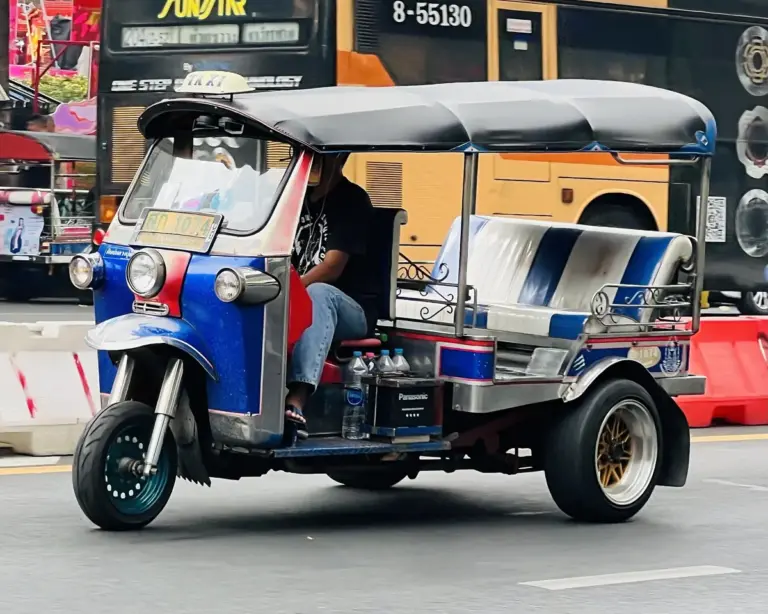
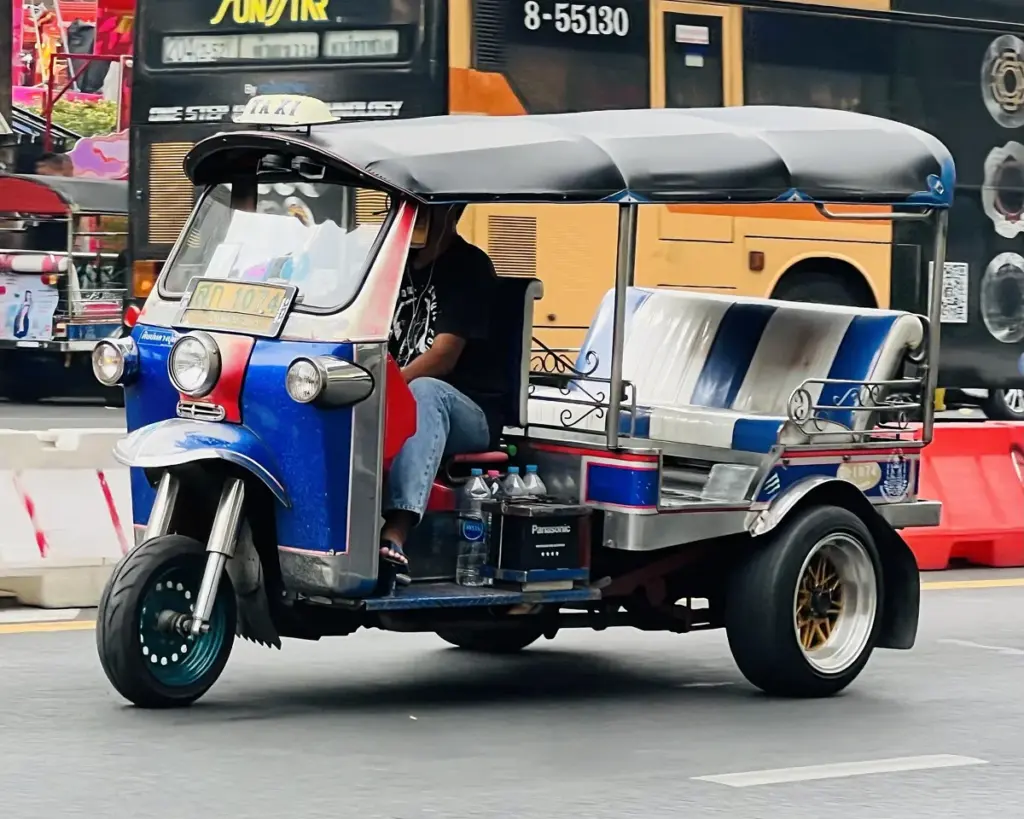
The classic tuk tuk scam starts with a very cheap city tour. Guides describe offers of about 100 to 200 baht for several hours. That sounds generous, because it is. The driver earns commission by taking you to tailor shops, jewellery stores or travel agencies along the way.
So, you spend the day in shops instead of temples. In some versions, the driver also raises the price at the end, or refuses to take you back until you visit one more store. Tuk-tuks are fun for short rides, but agree the fare first and keep the trip direct.
Is the Grand Palace really closed?
Usually, no. A common opening line is that the Grand Palace or a famous temple is closed today for a ceremony or a holiday. Then, the stranger suggests another sight and waves down a tuk-tuk for you. Instead, walk to the entrance and check yourself, or read the official opening hours before you go. Our guide to Thai temple etiquette explains the dress code, which is the real reason people are turned away.
What is the gem scam Bangkok guides warn about?
The gem scam Bangkok visitors meet is the expensive version of the same trick. A friendly local, sometimes dressed smartly, mentions a government gem sale that ends today. After that, a driver takes you to a shop where sapphires or rubies seem cheap, and you are told you can resell them at home for a profit.
In reality, the stones are worth far less than you pay, and refunds are close to impossible. So, the rule is easy: never buy gems as an investment on holiday. If you love jewellery, buy only what you would be happy to wear, at a price you would pay for decoration.
How do you avoid the jet ski scam?
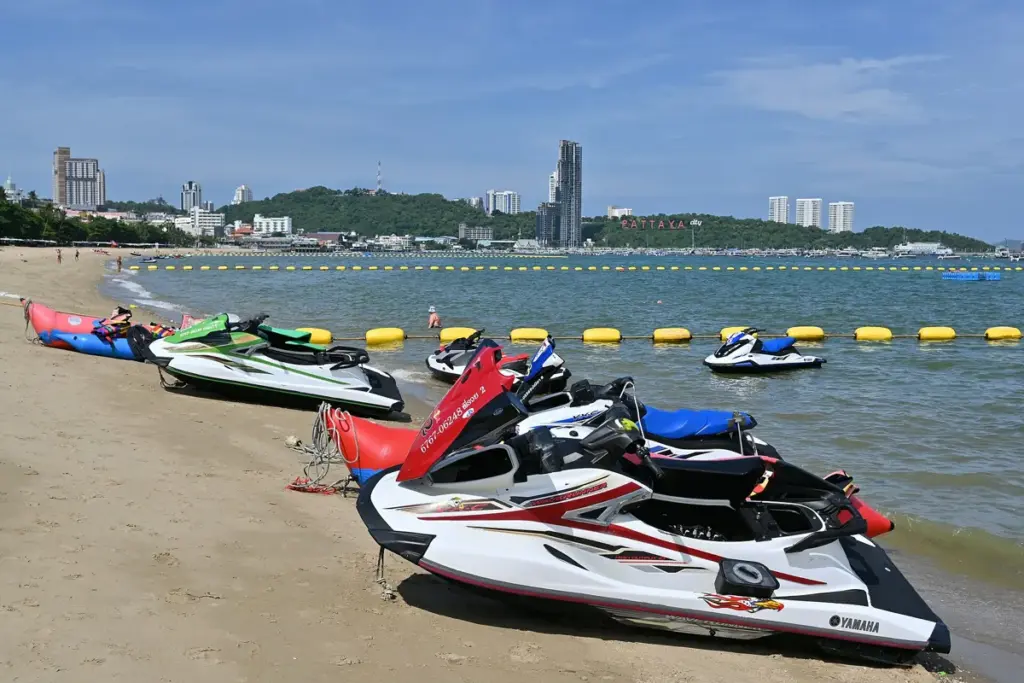
The jet ski scam is the beach scam travellers mention most, mainly in Pattaya and Phuket. When you return a rented jet ski, the operator points to scratches or cracks and demands a large repair fee. In some reports, staff hold the renter's passport until they pay.
To protect yourself, follow these steps:
- Film the jet ski before you ride. Walk around it slowly and record every side, with the operator watching.
- Never leave your passport. Offer a copy or a cash deposit instead.
- Agree the price and time in writing. A photo of the price board helps.
- Stay calm if a dispute starts. Ask for the Tourist Police and do not sign anything.
Also, think about whether you need a jet ski at all. A kayak or a longtail boat trip often gives better views with less risk. For quieter water, see our guide to Ao Luek day trips.
How do you beat the taxi meter scam?
The taxi meter scam is simple: the driver refuses to use the meter and quotes a high flat fare. This happens most at night, near nightlife areas and outside tourist sights. However, metered taxis are legal and common in Bangkok, so you can simply wait for another one.
Then, the easiest fix is a ride-hailing app. Apps show the price before you book, so there is nothing to argue about. Our guide to Grab in Thailand explains how it works. At airports, use the official taxi queue or the airport rail link where there is one, rather than an unofficial driver who approaches you inside.
What about fake police and online scams?
Among newer Thailand travel scams is the fake police stop, where someone claims you broke a rule and asks for your wallet or passport. One 2026 guide advises that you never hand these over without a clear reason, and that you call 1155 if you are unsure. In addition, watch for fake booking sites and QR codes taped over real ones. If you are scammed online, the Anti-Online Scam Center takes reports on 1441.
Who should you call if you are scammed?
Save a few numbers before you travel, in case one of these Thailand travel scams catches you. As of November 2026, guides list the following:
| Service | Number |
|---|---|
| Tourist Police (24 hours, several languages) | 1155 |
| Police | 191 |
| Ambulance and medical emergencies | 1669 |
| Anti-Online Scam Center | 1441 |
Also, report card fraud to your bank at once, and keep receipts and photos. Good Thailand travel insurance can cover some losses, although most policies exclude money you hand over willingly. For cash and cards, read our guide to money in Thailand.
Which places have the fewest Thailand travel scams?
Quiet towns and rural areas see far fewer Thailand travel scams, because there are fewer tourists to target. For example, the north of Krabi, around Ao Luek, has mangroves, hot springs and village markets rather than touts. As a result, many travellers find it a relaxing end to a busy city trip. Our Krabi airport to Ao Luek guide explains the transfer.
Where to stay away from the tourist traps in Krabi
Ao Luek is roughly 54 to 71 minutes by road from Krabi airport, depending on traffic. So, it is easy to reach, yet far from the beach strips where most touts work.
At a glance: 17 houses from 1,200 to 2,000 baht per night, air conditioning in every house, free breakfast, free Wi-Fi and a swimming pool, at 97/1 Moo 1, Ao Luek Nuea, Krabi.
We recommend Ban Kamnan Resort in Ao Luek Nuea. For a family or a small group, House #7 has two 5 ft beds, two bathrooms and 50 m², and sleeps four for 1,800 baht per night. Every house has air conditioning. In addition, guests share the swimming pool, and breakfast of toast, fried eggs and hot coffee is free. Prices match the resort's listing, so you know the rate before you arrive. Check your dates on Booking.com.
Frequently asked questions
Guides most often name the tuk-tuk tour that stops at commission shops, usually opened with a claim that a sight is closed. Jet ski damage claims are the most common beach scam.
Yes, for short rides. Agree the price before you get in, keep the trip direct, and decline any offer of a very cheap tour with shop stops.
Call 1155. Guides describe it as a 24-hour line with staff who speak several languages, and it can connect to the 191 police line.
No. Offer a photocopy or a cash deposit instead. Holding passports is a common way to force payment in rental disputes.
Not always, but they show the price in advance. That removes the main reason for an argument with a driver.
Final thoughts
Thailand travel scams are easy to avoid once you know the script. To sum up: check opening times yourself, agree prices first, film rentals, keep your passport, and use apps or metered taxis. Then relax, because most people you meet are kind. Check availability at Ban Kamnan Resort on Booking.com and end your trip somewhere quiet in Ao Luek.