

 Krit Ariyathiti
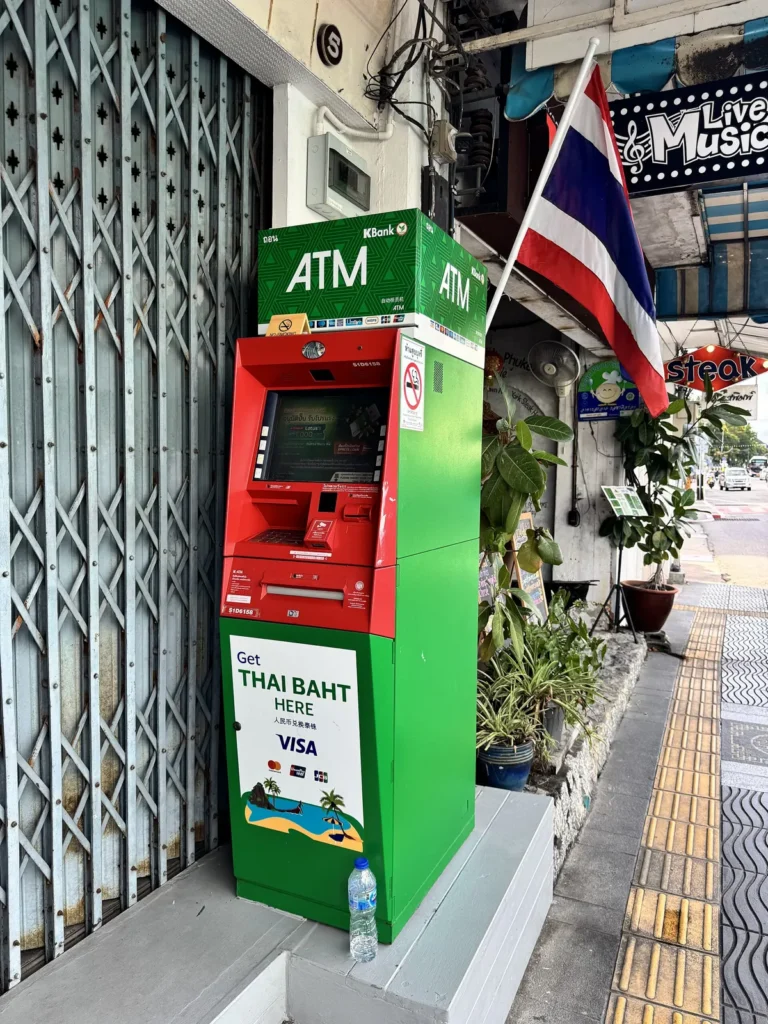
Money in Thailand is easy to handle once you know a few local habits: cash still matters, foreign cards pay a fee at every cash machine and tipping is relaxed. This guide covers Thailand ATM fees, tipping in Thailand, the best way to handle currency exchange in Thailand and where credit cards in Thailand work, with tips for Krabi, the islands and quiet towns like Ao Luek.
Quick answer: Thailand uses the Thai baht. As of November 2026, most recent guides say Thai bank cash machines charge foreign cards about 250 baht per withdrawal for Visa and up to 350 baht for some Mastercards, up from the long-standing 220 baht, although the fee shown on screen is the one that counts. Cards work in malls, hotels and bigger restaurants, but markets, longtail boats, small shops and many island businesses want cash. Tipping is welcome but not required. Exchange booths in town usually beat the airport rate.
The Thai baht at a glance
The baht comes in notes of 20, 50, 100, 500 and 1,000 baht, with coins of 1, 2, 5 and 10 baht. In addition, you may see small satang coins, though they are rarely used. Every note carries the portrait of the King, so treat money with respect: never step on a note that falls on the ground.
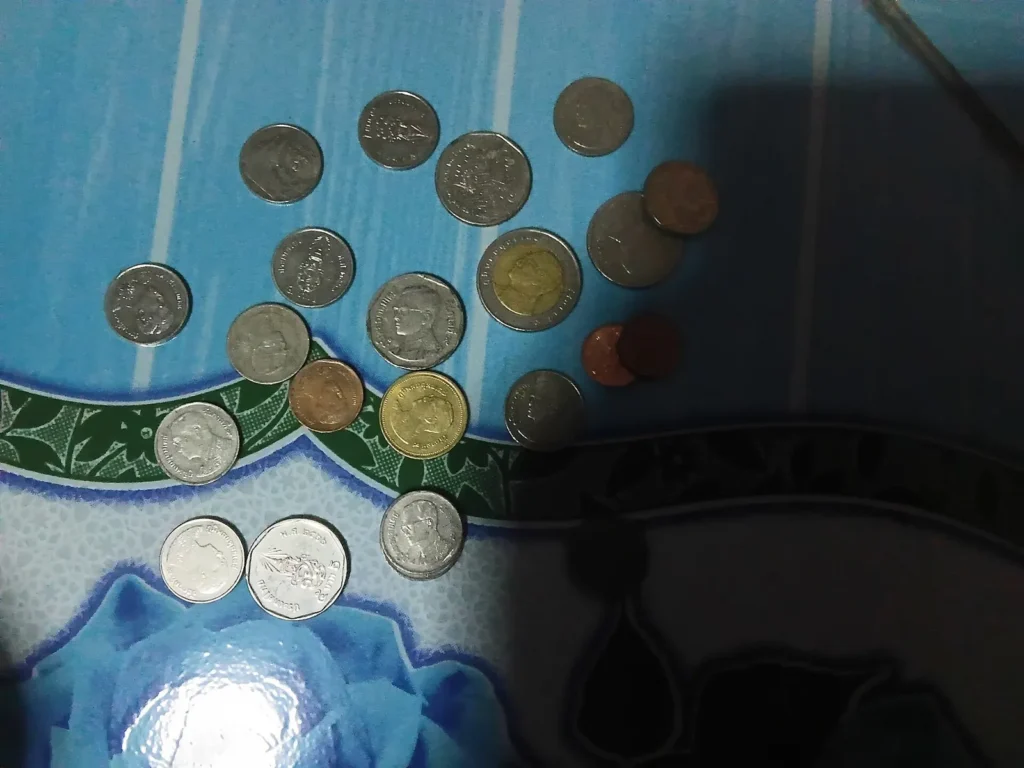
For daily money in Thailand, small notes are the most useful. For example, a street food meal, a songthaew ride or a bottle of water is easier to pay with a 100 baht note than with a 1,000. So, break large notes in supermarkets and convenience stores when you can.
Thailand ATM fees
Thailand ATM fees are the biggest surprise for many visitors. Thai banks add their own charge to every withdrawal with a foreign card. For years it was 220 baht, but several 2026 guides now list about 250 baht for Visa, UnionPay or JCB and about 350 baht for some Mastercards at major banks. However, older pages still quote 220 baht, so read the screen before you confirm.
| Tip | Why it helps |
|---|---|
| Withdraw larger amounts | The fee is per withdrawal, so fewer trips cost less |
| Check the machine limit | Many machines allow up to 20,000 baht at a time, some more |
| Decline currency conversion | Choose to be charged in baht, not your home currency |
| Check your home bank | Some cards refund foreign ATM fees |
| Use machines at bank branches | Safer, and easier to get help if a card is kept |
In short, Thailand ATM fees add up fast if you take out small amounts every day. Therefore, plan one larger withdrawal for several days and keep the cash in your room safe.
Credit cards in Thailand
Credit cards in Thailand are widely accepted in cities and tourist hubs. Malls, chain hotels, supermarkets, airlines and many restaurants take Visa and Mastercard. Also, some places add a small surcharge for card payments, so ask before you pay.
On the other hand, cash is still the main form of money in Thailand for local life. Night markets, street food stalls, small shops, taxis, songthaews and longtail boats usually want baht. One Krabi travel guide says that, unless you stay in a big hotel or eat at a smart restaurant, cash is often the only option. As a result, carry both a card and enough cash for the day.
Cash in Krabi and on the islands
Krabi Town and Ao Nang have plenty of cash machines. However, small islands and rural areas have fewer, and some have none. For example, our Koh Jum guide advises carrying cash and not relying on cards or cash machines, and quiet islands such as Koh Kradan have even fewer services. In Ao Luek, also carry cash for park fees, kayak trips and local restaurants. National park fees for foreigners are usually paid in cash as well.
Currency exchange in Thailand
Currency exchange in Thailand is easy in tourist areas. Exchange booths are common in airports, malls, beach towns and city centres. Most guides agree that the airport has some of the weakest rates, while booths in town and bank exchange counters do better. So, change only a small amount at the airport for your first taxi and meal.
- Bring clean notes. Booths often give lower rates for old, torn or marked notes.
- Compare rates. Booths on the same street can differ, so check two or three.
- Bring your passport. Banks and many booths ask to see it.
- Count the money. Count it at the counter before you walk away.
In addition, large notes such as 100 US dollars or 50 euros often get a better rate than small ones. Meanwhile, many travellers handle money in Thailand by mixing both methods: some cash from home for the first days, then a few large ATM withdrawals.
Tipping in Thailand
Tipping in Thailand is relaxed. It is not required, but it is welcome for good service. Also check the bill first, because hotels and smarter restaurants often add a 10% service charge, and then a tip is not expected.
| Situation | Common practice |
|---|---|
| Street food and markets | No tip needed; keep the change if you like |
| Sit-down restaurant, no service charge | Round up or leave about 20 to 100 baht |
| Restaurant with service charge | No extra tip expected |
| Massage | A small tip, such as 50 to 100 baht, is a kind gesture |
| Hotel porter or housekeeping | 20 to 50 baht is a kind gesture |
| Boat crew or tour guide | A tip for a good day is appreciated |
Cash is the normal way to tip, since card machines rarely have a tip option. Above all, a smile and a thank you, "khop khun", matter as much as the amount.
Daily costs and budgeting
Thailand can suit almost any budget, but prices vary a lot by place. For example, a street noodle soup can cost a fraction of a beach restaurant meal in Phuket. For a full breakdown, read our guide to Thailand travel costs, and see Krabi on a budget for local tips.
Keeping your money in Thailand safe
- Split your cash. Keep some in your bag and some in the room safe.
- Use a money belt on boats. Bags get wet and things slip out.
- Cover the keypad. Shield your PIN at every machine.
- Tell your bank you are travelling. This avoids a blocked card.
- Carry a backup card. Keep it separate from your main card.
For more general advice, read our guide is Thailand safe.
Where to stay on a sensible budget
Staying in a quiet area is one of the best ways to make your money in Thailand go further. Ao Luek has lower prices than the busy beach towns, and its sights, such as Than Bok Khorani National Park, are cheap to visit.
At a glance: 17 houses from 1,200 to 2,000 baht per night, air conditioning in every house, free breakfast, free Wi-Fi and a swimming pool, at 97/1 Moo 1, Ao Luek Nuea, Krabi.
We recommend Ban Kamnan Resort in Ao Luek Nuea. For couples on a budget, House #3, #10 and #11 each have one 5 ft bed, one bathroom and 24 m², at 1,200 baht per night. Every house has air conditioning, guests share the swimming pool, and breakfast of toast, fried eggs and hot coffee is free, which saves on the first meal of the day. Prices match the resort's listing, so check your dates on Booking.com.
Frequently asked questions
Recent guides say about 250 baht per withdrawal for Visa cards and up to 350 baht for some Mastercards at major Thai banks, while older pages say 220 baht. The fee on the screen is the one you pay.
Use both. Cards work in malls, hotels and bigger restaurants, while markets, taxis, boats and small shops usually want cash.
Tipping is not required but is welcome. Round up at restaurants without a service charge, and leave a little for massages, guides and boat crews.
Exchange booths and bank counters in town usually offer better rates than the airport. Bring clean notes and your passport, and compare two or three booths.
Yes. Small islands have few or no cash machines, so bring enough baht from the mainland for food, boats and park fees.
Final thoughts
Money in Thailand is simple with a little planning. To sum up: take out larger amounts to limit ATM fees, carry cash for markets and boats, use cards where they are accepted and tip for good service. Then spend less on your room by choosing a quiet base. Check availability at Ban Kamnan Resort on Booking.com and plan your Krabi trip.