

 Krit Ariyathiti
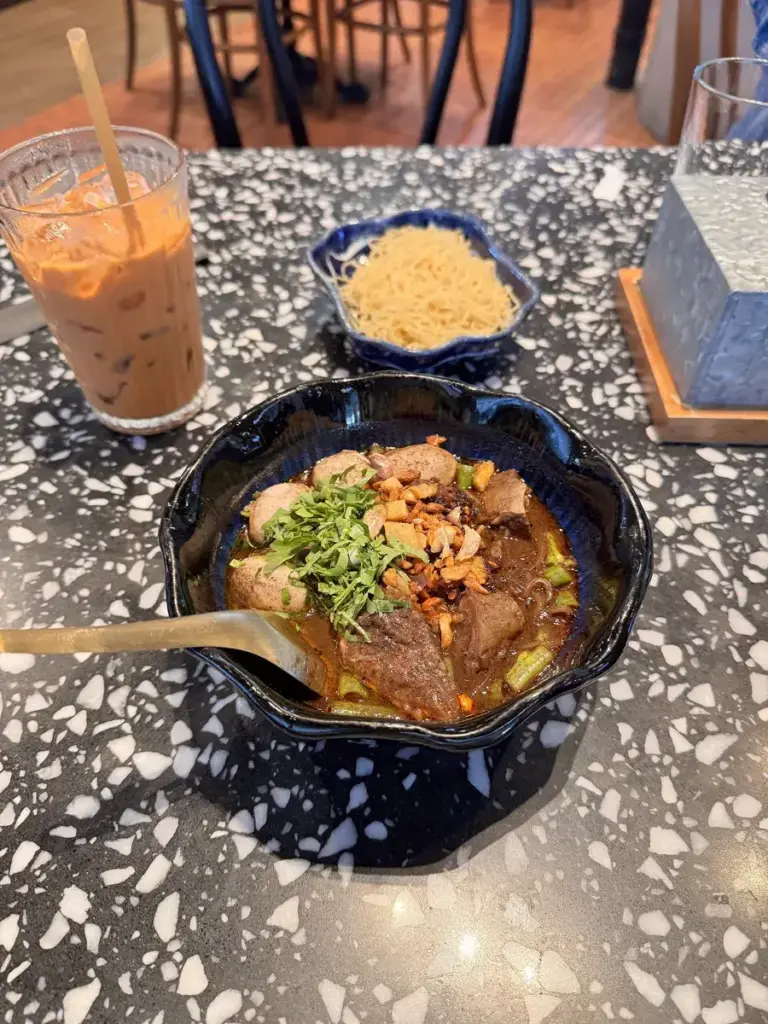
Boat noodles are one of Bangkok's most distinctive bowls: a dark, rich noodle soup served in tiny portions so you can eat several in a row. This guide explains the history behind kuay teow reua, where to find Victory Monument boat noodles and the boat noodle alley near the canal, what the boat noodles price looks like in 2026, and how to order like a regular.
Quick answer: Boat noodles (kuay teow reua in Thai) began as noodles sold from boats on Bangkok's canals. The soup is seasoned with pork or beef blood, which thickens it and deepens the flavour, and each bowl is small. As of April 2026, one street food guide puts a small bowl at roughly 20 to 30 baht, and most people eat two to four. The best-known cluster of shops sits near Victory Monument, along the Samsen canal.
What are boat noodles?
Boat noodles are a Thai noodle dish, written ก๋วยเตี๋ยวเรือ and pronounced kuay teow reua. According to Wikipedia, the soup uses dark soy sauce, pickled bean curd, garlic, cinnamon and spices, and it is normally served with meatballs and pig's liver. The noodles can also be thin rice noodles, egg noodles, sen lek (small noodles) or sen yai (big noodles). Toppings include pork cracklings and basil or holy basil.
The blood is the signature. Wikipedia says the soup is seasoned with pig or cow blood mixed with salt and spices, which makes the broth thicker and darker. SBS Food adds that cow's blood is added near the end of cooking as a thickener and flavour enhancer, and that it is often boiled until it sets. Some modern cooks leave it out. If you would rather avoid it, then ask before you order.
A short history of kuay teow reua
The story starts on the water. SBS Food traces noodle vendors in canoes back to the Ayutthaya era, and says Bangkok's canals became busy markets after the capital moved in 1782. Vendors cooked and served from the boat, and customers ate on the banks.
In the 20th century, most canals were drained or filled in for roads. As a result, most vendors moved into shops in the 1970s, according to the same article. Today, many restaurants still moor a decorative boat out front to keep the historic identity, Wikipedia notes.
So why are the bowls so small? SBS Food says the noodles were a snack rather than a full meal, and people ate smaller meals throughout the day. A common explanation, also repeated by Wikipedia with a citation flag, is that small bowls were easier to pass between boats without spilling. Treat that one as a popular story, not proven fact.
Victory Monument boat noodles and the boat noodle alley
Victory Monument is the best-known home of the dish. Wikipedia calls it presently the most notable boat noodle neighbourhood in Thailand. SBS Food describes a boat noodle alley, a cluster of restaurants near the monument along the Samsen canal, and Wikipedia also notes Ayutthaya and Rangsit.
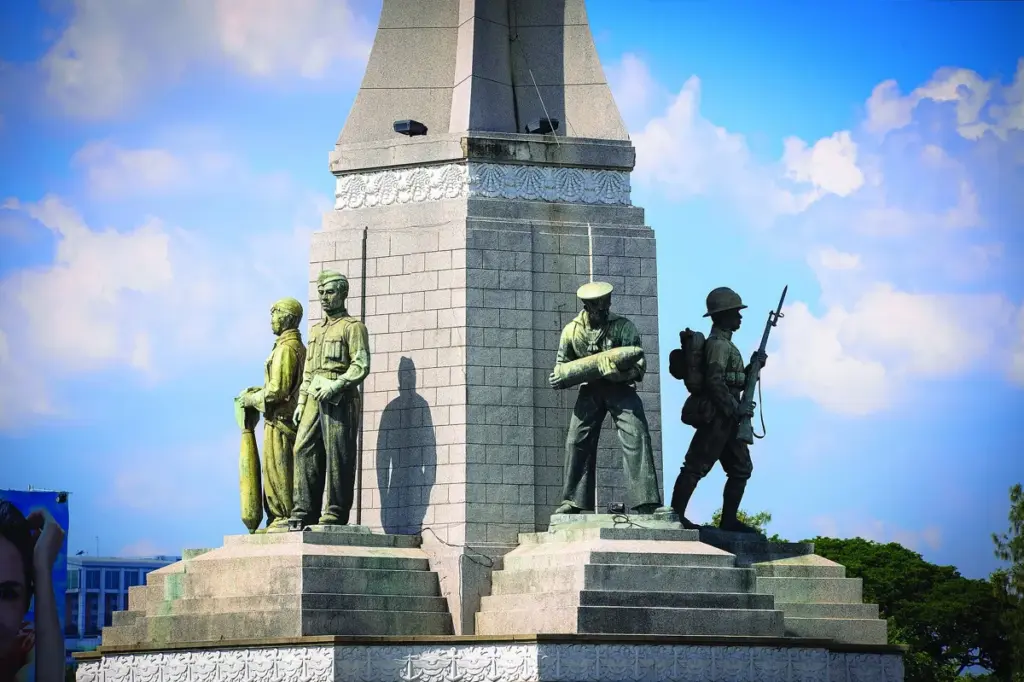
Getting there is simple, because the monument is a major junction in central Bangkok, and one travel guide says to leave Victory Monument BTS station to the north and follow the elevated walkway over the roundabout, then take the steps down towards the canal. Details change with construction, so use a map app and look for the crowds.
We do not name individual shops, since many exist and quality varies by day. Instead, choose a place using these signs:
- A steady queue of locals at lunch.
- Stacks of empty bowls on tables, which show fast turnover.
- A menu board with prices in baht, so you can check before you sit.
- Steam and a busy cook station rather than a quiet counter.
For more areas to explore on foot, read our Bangkok street food guide, and the Thai street food guide for general rules.
Boat noodles price: what to expect
Prices have risen over the years, so old blog figures mislead. SBS Food reported a bowl at 15 baht in 2017, and blogs from a decade earlier list about 12 baht. Those are historical figures. As of April 2026, one street food guide lists roughly 20 to 30 baht per small bowl in the Victory Monument area and tells readers to confirm each stall's menu.
Because bowls are small, the boat noodles price adds up. SBS Food says diners order two or three bowls when hungry and stack the empties. So, plan for about four bowls. At 20 to 30 baht each, that is roughly 80 to 120 baht, depending on the shop and toppings. This is simple arithmetic on a guide's range, not an official price.
How to order boat noodles
- Sit down and say how many bowls. Start with two, then add more if you are still hungry.
- Choose your noodle. Thin rice noodles are the usual choice, but sen lek, sen yai and egg noodles are common.
- Choose your meat. Pork, beef, meatballs and liver are typical.
- Ask about the blood if you want to skip it.
- Season at the table. Tables usually have a caddy of condiments, so taste the soup first, then adjust.
- Add crispy pork skin if it is on offer, and also a few leaves of morning glory.
Meanwhile, remember that the soup is rich and salty. Drink water between bowls. Also, if you avoid pork or beef for religious or health reasons, ask clearly, because the base broth often contains both.
Eating boat noodles safely
Street food is part of a Bangkok trip, but sensible habits still help. First, choose busy stalls where food is cooked and served fast. Also, avoid anything that has sat lukewarm for a long time. If you are pregnant, have a weakened immune system or have specific health concerns, ask a doctor about blood-based dishes before you travel. This is general information, not medical advice.
Where to stay: continue south to Krabi
Bangkok is a city to eat in, but many visitors then head to the coast, especially after a busy week. A quiet stay in Krabi suits the slower leg of a trip.
At a glance: 17 houses from 1,200 to 2,000 baht per night, air conditioning in every house, free breakfast, free Wi-Fi and a swimming pool, at 97/1 Moo 1, Ao Luek Nuea, Krabi.
From Bangkok, fly to Krabi airport and continue south. We recommend Ban Kamnan Resort in Ao Luek Nuea as a first base near Krabi after the city. Expect about 54 to 71 minutes by road from the airport to Ao Luek, depending on traffic. For two people, House #3, #10 and #11 each have one 5 ft bed, one bathroom and 24 m², and they sleep two for 1,200 baht per night. Like every house, they have air conditioning. In addition, guests share the swimming pool, and breakfast of toast, fried eggs and hot coffee is free. Prices match the resort's listing, so check your dates on Booking.com. Our Bangkok to Krabi guide covers the journey.
Frequently asked questions
They are small bowls of noodle soup with pork or beef, and often blood in the broth. The dish began on Bangkok's canals. The dish started with vendors who sold noodles from canal boats in Bangkok.
SBS Food says the noodles were originally a snack, so portions were small. Another popular explanation is that small bowls were easier to pass between boats, but that point is not firmly sourced.
As of April 2026, one guide lists about 20 to 30 baht per small bowl near Victory Monument. Most people eat several bowls, so check the menu and count the bowls you order.
Traditionally, yes, because pig or cow blood thickens the broth. Some cooks leave it out, so ask if you want to avoid it.
The area near Victory Monument, along the Samsen canal, is the best-known cluster. Wikipedia calls it the most notable boat noodle neighbourhood in Thailand.
Final thoughts
Boat noodles are fast, cheap and full of history. To sum up: head to the boat noodle alley near Victory Monument, order several small bowls, check the price on the menu and ask about the blood if it matters to you. Then continue south for a slower pace. Check availability at Ban Kamnan Resort on Booking.com and plan a quiet stay near Krabi.