

 Krit Ariyathiti
Bangkok street food is one of the best reasons to visit the city, with noodles, grills, curries and sweets cooked on almost every corner. This guide covers Yaowarat street food in Chinatown, the dishes to look for in Bangkok Chinatown food, where to find the best street food in Bangkok in other areas, and the honest answer to is street food safe in Bangkok, so you can eat well and stay healthy before you travel south.
Quick answer: Start with Yaowarat Road in Chinatown in the evening, where guides say most stalls open from about 17:00 or 18:00. Then try dishes such as pad thai, boat noodles, grilled pork skewers, oyster omelette and mango sticky rice. Most stalls take cash only, and one guide suggests about 300 to 500 baht for a filling food walk. Above all, choose busy stalls where food is cooked fresh in front of you.
Why Bangkok street food is special
Bangkok street food is part of daily life in the city. Office workers eat breakfast at a cart, students share noodles at lunch, and families gather at night markets after dark. As a result, the food is cheap, fast and made for local tastes. In fact, many of the best dishes in the city never appear in a restaurant.
However, Bangkok street food can feel overwhelming at first. So, pick one area per evening and walk slowly. Also, eat small portions, because the best plan is to try many things.
Yaowarat street food in Chinatown
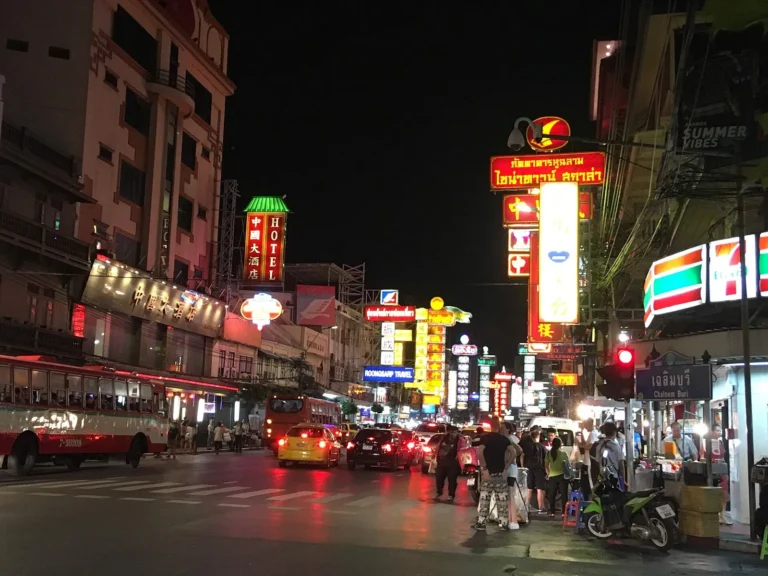
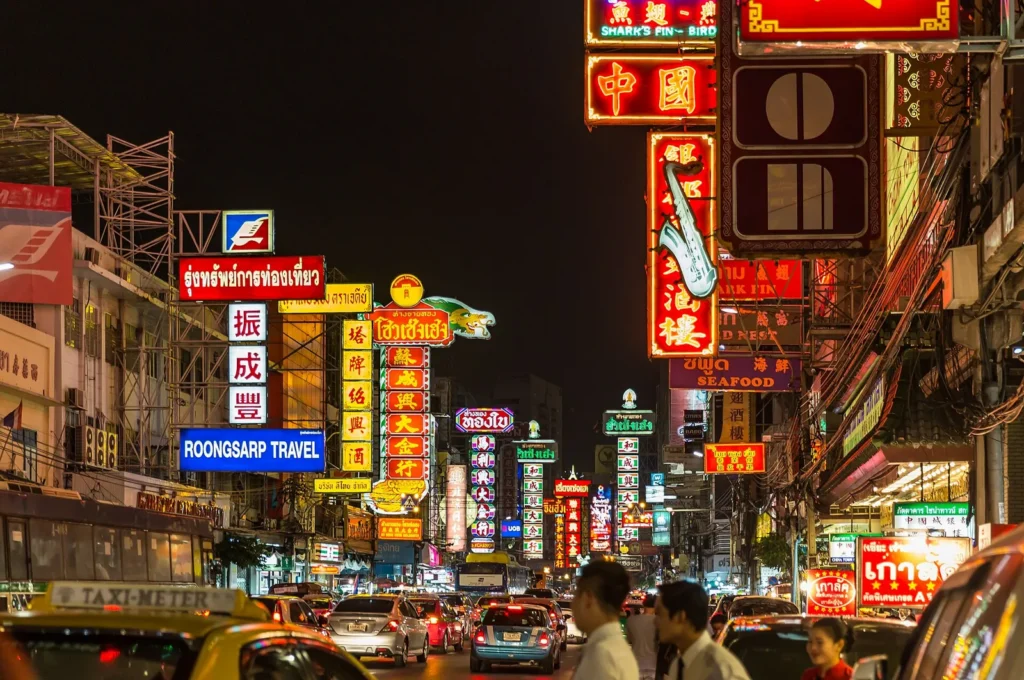
Yaowarat street food is the most famous food scene in Bangkok. Yaowarat Road is the main street of Chinatown, and after sunset it fills with neon signs, smoke from grills and long rows of plastic stools. According to one food guide, the street stall window is roughly 18:00 to 02:00, although each vendor keeps its own hours.
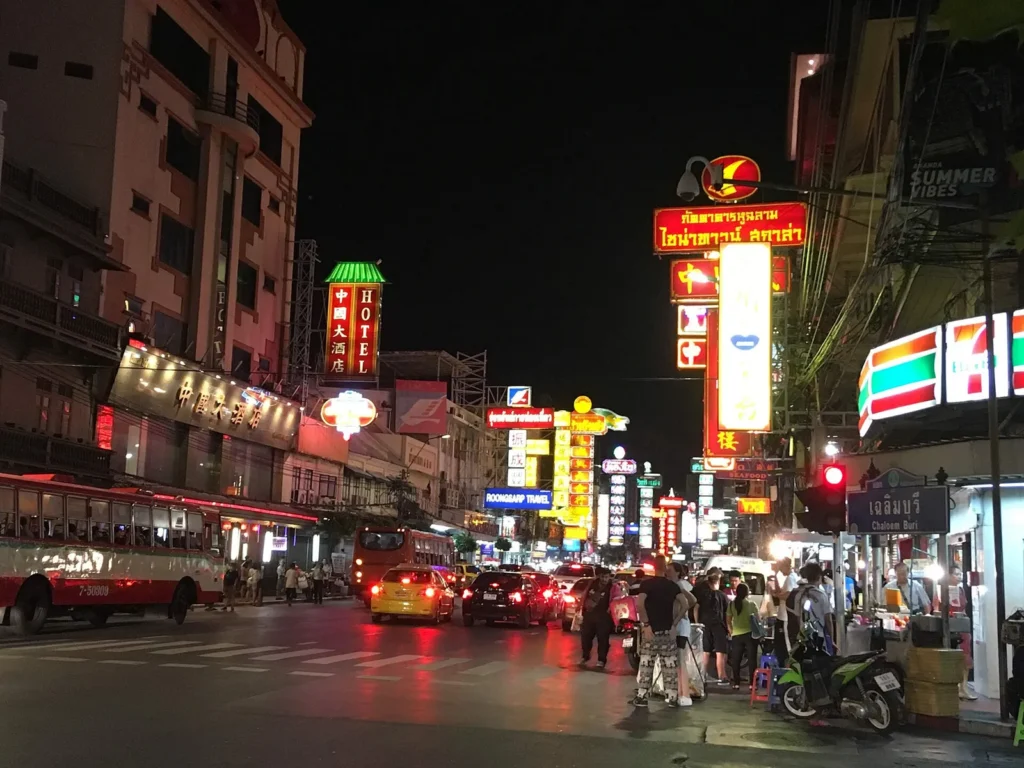
For example, guides point to seafood, grilled dishes, oyster omelette and Chinese Thai dishes as the strengths here. In addition, look for roasted chestnuts, dim sum style buns and cold desserts. Then walk into the side lanes, because some of the best stalls are away from the main road.
Getting to Chinatown
The MRT Blue Line now stops at Wat Mangkon station, and one guide notes it puts you right in the middle of Chinatown. Alternatively, take a river boat to a nearby pier and walk in. However, avoid driving, since the evening traffic is very slow.
Bangkok Chinatown food: what to order
Bangkok Chinatown food mixes Thai and Chinese cooking. So, you will find dishes that are hard to get elsewhere in the country.
| Dish | What it is | Tip |
|---|---|---|
| Oyster omelette | Crispy egg and batter with oysters or mussels | Best eaten hot from the pan |
| Rolled noodle soup | Peppery broth with curled rice noodles | A local favourite late at night |
| Grilled seafood | Prawns, squid and fish over charcoal | Check the price per weight first |
| Fish maw soup | A thick soup with mushrooms and herbs | Rich and warming |
| Bird's nest and sweet soups | Traditional Chinese desserts | Ask the price before you order |
| Fried dough sticks | Light, crispy dough with sweet dip | Good with soy milk |
Then, between dishes, fresh fruit carts sell mango, guava and pineapple for a cool break between dishes.
The best street food in Bangkok beyond Chinatown
The best street food in Bangkok is spread across the city, not just in Chinatown. For instance, each district has its own markets and food lanes.
- Old town and Banglamphu. Good for noodles and classic Thai dishes near Khao San Road.
- Victory Monument. Known for boat noodles in small bowls.
- Sukhumvit side streets. Evening carts near the BTS stations.
- Silom and Bang Rak. Lunch stalls for office workers, plus old shops near the river.
- Weekend markets. The Chatuchak Market has food stalls between the shopping sections.
Above all, follow the crowds. A long queue of locals is the best review you can get.
Classic Thai dishes to try
You do not need to know every dish to enjoy Bangkok street food. Still, a short list helps you order.
- Pad thai. Stir fried rice noodles with egg, tofu and peanuts, also served with lime.
- Pad kra pao. Stir fried meat with holy basil, often served with a fried egg.
- Som tam. Green papaya salad, which can be very spicy.
- Moo ping. Grilled pork skewers, a classic breakfast with sticky rice.
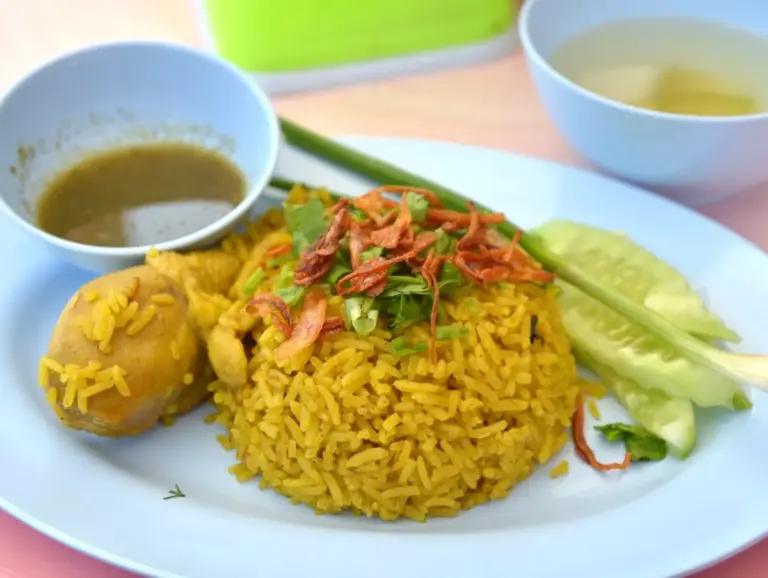
- Khao man gai. Poached chicken on rice cooked in chicken stock.
- Boat noodles. Small bowls of rich noodle soup.
- Mango sticky rice. Sweet coconut rice with ripe mango.
If you cannot eat chilli, say "mai phet", which means "not spicy". However, some dishes are always hot, so ask first.
Is street food safe in Bangkok?
So, is street food safe in Bangkok? For most travellers, yes, as long as you choose stalls with care. After all, millions of people eat Bangkok street food every day. Even so, a new diet, heat and ice can upset some stomachs.
- Pick busy stalls. High turnover means fresh food, so queues are a good sign.
- Watch it cook. Food cooked hot in front of you is the safest choice.
- Be careful with raw dishes. Raw seafood and some salads carry more risk.
- Drink bottled water. Ice from factories is common, but if in doubt, skip it.
- Wash your hands. Carry hand gel, since not every stall has a sink.
- Ease in. Start mild and build up to spicy food.
In short, use common sense and you will eat very well.
Street food tips and etiquette
- Carry cash. Most stalls are cash only, so small notes help.
- Share tables. It is normal to sit with strangers, especially at busy stalls.
- Use the condiments. Sugar, chilli, fish sauce and vinegar sit on most tables.
- Return your plate. Some markets have a tray area.
- Check closing days. Some stalls close one day a week, so have a backup.
When to eat street food in Bangkok
Bangkok street food runs from dawn to late at night. For example, breakfast carts start early, often before 07:00. Then lunch stalls serve office workers from late morning. However, the biggest scene is in the evening, when night markets and Chinatown open. So, keep your first night free for a long food walk.
Taste the south next: Krabi and Ao Luek
In contrast, southern Thai food is spicier and full of seafood, turmeric and fresh herbs. After Bangkok, you can taste it at the source. For example, read our guides to Krabi street food and the Krabi night market. For the trip itself, see Bangkok to Krabi.
At a glance: 17 houses from 1,200 to 2,000 baht per night, air conditioning in every house, free breakfast, free Wi-Fi and a swimming pool, at 97/1 Moo 1, Ao Luek Nuea, Krabi.
For a calm base after the city, we recommend Ban Kamnan Resort in Ao Luek Nuea, about 54 to 71 minutes by road from Krabi airport, depending on traffic. For couples on a budget, House #5 and #6 each have one 5 ft bed, one bathroom and 28 m², for 1,200 baht per night. Like every house, they have air conditioning. Also, guests share the swimming pool, and breakfast of toast, fried eggs and hot coffee is free. Prices match the resort's listing, so check your dates on Booking.com.
Frequently asked questions
Yaowarat Road in Chinatown is the most famous area. However, the old town, Victory Monument, Sukhumvit side streets and weekend markets also have excellent stalls.
Most stalls open in the evening. One guide puts the main window at about 18:00 to 02:00, but each vendor keeps its own hours, and some open earlier.
For most travellers, yes. Choose busy stalls, eat food cooked hot in front of you and drink bottled water.
Prices for Bangkok street food vary by dish and area. One guide suggests about 300 to 500 baht for a filling food walk, while seafood costs more.
Most do not. Carry cash in small notes, although some stalls now accept Thai QR payments.
Final thoughts
Bangkok street food is a highlight of any trip to Thailand. To sum up: spend one evening in Chinatown, try a new dish every day and choose busy stalls. Then head south for spicier food and quiet nature. Check availability at Ban Kamnan Resort on Booking.com and plan the next leg of your trip.