

 Krit Ariyathiti
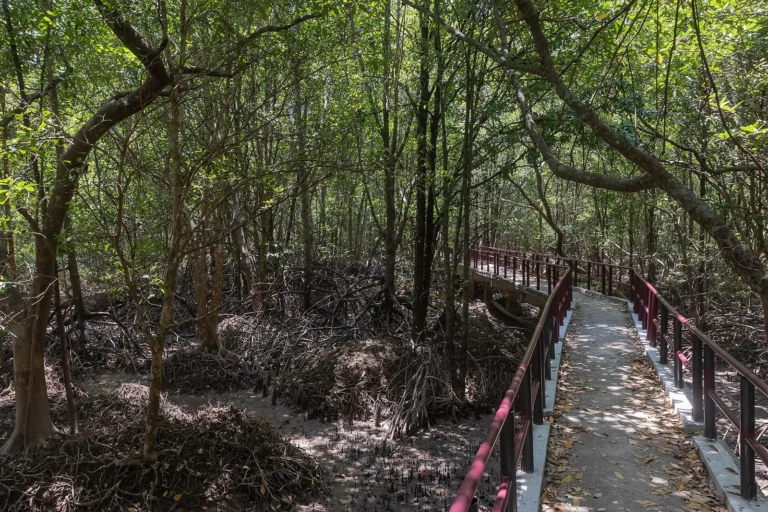
Eco tourism Krabi is about enjoying the province's mangroves, rainforest and islands while keeping them healthy for the people who live there. This guide shows how to practise responsible travel in Krabi, where to join a Krabi mangrove tour, how community based tourism Krabi projects share income with villages and why the boardwalk at Tha Pom Khlong Song Nam is a perfect first stop.
Quick answer: The best eco tourism Krabi experiences are community-run mangrove trips at Tung Yee Peng village on Koh Lanta, the peat swamp boardwalk at Tha Pom Khlong Song Nam, guided kayaking in sheltered mangroves such as Ao Thalane and Bor Thor, and national park visits where your entrance fee supports protection. Choose small groups, avoid feeding wildlife and stay with local, family-run hosts.
What is eco tourism in Krabi?
Eco tourism in Krabi means low-impact travel that protects nature and benefits local communities. In practice, that is a small kayak group instead of a loud speedboat, a village homestay or family resort instead of a chain, and a guide who explains the ecosystem. In addition, it means paying park fees and following the rules, because those fees help fund protection.
Krabi mangrove tour: where to go
Mangroves are the nurseries of the Andaman Sea. In fact, they shelter young fish, crabs and birds, and they protect the coast from storms. Therefore, a Krabi mangrove tour is one of the most rewarding ways to see the province.
Ao Luek and Bor Thor
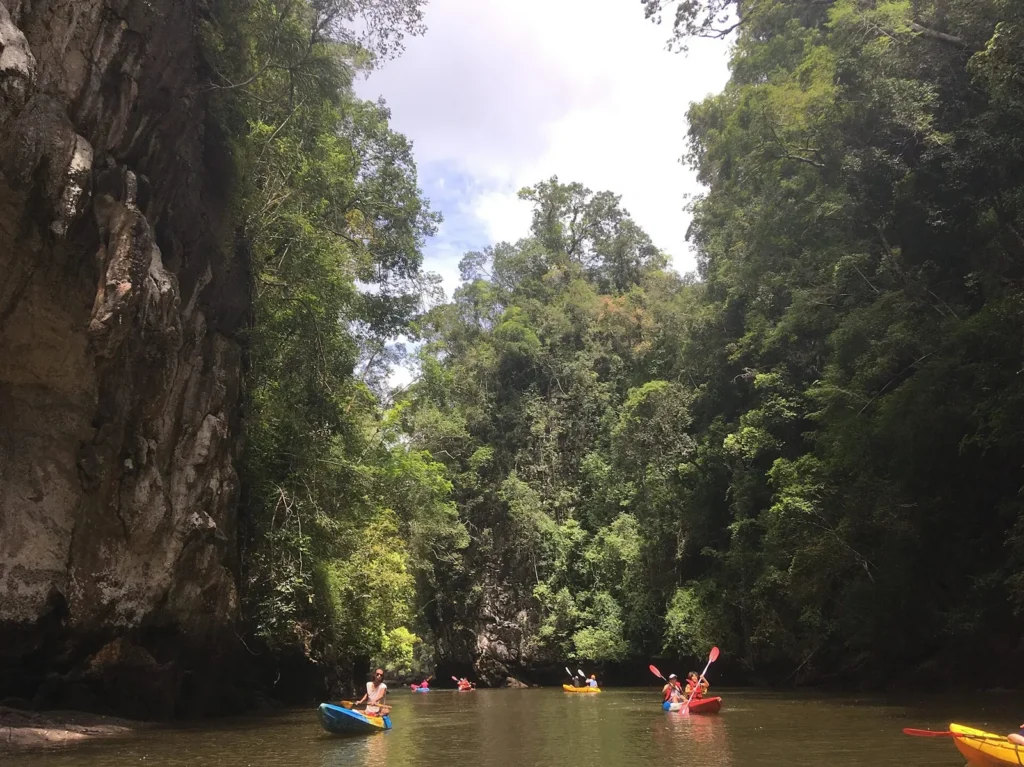
The mangrove channels of Ao Luek lead to limestone caves and ancient paintings. Before you go, read our Tham Lod cave kayaking guide and Phi Hua To cave guide.
Ao Thalane
Ao Thalane is a sheltered bay of mangroves and cliffs where guided kayak trips paddle between the rocks. Also, the calm water makes it suitable for beginners.
Tha Pom Khlong Song Nam
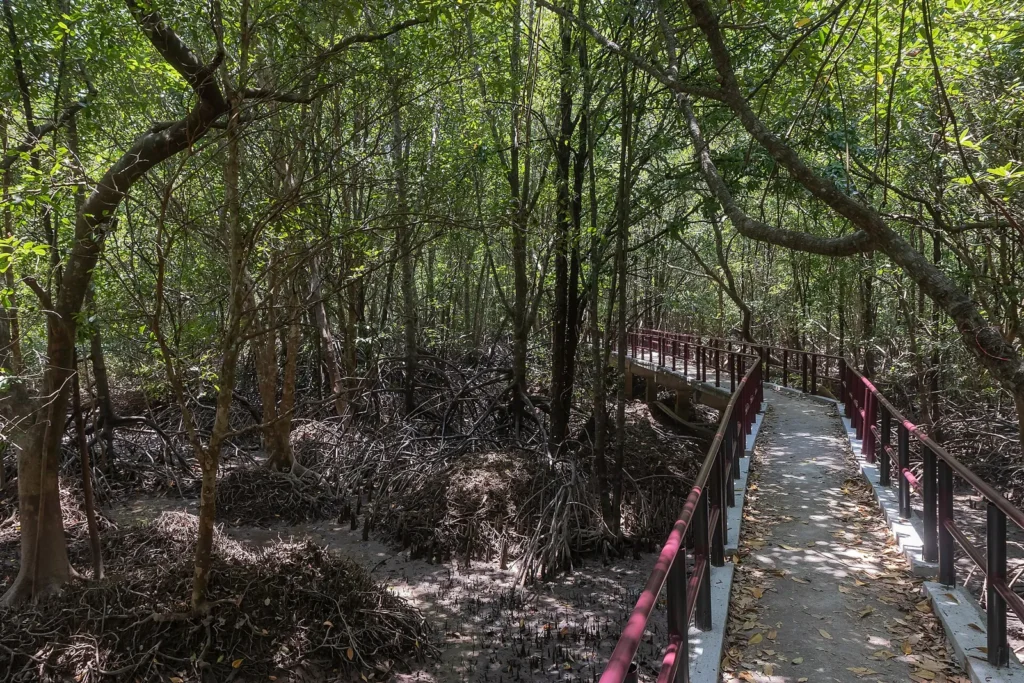
Tha Pom Khlong Song Nam is an inland peat swamp and mangrove trail in Khao Khram subdistrict, roughly 34 km from Krabi Town according to one guide. In particular, reviewers describe a circular boardwalk of about 700 m that takes 30 to 40 minutes. Most sources put the entry fee at about 100 baht for adults and 50 baht for children, and kayaking costs extra when the water level allows. Opening hours differ by source, so check locally.
Community based tourism Krabi: Tung Yee Peng
Tung Yee Peng is a small Muslim village on Koh Lanta surrounded by mangroves. Its community based tourism club has helped protect and replant mangroves for almost 20 years, according to one source. In general, visitors explore by longtail or traditional rowing boat and may spot birds, monitor lizards and monkeys. One operator lists a village entrance fee of about 40 baht per adult and 20 baht per child.
In addition, income is shared beyond boat trips. For example, a local women's group produces shrimp paste, and the village is known for a signature herbal tea. Also, for more on the island, see our Koh Lanta guide.
National parks: pay the fee, follow the rules
In general, Krabi's national parks protect forests, reefs and caves. Entrance fees help fund rangers and maintenance, so think of them as part of responsible travel in Krabi. Good examples include Than Bok Khorani National Park, the Emerald Pool Krabi and the island parks you visit on a Krabi 4 islands tour.
Responsible travel in Krabi: 8 simple rules
- Do not feed monkeys or fish. Feeding changes their behaviour and health.
- Skip sunscreen before freshwater swims. It harms springs and pools; wear a rash vest instead.
- Choose small groups. Fewer people means less noise and erosion.
- Never stand on coral. Snorkel with a life jacket if you are not confident.
- Refill, do not buy. Carry a reusable bottle.
- Take your rubbish home. Including cigarette ends and plastic wrappers.
- Hire local guides. They know the area and keep income in the community.
- Respect local customs. Dress modestly in villages and temples.
Eco tourism Krabi on a budget
In fact, low impact is often low cost. A shared kayak, a village boat trip and a park entrance cost far less than a private speedboat. Moreover, staying in a quiet district saves money and supports small businesses. Also, see our Krabi on a budget guide and our list of Krabi off the beaten path places.
Where to stay for eco tourism Krabi
A small, family-run resort fits the spirit of eco tourism. Ao Luek, in the north of Krabi, sits next to mangroves, springs and caves, so many trips start a short drive away.
At a glance: 17 houses from 1,200 to 2,000 baht per night, air conditioning in every house, free breakfast, free Wi-Fi and a swimming pool, at 97/1 Moo 1, Ao Luek Nuea, Krabi.
We recommend Ban Kamnan Resort, a family-run resort in Ao Luek Nuea. For families of four, House #A to #D each have two 5 ft beds, one bathroom and 40 m², and sleep four for 1,700 baht per night. Like every house, they have air conditioning, a TV, a fridge and a kettle. Guests share the resort's swimming pool, and breakfast of toast, fried eggs and hot coffee is free. Check prices and book on Booking.com.
For more on the area, read our Ao Luek travel guide.
Frequently asked questions
A community-run mangrove trip, such as the boat tours at Tung Yee Peng on Koh Lanta, is one of the best eco tourism Krabi activities, because it protects the forest and shares income with the village.
Popular areas include Bor Thor and Tham Lod in Ao Luek, Ao Thalane, the Tha Pom Khlong Song Nam boardwalk and Tung Yee Peng on Koh Lanta.
Most sources list about 100 baht for adults and 50 baht for children. Kayaking costs extra when the water level allows.
Do not feed wildlife, avoid sunscreen before freshwater swims, choose small groups, carry a reusable bottle, hire local guides and stay with family-run hosts.
Final thoughts
Eco tourism Krabi lets you enjoy mangroves, forests and islands while helping them last. To sum up: join community-run trips, pay park fees, travel in small groups and stay locally. Check availability at Ban Kamnan Resort on Booking.com and plan a greener Krabi trip.