

 Krit Ariyathiti
Khao Sam Roi Yot National Park is a coastal park in Prachuap Khiri Khan province, where limestone peaks rise beside a huge freshwater marsh and quiet Gulf beaches. This guide covers the Phraya Nakhon Cave and its golden pavilion, Sam Phraya Beach, the Sam Roi Yot entrance fee and a realistic Sam Roi Yot day trip from Hua Hin or Bangkok, so you can plan a calm nature stop on the Gulf coast.
Quick answer: Khao Sam Roi Yot National Park is in Kui Buri district, about 60 km south of Hua Hin and about 255 km from Bangkok, according to Thai National Parks. Recent guides list the foreign adult fee at 200 baht and the child fee at 100 baht, with attractions open from about 08:00 to 16:30. The main attraction is Phraya Nakhon Cave, which needs a short boat ride and a steep climb. As of November 2026, confirm fees and boat prices on arrival.
What is Khao Sam Roi Yot National Park?
Khao Sam Roi Yot was declared a national park on 28 June 1966, according to Wikipedia, and today it covers about 98 km². Thai National Parks calls it the first marine national park in Thailand, and Thai Holiday Guide calls it the first coastal national park. The name is often translated as the mountain with three hundred peaks, although Wikipedia says its origin is not settled.
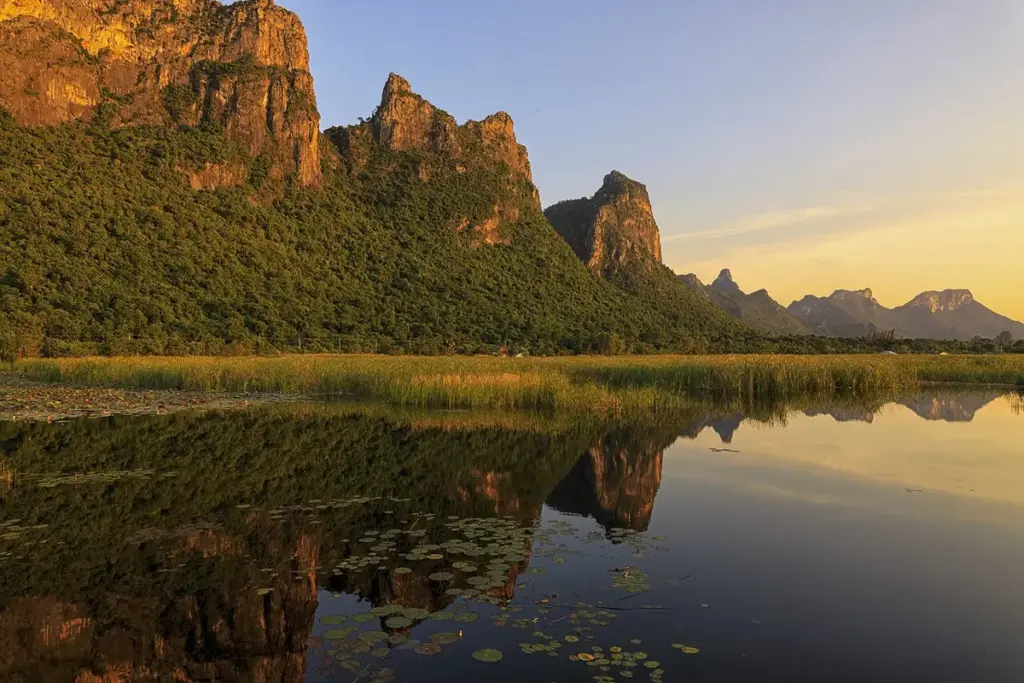
The landscape mixes three things. First, steep limestone hills run along the coast, and the highest, Khao Krachom, reaches 605 m. Second, a wide marsh fills the valley behind them. Third, sandy beaches and mangroves line the shore. As a result, you can see caves, birds and beaches in a single day.
Sam Roi Yot entrance fee and opening hours
The Sam Roi Yot entrance fee is 200 baht for foreign adults and 100 baht for children aged 3 to 14, according to Thai Holiday Guide and Thai National Parks. Meanwhile, Thai adults pay 40 baht and Thai children 20 baht at Khao Sam Roi Yot National Park. Thai Holiday Guide says the schedule comes from the Department of National Parks and dates from 2023, so rates may change.
- Opening hours: About 08:00 to 16:30 for the attractions, and 08:00 to 16:00 for the cave, according to Thai Holiday Guide.
- One ticket: One national park ticket covers the whole park for the day.
- Driving through: Passing through the park to reach villages or hotels needs no ticket.
- Cash: Carry small notes for boats, parking and food.
One tour listing shows a separate 400 baht cave ticket, but it looks like a third-party price, so ask your tour agent what is included. Also, the park closes in the late afternoon, so start early.
Phraya Nakhon Cave: boat, climb and sunbeam
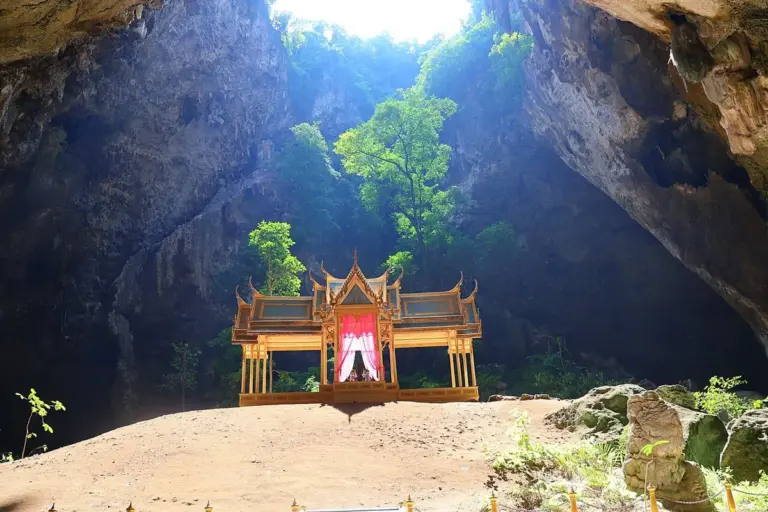
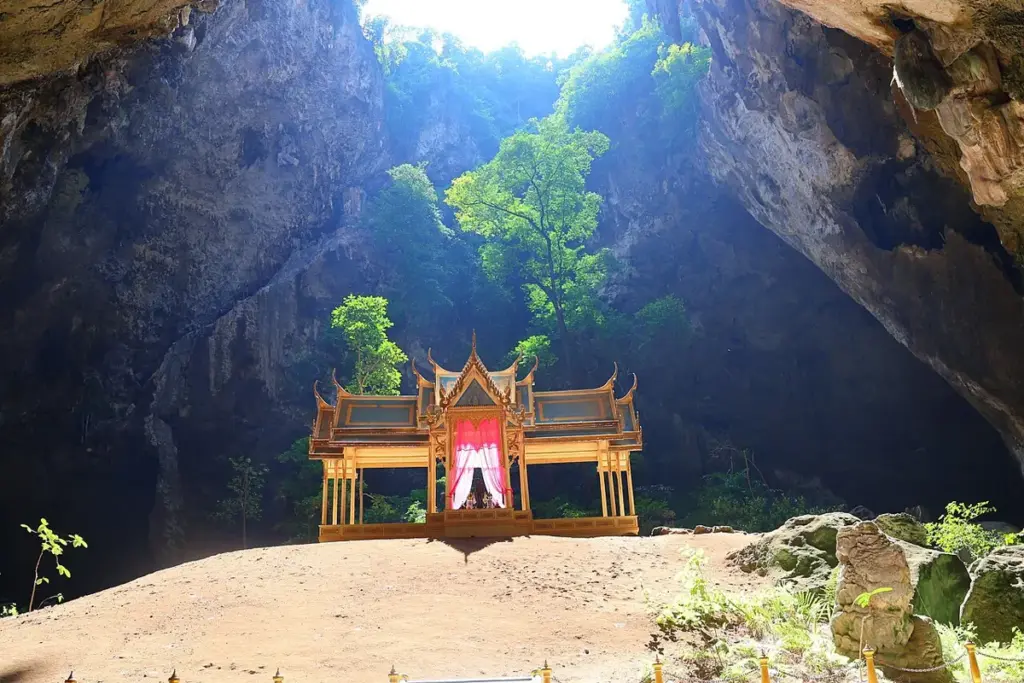
Phraya Nakhon Cave is the park's main attraction, according to Thai National Parks. Two collapsed roofs let daylight fall into a large cavern, and a small golden pavilion, the Kuha Karuhas Pavilion, stands on the floor. At the right hour, a beam of sunlight lights the roof of the pavilion. In short, the sunbeam on the pavilion is the highlight.
How to reach the cave
First, start at Bang Pu village. From there, a longtail boat crosses to Laem Sala Beach, and then a steep path climbs to the cave mouth. Prices differ by source. Thai Holiday Guide says about 150 baht per person return on its cave page, but about 400 baht return on its park page, which may be a per-boat rate. So, agree the price before you board.
You can also walk. A headland trail of about 30 minutes links Bang Pu with Laem Sala, according to Thai Holiday Guide. After that, the climb to the cave is about 430 m of steep, rocky trail with stone steps and some rope sections. It takes roughly 30 to 45 minutes, so allow time to rest.
When to go for the light
The sunbeam is strongest on a clear day from about 10:00 to 11:00, according to Thai Holiday Guide. The same page suggests reaching Bang Pu by about 9:00 am. Tour groups from Hua Hin often arrive nearer midday, when the light has started to fade. Also, overcast skies can hide the beam altogether.
History of the pavilion
Sources agree that King Rama V visited the cave in 1890. However, they differ on when the pavilion was built. Wikipedia and Thai National Parks link it to the 1890 visit, while Thai Holiday Guide says King Rama VII had it built for a royal visit in 1926. So, treat the exact date as uncertain.
Sam Phraya Beach and Laem Sala
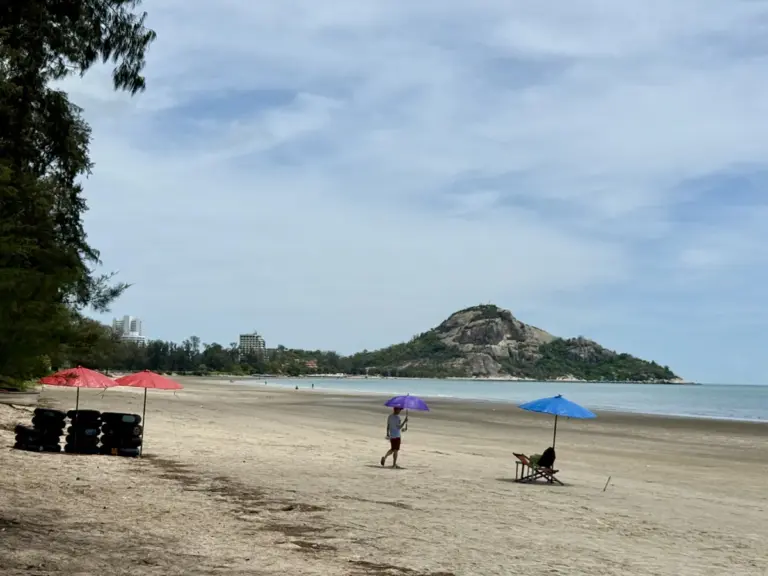
Sam Phraya Beach is a quiet strip of sand lined with pine trees and backed by rocky cliffs. According to Thai National Parks, it lies about 5 km north-east of the park headquarters and has a campsite and a restaurant. The restaurant is open from 7 am to 9 pm on weekdays and later on busy weekends. It is a calm spot for lunch after the cave.
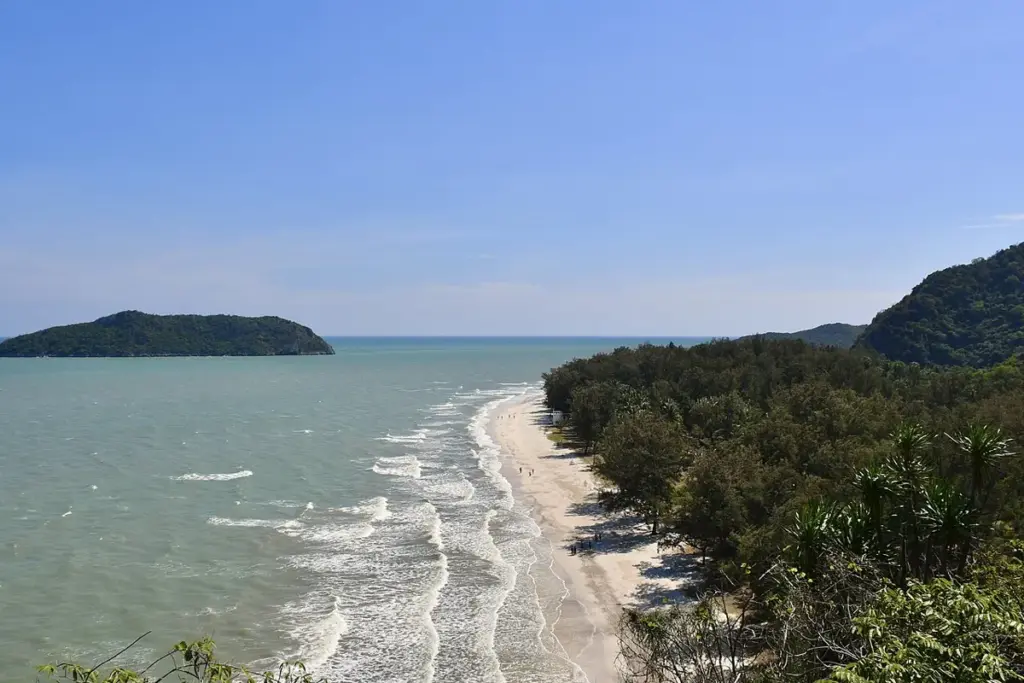
Laem Sala Beach is the trailhead beach for the cave. In addition, it has a camping area and park rooms. The same source lists tents at 150 baht for two people, and rooms from about 1,600 baht for six. Bookings run through the Department of National Parks website, and only people within Thailand can book, so ask your hotel for help.
In addition, dusky leaf monkeys are reliably seen at Laem Sala, according to Thai National Parks. Keep your food out of sight, and do not feed any animal.
Wetlands, birds and wildlife in Khao Sam Roi Yot National Park
The Thung Sam Roi Yot freshwater marsh covers nearly 37% of the park and is the largest freshwater marsh in Thailand, according to Thai National Parks. It was listed as a Ramsar wetland on 8 January 2008, according to Wikipedia. A boardwalk of about 1 km, the Bueng Bua Boardwalk, crosses part of it.
Besides the views, birdwatchers come for the waterbirds. Thai National Parks counts about 355 bird species, roughly half of them migratory, and says January and February are good months along the flyway. Thai Holiday Guide names painted storks and purple herons. For mammals, sources list the mainland serow, dusky langur and fishing cat, but you are unlikely to see the shy ones on a day trip.
Other stops include the Khao Daeng viewpoint at 157 m and mangrove boat tours on the Khao Daeng Canal. One source lists the tour at 500 baht for a group of up to six. Kui Buri National Park, known for wild elephant watching, can be combined with a long day if you leave in time.
Planning a Sam Roi Yot day trip
A Sam Roi Yot day trip works best from Hua Hin. Thai Holiday Guide puts the drive at about one hour, and Thai National Parks gives about 60 km. From Bangkok, the park is nearly three hours by car, according to the same source. Therefore, you can combine it with a night in Hua Hin or Prachuap.
However, public transport is limited. One source says no public transport reaches the park, while another mentions local buses taking about two hours, so a car, a motorbike, a private driver or a tour is the safe choice. Inside the park, distances are long and shade is limited. As a result, a vehicle or bicycle helps.
For a similar nature stop nearby, see our Kaeng Krachan National Park guide. If you want beaches close to the capital, beaches near Bangkok lists easier options.
Best time to visit Khao Sam Roi Yot National Park
Thai Holiday Guide recommends November to March, when the weather is cool and dry. Thai National Parks says the rainy season runs from May to November, with the heaviest rain from September to November. Wikipedia lists temperatures of about 23 to 32°C from March to May. So, midday on the cave climb can feel hot even in winter.
Also, migratory birds peak around January and February. Meanwhile, the sunbeam needs clear skies, so a dry-season morning gives the best chance.
What to bring to Khao Sam Roi Yot National Park
- Closed shoes: Thai Holiday Guide warns that flip-flops make the descent risky.
- Water: The climb is steep, with little shade.
- Sun protection: A hat and sunscreen help on the boardwalk and the beach.
- Small cash: For boats, parking and food.
- A torch: Useful inside the cave and on the way back.
Overall, the cave in Khao Sam Roi Yot National Park is rated moderate for fitness. It is not suited to people with limited mobility or small children who tire easily, according to Thai Holiday Guide.
Where to stay: continue south to Krabi
Khao Sam Roi Yot is on the upper Gulf coast, far from Krabi, so it is a separate leg of a Thailand trip. After the park, you can fly south to the Andaman coast. One 2026 guide puts the Bangkok to Krabi flight at about 1 hour 25 minutes, and our Bangkok to Krabi guide explains the options. From Krabi airport, Ao Luek is about 54 to 71 minutes by road, depending on traffic. Then things to do in Ao Luek shows what to do next.
At a glance: 17 houses from 1,200 to 2,000 baht per night, air conditioning in every house, free breakfast, free Wi-Fi and a swimming pool, at 97/1 Moo 1, Ao Luek Nuea, Krabi.
We recommend Ban Kamnan Resort in Ao Luek Nuea as a trial slow stay or a first base near Krabi. For a small group, House #A, #B, #C and #D each have two 5 ft beds, one bathroom and 40 m², and they sleep four for 1,700 baht per night. Also, like every house, they have air conditioning. In addition, guests share the resort's swimming pool, and breakfast of toast, fried eggs and hot coffee is free. Prices match the resort's listing, so check your dates on Booking.com.
Frequently asked questions
Recent guides list 200 baht for foreign adults and 100 baht for children, and Thai citizens pay less. Because older pages show different rates, confirm at the gate.
The climb from Laem Sala Beach is about 430 m and takes roughly 30 to 45 minutes. Add the boat ride or a 30-minute headland walk from Bang Pu.
Thai Holiday Guide says about 10:00 to 11:00 on a clear day. Arrive at Bang Pu by about 9:00 am to be early.
Yes. The drive is about one hour, according to Thai Holiday Guide, and tours run from Hua Hin. A private driver gives more flexibility.
Sources disagree. One says none reaches the park, and another mentions slow local buses. So, plan on a car, a driver or a tour.
Final thoughts
Khao Sam Roi Yot National Park packs a cave, wetlands and quiet beaches into one calm day. To sum up: start early, bring closed shoes and water, agree the boat price and aim for the late-morning light. Then, when you head south, check availability at Ban Kamnan Resort on Booking.com and plan your Krabi leg.