

 Krit Ariyathiti
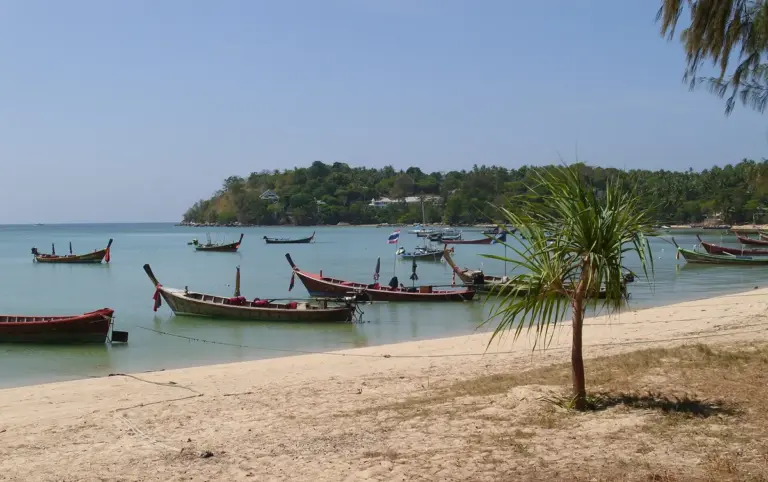
Rawai Beach is a working fishing shore at the southern tip of Phuket, famous for its seafood market, its longtail boats and a long-established sea nomad community. It is not a classic swimming beach. This guide explains the Rawai seafood market, the Rawai sea nomad village, boat trips from Rawai and the Rawai vs Nai Harn choice, so you can decide whether it fits your Phuket plans.
Quick answer: Come to Rawai for fresh seafood, the pier and a local feel, and swim at Nai Harn instead. Guides agree that Rawai has no good swimming beach, because boats are moored offshore, the water is shallow and the tide leaves rocky mud flats. At the seafood market you buy raw fish, shrimp or crab by weight from stalls, then pay a restaurant across the road to cook it. Cooking fees vary by source, so ask first.
What is Rawai Beach like?
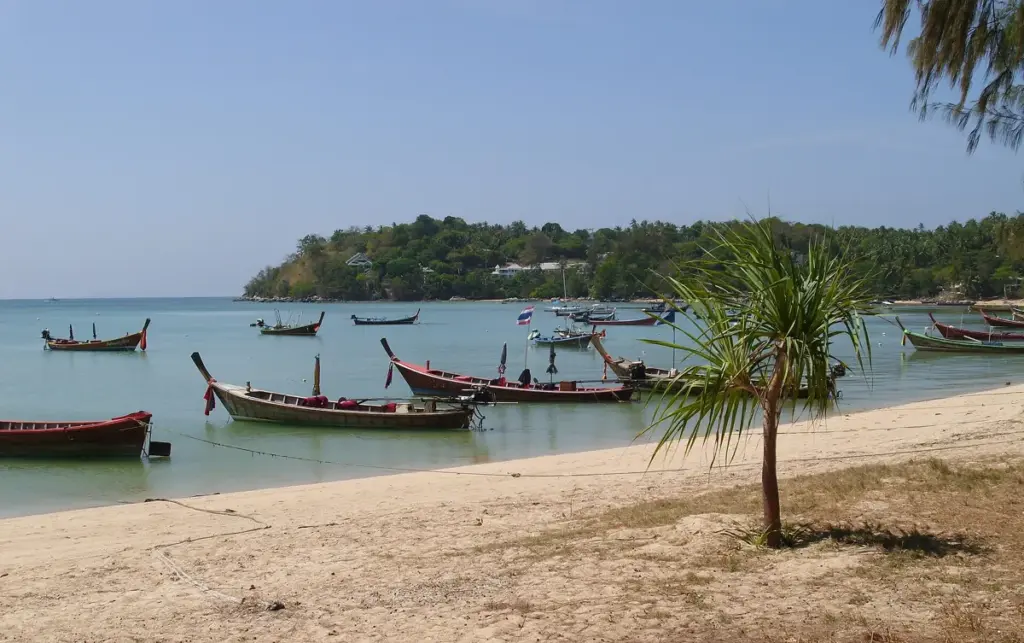
Rawai Beach sits at the southern end of Phuket, a short ride from Promthep Cape. According to Wikivoyage, it is much less touristy than Kata and Patong. Instead of sunbeds, the shore is lined with longtails and speedboats that run snorkelling and sightseeing trips to nearby islands. As a result, the mood is more harbour than resort.
There is no entry fee and no set opening hours for Rawai Beach and its pier, one guide notes. You only pay for food, a boat or a ride. For the wider picture, see our guide to the best beaches in Phuket.
Can you swim at Rawai Beach?
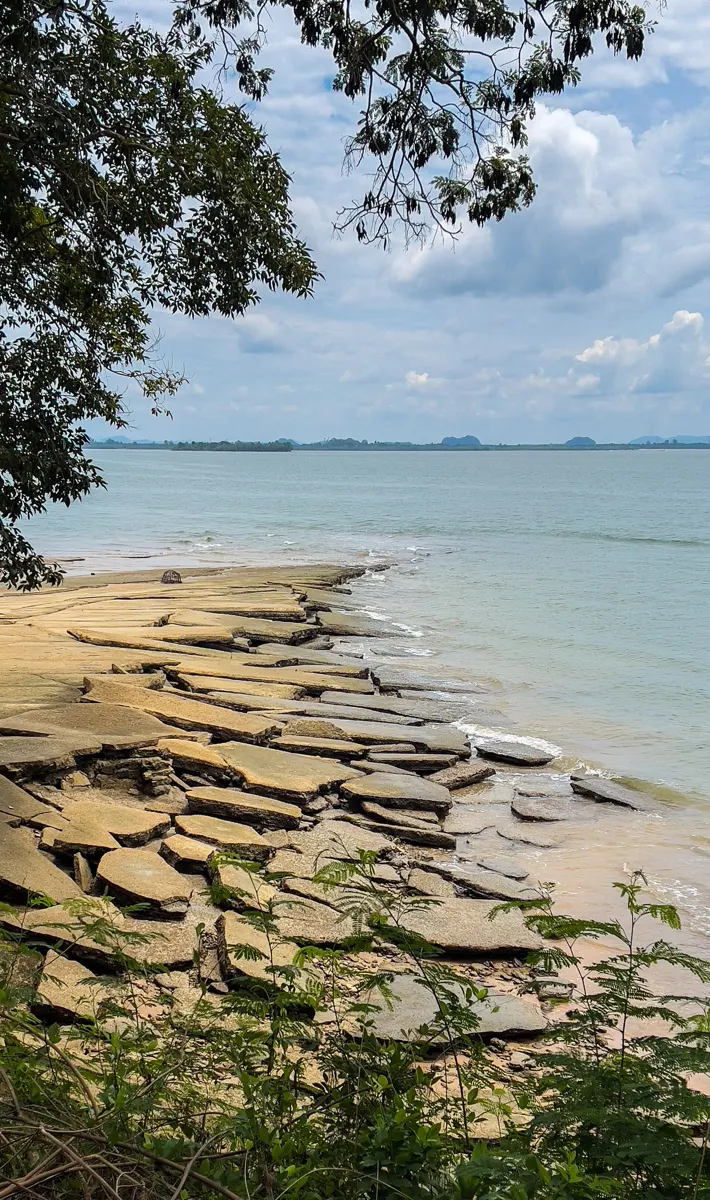
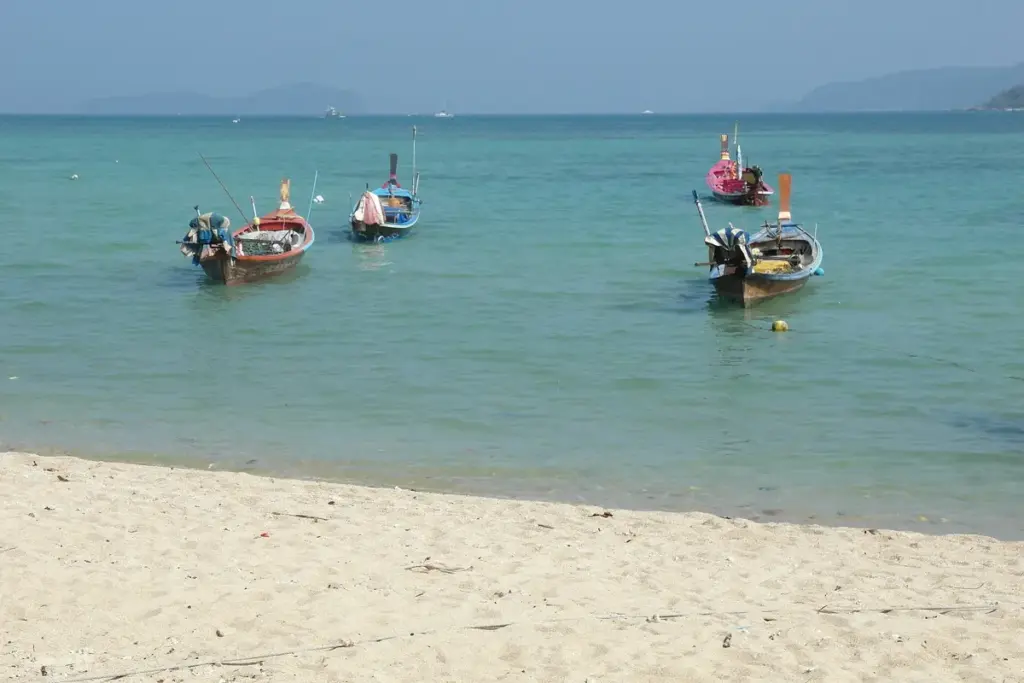
Not really. Several sources say Rawai is not a beach for sunbathing or swimming, and the tide is pronounced. Moored boats share the water, and the bottom is shallow and rocky at low tide. One guide adds that the only swimmable stretch is at the far north end, where few visitors go.
So, treat Rawai Beach as a place to eat, walk and book a boat. For a proper swim, head to Nai Harn, which several guides describe as one of the island's nicest beaches. Also, check the sea state and flags before you swim anywhere on Phuket in the monsoon, roughly May to October.
Rawai seafood market: how it works
The Rawai seafood market is the main reason most people visit. A short dirt road runs along the shore, with seafood stalls on one side and cooking restaurants on the other. Here is how it works.
- Choose your seafood. Walk the stalls and compare what looks fresh.
- Weigh and pay. Stalls sell by weight and take cash, so bring baht.
- Carry it across the road. Pick a restaurant and tell them how you want it cooked.
- Pay the cooking fee. Rice, vegetables and drinks are usually billed separately.
Cooking fees are not fixed. One guide gives 50 to 150 baht a dish, while others quote about 100 baht per kg, and no official source lists current prices. Therefore, agree the fee before you hand over your seafood. One window-on-Phuket guide says mornings are quieter and best for shopping, while more people arrive later to eat. Hours vary by listing, with one giving 11:00 to 21:00 and another 09:00 to 21:00, so check on the day. For more local dishes, read our Phuket street food and Phuket food guide.
The Rawai sea nomad village
Just north of the pier lies the Rawai sea nomad village, home to a community of sea nomads, a traditionally seafaring fishing people. Wikivoyage notes that the village has shops and longtail boats for rent. Another source says the community has shrunk under development pressure over the years, but it is still there. In addition, the seafood market sits on its edge.
Visit with respect. Ask before you photograph people, do not walk into homes and buy from local stalls where you can. Also, remember that this is a living neighbourhood, not a museum. So, treat it the way you would treat any village you visit.
Rawai vs Nai Harn: which should you choose?
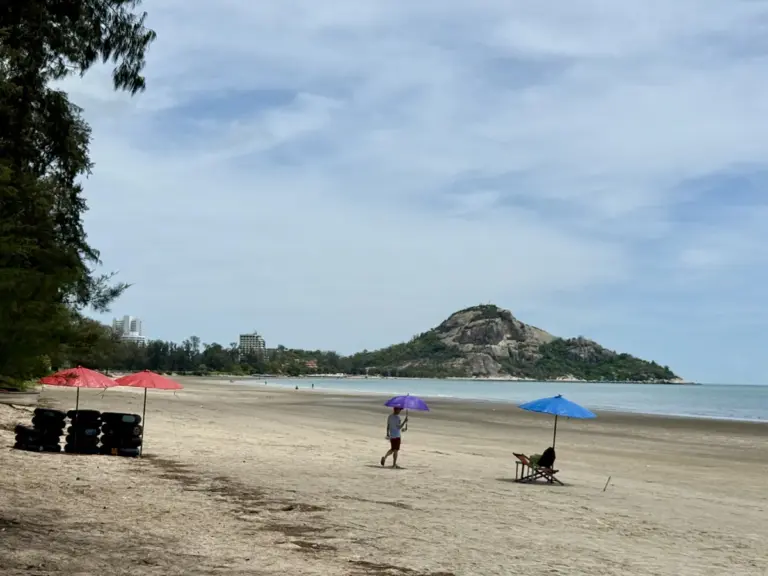
The Rawai vs Nai Harn question is simple, because they do different jobs. Rawai is for seafood, boats and a local harbour feel. Nai Harn is for swimming and sunsets, and it is only a few minutes away by bike, taxi or local bus.
| Feature | Rawai | Nai Harn |
|---|---|---|
| Swimming | Poor, tidal and boat-filled | The beach guides recommend |
| Mood | Working harbour | A proper beach |
| Best for | Seafood, boat trips, local life | Swimming and sunset |
| Distance | Starting point | About 2 km, per one guide |
So, many visitors split the day: swim at Nai Harn, then eat at Rawai in the evening. For a Phuket-wide comparison, see where to stay in Phuket.
Boat trips from Rawai
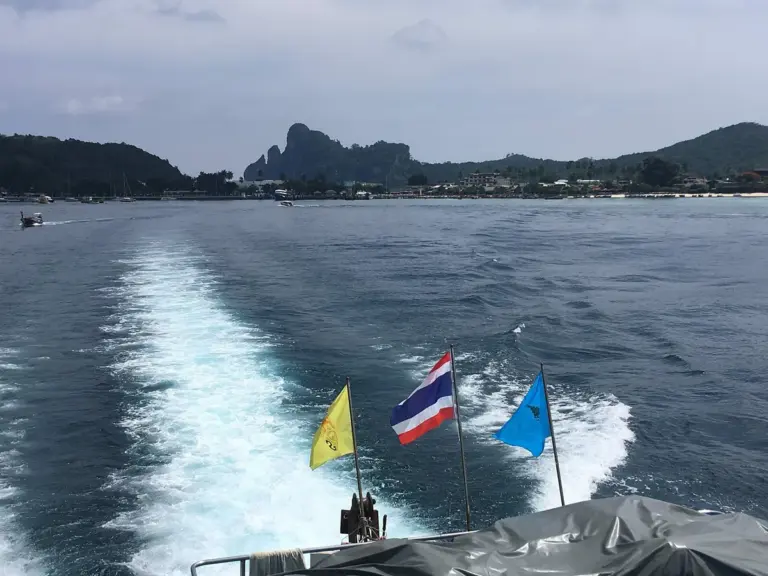
Rawai Beach is one of Phuket's main boat departure points, along with Chalong. According to Wikivoyage, Koh Bon is about 10 minutes away by boat and has a beach and a restaurant, while Ko Kaeo is about 3 km offshore, roughly 30 minutes. Our Phuket snorkeling guide notes that Coral Island is about 15 minutes by speedboat from Chalong or Rawai. Meanwhile, the Racha Island trips are another popular option from the south.
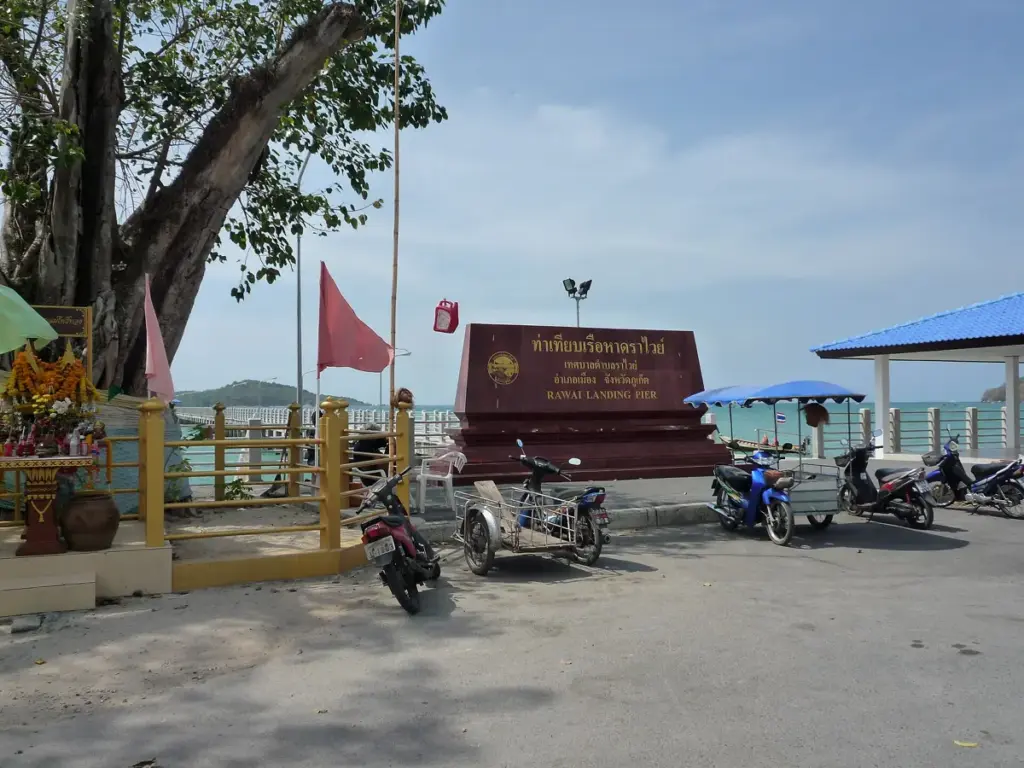
Sources differ on how the new pier is used. One says it is a walking and fishing pier rather than a boat landing, and another calls Rawai Pier a departure point. So, ask your operator where your boat leaves. Prices vary by boat and season, so agree them in advance.
Getting to Rawai and around
Rawai Beach is spread out, so a scooter or taxi helps. One older Wikivoyage entry puts scooter hire at about 150 to 200 baht a day, but prices change, so confirm locally. Also, one 2026 guide lists the Phuket Smart Bus at a flat 100 baht along the west coast to Rawai, as our Phuket budget travel guide notes. Promthep Cape is about 2 km away, and it is a famous sunset spot. See our Promthep Cape guide.
Where to stay: continue to Ao Luek
Rawai Beach is a good last stop on Phuket's south coast. After that, many travellers cross to Krabi for limestone scenery and mangroves. Our Phuket to Krabi by car and Phuket to Krabi ferry guides compare the options. From Krabi airport, Ao Luek is about 54 to 71 minutes by road, depending on traffic.
At a glance: 17 houses from 1,200 to 2,000 baht per night, air conditioning in every house, free breakfast, free Wi-Fi and a swimming pool, at 97/1 Moo 1, Ao Luek Nuea, Krabi.
We recommend Ban Kamnan Resort in Ao Luek Nuea. For a couple, House #E, #F or #G has one 6 ft bed and 35 m² for 1,350 baht per night. Like every house, it has air conditioning. Also, guests share the swimming pool, and breakfast of toast, fried eggs and hot coffee is free. Prices match the resort's listing, so check your dates on Booking.com.
Frequently asked questions
No. Guides say boats, shallow water and rocky mud flats at low tide make it unsuitable, so swim at Nai Harn instead.
You buy raw seafood by weight at a stall, then take it to a restaurant across the road to be cooked. You pay the stall and the restaurant separately.
Sources give estimates from about 50 to 150 baht per dish, or about 100 baht per kg. There is no official price list, so agree the fee first.
Yes, it sits just north of the pier. Visit respectfully, ask before taking photos and buy from local sellers.
They suit different plans. Rawai Beach is for seafood and boats, while Nai Harn is the better beach for swimming and sunsets.
Final thoughts
Rawai Beach is a place to eat, watch the boats and meet a real Phuket fishing community. To sum up: pick your seafood, agree the cooking fee, swim at Nai Harn and book your island trip from the pier. Then, continue to Krabi and check availability at Ban Kamnan Resort on Booking.com.