

 Krit Ariyathiti
Southern Thai food is the boldest cooking in Thailand: sour turmeric curries, dry fiery stir-fries, herb rice salads and fresh rice noodles under fish curry. This guide explains the dishes to order, from gaeng som and kua kling to khao yam and roti, how a southern Thai curry differs from the curries you know at home, and where to try them on a trip through Krabi, Phuket and Trang.
Quick answer: Southern Thai food is spicier, more sour and more turmeric-heavy than food from central Thailand. The dishes to try first are gaeng som (sour yellow curry, often with fish), kua kling (a dry minced curry), khao yam (a herb and rice salad), khanom jeen with a curry sauce, and roti from Muslim stalls. You find them at morning markets, curry-and-rice shops and night markets across the south, usually for a modest price.
What makes southern Thai food different?
The south sits on a long peninsula between two seas. As a result, seafood, coconut and fresh turmeric shape almost every meal. In addition, the region has strong Malay, Muslim and Chinese influences, so you see roti, biryani-style rice and Hokkien noodles beside Thai curries.
Heat is the other big difference. Many travel guides, including Phuket 101, describe southern dishes as the spiciest in the country. However, that heat usually comes with sourness and salt, not sweetness. So, expect sharp flavours, and order a mild dish next to a hot one.
- Turmeric. It colours and flavours many curries and fried fish.
- Shrimp paste. Kapi gives depth to curries and dips.
- Sour notes. Tamarind, sour fruit and lime balance the chilli.
- Fresh vegetables. Raw greens arrive on the side to cool your mouth.
Gaeng som: the sour yellow curry
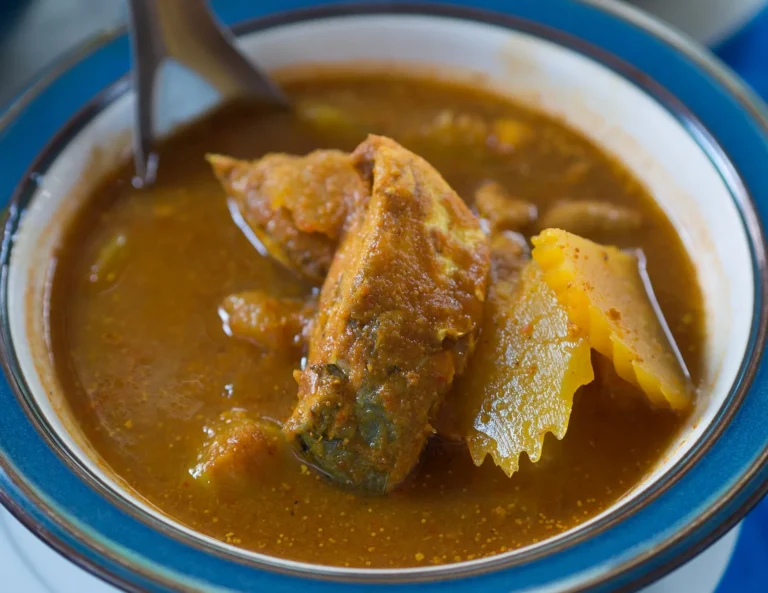
Gaeng som is a thin, sour and very hot curry, usually cooked with fish or shrimp. Outside the south, people often call this style gaeng leung, or yellow curry, and Michelin Guide notes that it is one of the key dishes of southern cuisine. In fact, a good bowl is seen as a test of a cook's skill.
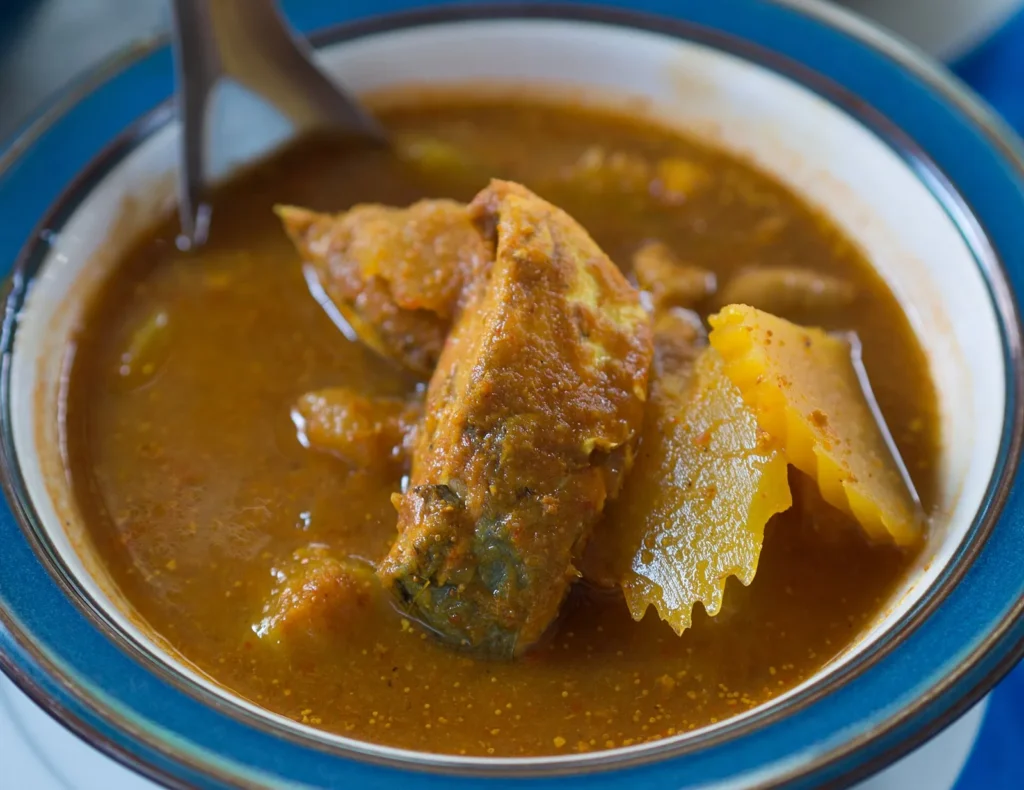
The broth is not creamy. Instead, it is sharp with tamarind and fresh turmeric, and it often holds green papaya, bamboo shoots or pineapple. For example, the version in our photo uses fish and pineapple. Eat it with plenty of rice, because the rice takes the edge off the heat.
Kua kling: the dry curry
Kua kling is a dry curry, usually made with minced pork, although beef and chicken versions also exist. The meat is fried with curry paste until almost no liquid is left. Therefore, every bite carries the full heat of the paste, plus lime leaf and pepper.
Locals often eat kua kling with rice, a boiled egg and a plate of raw vegetables. Above all, do not order it as your only dish if you dislike chilli. Instead, share it, and ask for it "phet noi", which means a little spicy.
Khao yam: the herb rice salad
Khao yam is the gentle side of southern Thai food. It is a rice salad mixed with shredded herbs, toasted coconut, bean sprouts, sour fruit and a fermented fish sauce called budu. Some sources link it to the Malay peninsula, where similar dishes are common, and some cooks colour the rice blue with butterfly pea flowers.
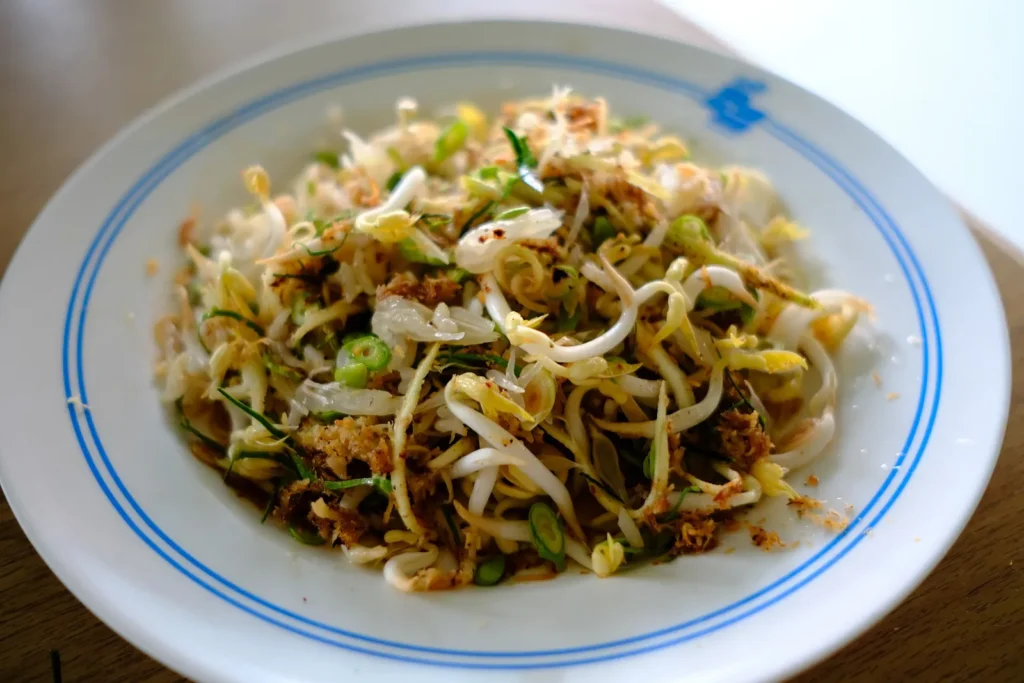
It is usually a breakfast or lunch dish. Also, it is often served unmixed, so you stir the herbs and sauce together yourself. In short, khao yam is a good choice if you want fresh flavours without a lot of heat.
Khanom jeen with curry
Khanom jeen are soft, fresh rice noodles, not a curry. However, in the south they almost always come under one. Common sauces include nam ya, a coconut fish curry, and gaeng tai pla, a strong curry made with fermented fish, according to several food guides.
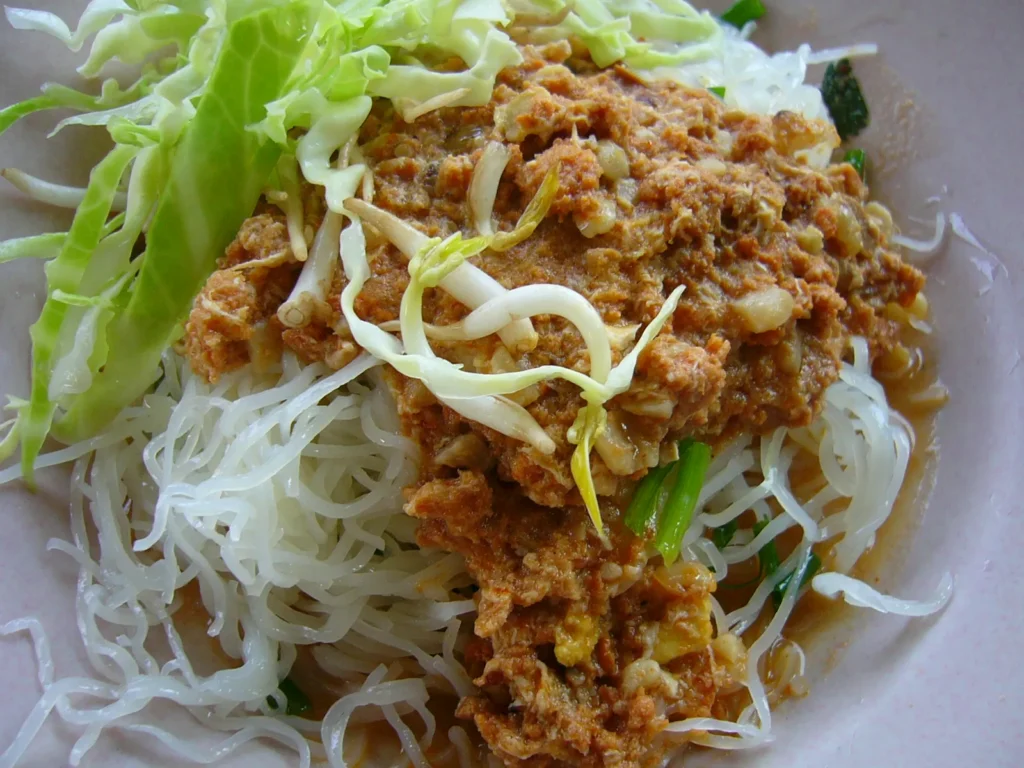
The best part is the side table. In many shops, a tray of raw vegetables, pickles and herbs is free with your noodles. So, add what you like, and eat it the way locals do, with a spoon and fork. Our Trang food guide covers another breakfast tradition of the south.
Roti and other Muslim dishes
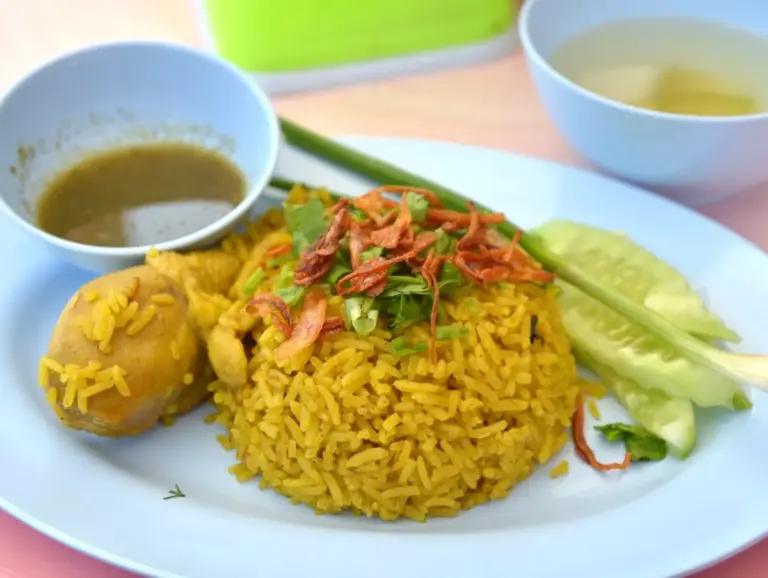
Roti stalls are everywhere in the south, especially in Krabi, Trang and southern Phuket. The flatbread is fried on a hot plate and served sweet with egg, banana and condensed milk, or savoury with a curry for dipping. Meanwhile, Muslim kitchens also serve khao mok, a yellow rice with chicken that many travellers compare to biryani.
These dishes are often less spicy. As a result, they are a good break between hot curries. Look for them in the morning and at night markets.
How to order southern Thai food
Many southern restaurants are rice-and-curry shops. Pots or trays of ready dishes sit at the front, and you point to what you want. Then, the cook spoons it over rice. Prices change by place and season, so check the board or ask before you order.
| Dish | What it is | Heat level |
|---|---|---|
| Gaeng som | Sour yellow curry, often with fish | Very hot |
| Kua kling | Dry minced curry | Very hot |
| Khao yam | Herb and rice salad | Mild |
| Khanom jeen nam ya | Rice noodles with coconut fish curry | Medium |
| Roti with curry | Fried flatbread with a dipping curry | Mild to medium |
| Khao mok gai | Yellow rice with chicken | Mild |
A few phrases help. For example, "mai phet" means not spicy, and "phet nit noi" means a little spicy. Also, point at other tables if you are unsure.
Where to try southern Thai food
Morning markets and night markets are the easiest places for a first taste. For example, our guide to Krabi street food covers stalls and dishes in Krabi Town, and the Krabi night market guide covers the weekend walking street. In Phuket, the Phuket food guide explains the island's mix of southern and Peranakan cooking.
If you want to cook the dishes yourself, a Thai cooking class in Krabi is a fun half day. Then, try the seafood side of the region with our guide to seafood in Krabi, or read the wider Thai street food guide before you go.
Tips for eating southern Thai food
- Start mild. Order khao yam or roti first, then try a hot curry.
- Use the vegetables. Raw greens and cucumber cool the heat.
- Eat early. Many curry shops sell out by early afternoon.
- Carry small notes. Market stalls rarely change big notes.
- Drink water, not beer, with heat. Cold sweet tea also helps.
Where to stay for a southern food trip
Krabi is a good base for southern Thai food, because markets, curry shops and seafood are all close. Ao Luek, in the north of the province, has quiet villages, morning markets and easy roads to Krabi Town and Phang Nga. So, you can eat locally and still reach the big sights. Read our Ao Luek travel guide for ideas.
At a glance: 17 houses from 1,200 to 2,000 baht per night, air conditioning in every house, free breakfast, free Wi-Fi and a swimming pool, at 97/1 Moo 1, Ao Luek Nuea, Krabi.
We recommend Ban Kamnan Resort in Ao Luek Nuea. For couples, House #5 and #6 each have one 5 ft bed, one bathroom and 28 m², and they sleep two for 1,200 baht per night. Like every house, they have air conditioning. In addition, guests share the swimming pool, and breakfast of toast, fried eggs and hot coffee is free. Prices match the resort's listing, so check your dates on Booking.com.
Frequently asked questions
Often, yes. Many guides call it the spiciest regional cooking in Thailand. However, dishes like khao yam, roti and khao mok are mild, and you can ask for less chilli.
Gaeng som, the sour yellow curry with fish or shrimp, is the best known. Kua kling, a dry minced curry, is a close second.
Start with khao yam, khanom jeen nam ya and roti with curry. Then try a small portion of gaeng som or kua kling with plenty of rice.
Not always. However, many Muslim-run shops and roti stalls in the south serve halal food, so look for halal signs or ask the owner.
Final thoughts
Southern Thai food rewards the curious. To sum up: try gaeng som for sourness, kua kling for heat, khao yam for freshness and roti for comfort, and use the free vegetables to balance it all. Then, stay somewhere close to the markets. Check availability at Ban Kamnan Resort on Booking.com and plan a southern Thai food trip from Ao Luek.