

 Krit Ariyathiti

The rules for a Thailand visa for tourists changed in September 2026, so many older guides are now out of date. This guide explains the new 30-day Thailand visa exemption, who can use the Thailand visa on arrival, how to apply for a Thailand e-Visa, and when a Thailand tourist visa or a long-stay visa makes more sense. Rules can change quickly, so treat this as a starting point and check the official sources before you book.
Quick answer: As of November 2026, passport holders from 60 countries and territories can enter Thailand without a visa for up to 30 days of tourism, according to the Tourism Authority of Thailand (TAT). This replaced the old 60-day exemption on 15 September 2026. If you need longer, apply for a tourist visa through the official Thai e-Visa website before you travel. Either way, every foreign visitor must also complete the free Thailand Digital Arrival Card within 72 hours before arrival.
What changed for a Thailand visa for tourists in 2026?
In short, the visa-free part of a Thailand visa for tourists got shorter. According to a TAT notice published on 1 September 2026, the Ministry of Interior announcements appeared in the Royal Gazette on 31 August 2026 and took effect on 15 September 2026. As a result, the 60-day exemption that had run since July 2024 ended on that date.
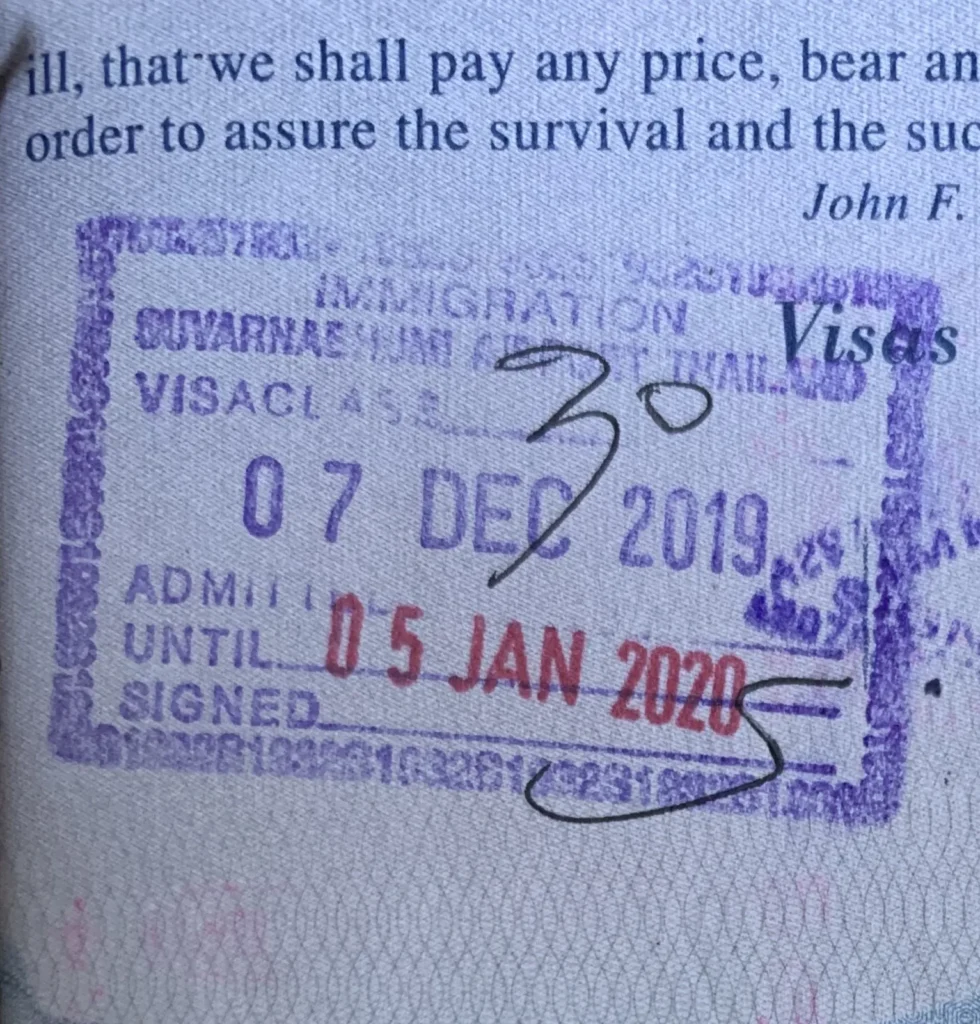
So, the new Thailand visa for tourists framework has a few layers. First, there is a 30-day exemption for 60 countries and territories. Second, there is a 15-day exemption, which TAT lists for Seychelles and Mauritius. Third, there is a short visa on arrival list. Finally, some bilateral agreements still give stays of 90, 30 or 14 days, depending on the agreement.
| Entry type | Stay | Who it is for |
|---|---|---|
| Visa exemption | Up to 30 days | 60 countries and territories (TAT list) |
| Visa exemption | Up to 15 days | Seychelles and Mauritius (TAT) |
| Visa on arrival | Short stay, check the list | Azerbaijan, Belarus and Serbia (TAT) |
| Bilateral agreement | 90, 30 or 14 days | Depends on the agreement |
| Tourist visa | 60 days per entry | Anyone who applies in advance |
How does the Thailand visa exemption work?
The Thailand visa exemption lets eligible visitors arrive with just a valid passport, an onward plan and enough money for the trip. You do not apply in advance. Instead, the immigration officer stamps your passport on arrival.
However, there are limits. TAT says travellers on the 30-day exemption can generally enter through land border checkpoints no more than twice per calendar year. Nationals of Malaysia, Brunei, Indonesia and Singapore are among the exceptions. So, if you plan to cross from Malaysia or Laos several times, check this rule first.
Can you extend the 30-day exemption?
Usually, yes. Several visa guides say you can ask for one extension of up to 30 more days at a local immigration office, and they put the fee at about 1,900 baht. However, TAT did not list the extension rules in its notice. Therefore, confirm the current fee and documents with the Immigration Bureau before you rely on it.
Which countries are on the list?
The full list of 60 countries and territories is in the TAT notice. Secondary sources say it includes the United States, the United Kingdom, Canada, Australia, Japan and most European Union states. Still, the list is the one thing you must check yourself, because one wrong assumption can mean a refused boarding pass.
Who can get a Thailand visa on arrival?
The Thailand visa on arrival is now a short list. TAT names Azerbaijan, Belarus and Serbia, and one visa guide puts the stay at 15 days. In contrast, most travellers from Europe, North America and Australia now use the 30-day exemption instead.
If your country is on neither list, you will need a Thailand visa for tourists before you fly. In that case, the e-Visa system is the main route.
How do you apply for a Thailand e-Visa?
Thailand runs an official online visa system at thaievisa.go.th, and most embassies now send applicants there. You fill in the form, upload documents and pay online. Then the approval arrives by email, and you show it at check-in and at immigration.

Here is the usual order of steps:
- Pick the right visa. For a holiday longer than 30 days, the usual Thailand visa for tourists is the tourist visa.
- Prepare your documents. Expect a passport scan, a photo, flight details, proof of accommodation and proof of funds.
- Apply on the official site only. Government sites in Thailand end in .go.th.
- Allow time. Processing times vary, so apply weeks ahead, not days.
- Print the approval. Airlines may ask to see it before you board.
Also, be careful with copycat websites. Some agencies look official but charge extra fees. If the address does not end in .go.th, it is not the government.
Is a Thailand tourist visa better for a long trip?
For trips longer than a month, yes. Visa guides describe the Thailand tourist visa as 60 days per entry, and they say it can usually be extended once by 30 days at an immigration office inside Thailand. That gives up to about 90 days in total, which suits a slow trip through the south.
For example, you could spend two weeks in Bangkok and the north, then a month on the Andaman coast, and finish with a few quiet weeks in Krabi. Our guide to Thailand slow travel shows how that kind of trip feels.
What about the DTV for remote workers?
The Destination Thailand Visa, often called the DTV, is a different product. Visa guides describe it as valid for five years, with stays of up to 180 days per entry. They also put the fee at about 10,000 baht and the savings test at about 500,000 baht. However, these figures come mostly from consultancies, and some details vary by embassy. So, check with the Thai embassy that covers your nationality before you apply. Our digital nomad Krabi guide covers life on the ground.
What documents should you carry at the airport?
Even with a visa exemption, immigration can ask questions, so prepare your papers as carefully as any Thailand visa for tourists application. In July 2026, TAT issued a reminder that visitors must be able to show proof of sufficient funds. Many sources quote 20,000 baht per person or 40,000 baht per family, but they do not all agree. Therefore, the safe plan is to carry that amount in cash or a clear bank statement.
- Passport. Most embassies ask for at least six months of validity.
- Onward or return ticket. Airlines often check this at check-in.
- Accommodation details. Your first hotel booking is usually enough.
- Proof of funds. Cash, a card statement or a bank letter.
- Thailand Digital Arrival Card. Submitted within 72 hours before arrival.
For the arrival card, read our guide to the Thailand Digital Arrival Card. After that, plan your route from the airport with our Krabi airport to Ao Luek guide.
What happens if you overstay?
Do not overstay. Thai immigration charges a daily fine for overstays, and many sources put it at 500 baht per day. Longer overstays can also lead to arrest, deportation and a ban on returning. In short, if your plans change, extend your stay at an immigration office before it runs out.
Where to stay after you land
Once your Thailand visa for tourists is sorted, the fun part begins. Many travellers fly from Bangkok to Krabi for the second half of their trip. The flight is short, and Ao Luek is roughly 54 to 71 minutes by road from Krabi airport, depending on traffic. As a result, it makes a calm first stop after a long journey.
At a glance: 17 houses from 1,200 to 2,000 baht per night, air conditioning in every house, free breakfast, free Wi-Fi and a swimming pool, at 97/1 Moo 1, Ao Luek Nuea, Krabi.
We recommend Ban Kamnan Resort in Ao Luek Nuea. For couples, House #E, #F and #G each have one 6 ft bed, one bathroom and 35 m², and they cost 1,350 baht per night. Like every house, they have air conditioning. Also, guests share the swimming pool, and breakfast of toast, fried eggs and hot coffee is free. Prices match the resort's listing, so check your dates on Booking.com. For a first plan of the area, read things to do in Ao Luek.
Frequently asked questions
Under the current Thailand visa for tourists rules, as of November 2026, travellers from 60 countries and territories can stay up to 30 days without a visa, according to TAT. This replaced the 60-day exemption on 15 September 2026.
If your passport is on the 30-day exemption list, you do not need a visa for a two-week holiday. However, you still need the Thailand Digital Arrival Card and, ideally, proof of funds and an onward ticket.
Usually, yes. Visa guides say both the 30-day exemption and the 60-day tourist visa can be extended once by up to 30 days at an immigration office, for a fee of about 1,900 baht. Check the current rules first.
Apply on the official Thai e-Visa website at thaievisa.go.th. Avoid agency sites that copy its look, because they add fees and are not run by the government.
Yes, but only for a short list of nationalities. TAT names Azerbaijan, Belarus and Serbia. Most Western travellers use the 30-day visa exemption instead.
Final thoughts
The new 30-day Thailand visa for tourists rule is simple once you know it. To sum up: check that your passport is on the TAT list, carry proof of funds and an onward ticket, and apply for a tourist visa on thaievisa.go.th if you need longer. Then fill in the arrival card, land, and head south to the Andaman coast. Check availability at Ban Kamnan Resort on Booking.com and start your Krabi trip in calm Ao Luek.