

 Krit Ariyathiti
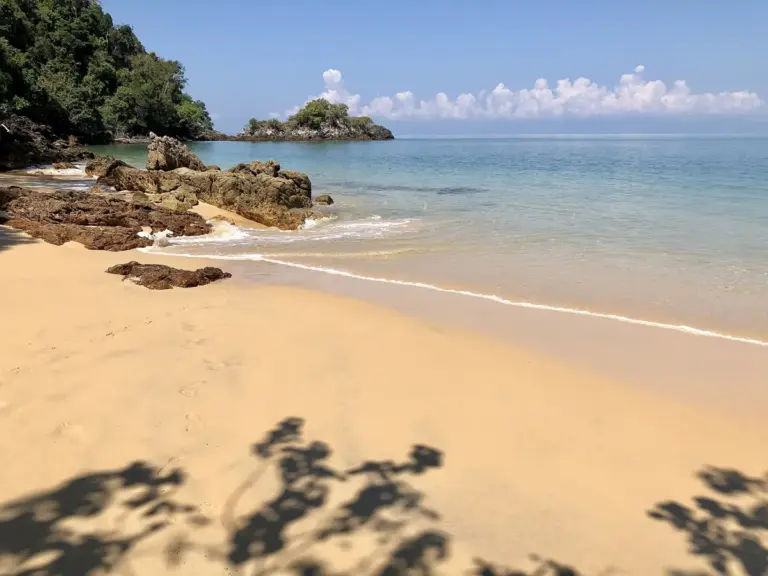
Koh Phayam is a small, green island off Ranong province in the north of the Andaman Sea, with quiet beaches, rubber and cashew trees and no cars. It suits travellers who want a slow stay, not a party. This guide covers the boat from Ranong to Koh Phayam, the main Koh Phayam beaches, the calmer Buffalo Bay Koh Phayam and what life on a car-free island in Thailand is like. So you can decide how long to stay and when to go.
Quick answer: Boats run from Ranong, and guides put the speedboat crossing at about 35 to 40 minutes and the slow ferry at about 2 hours. There are no cars on the island, so visitors walk, rent a scooter or take a motorbike taxi. The dry season, from about November to April, is when most places are open. Between about May and October the monsoon brings rough seas, fewer boats and many closed bungalows, so plan carefully.
Our wider guide to the best islands in Thailand compares many islands. This page covers one quiet one in the north of the Andaman coast.
Koh Phayam: a quiet island off Ranong
Koh Phayam lies in Ranong province, about 33 km from the mouth of the Ranong River, according to Wikivoyage. Visit Thailand Today calls it a small, green island and says that riding from one end to the other takes about 25 minutes by scooter. As a result, you can see most of it in a day.
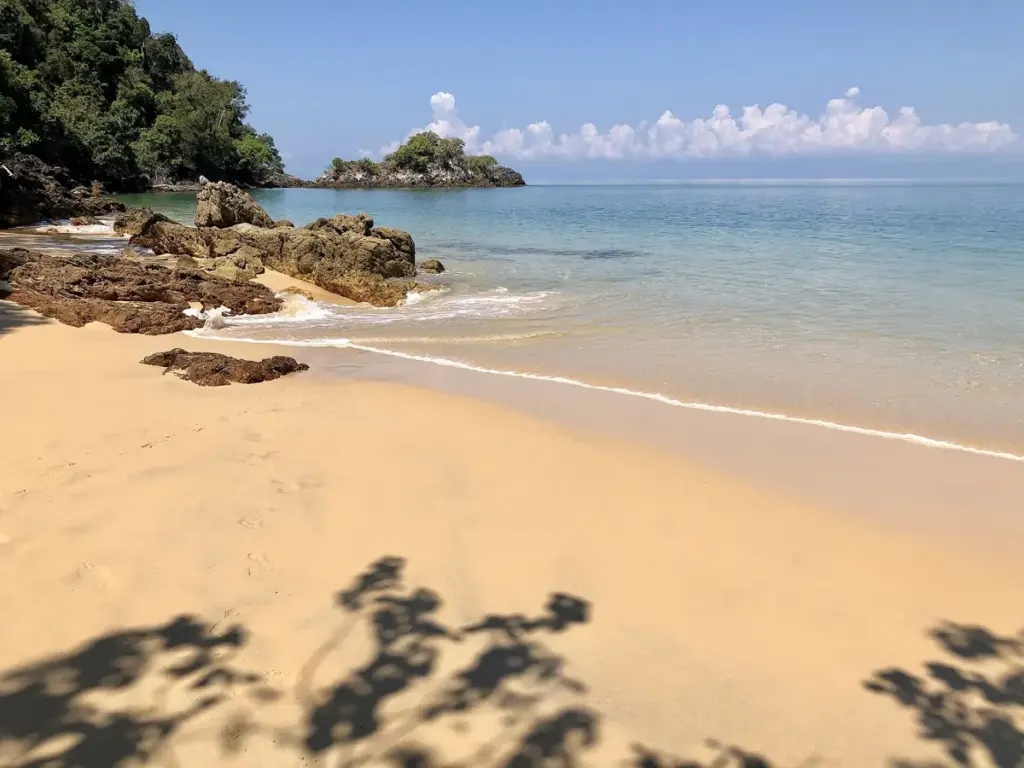
The island has no big sights or nightlife strip. Instead, you spend time on beaches, on a scooter or in a hammock. Wikivoyage says locally grown cashew nuts are the item to buy. Also, a neighbouring island is called Koh Chang too, but it is a different island from the Koh Chang in Trat.
Car-free island in Thailand: how to get around
Koh Phayam is a true car-free island in Thailand that you reach by boat. Visit-thailand.org says there are no cars or trucks, only motorbikes, a few tractors and some quad bikes. Wikivoyage agrees that motorbikes are the main transport. So a car-free island in Thailand style stay means slower days.
- Motorbike taxis. They meet the boats. Visit-thailand.org, citing Travelfish, quotes about 70 to 100 baht to places on the island, and Wikivoyage lists 70 baht from the pier to Ao Yai.
- Scooter rental. Visit Thailand Today says about 200 to 350 baht a day, while Wikivoyage lists 150 to 200 baht. Prices vary, so ask before you rent.
- Walking and cycling. Some beaches are walkable from each other, and bicycles are available.
Photograph any scratches before you rent a scooter, and ride slowly on sandy ruts, according to visit-thailand.org. Wikivoyage also advises against riding on the beach because of possible fines. For general tips, read renting a scooter in Thailand.
Ranong to Koh Phayam: boats and timings
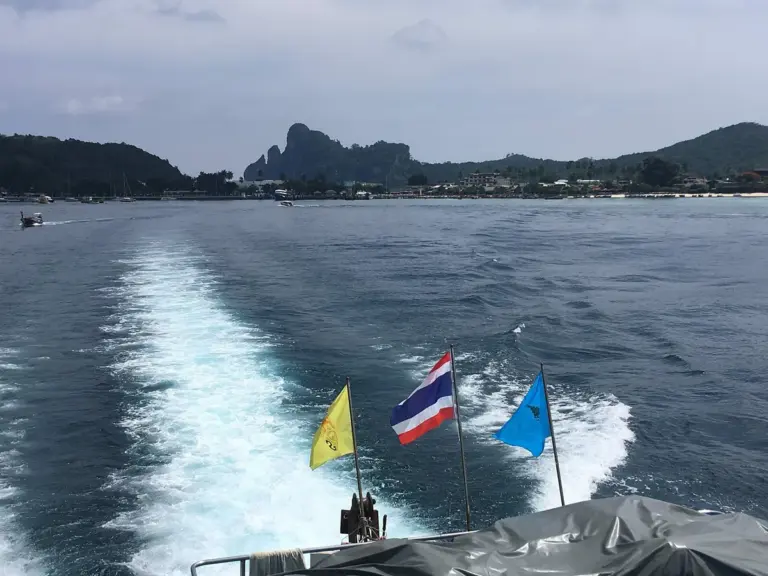
The boat from Ranong to Koh Phayam is the usual way in. As of November 2026, a ferry booking site lists a crossing of about 35 to 40 minutes, at least four operators and departures from about 08:30 to 17:30. Foot passengers only are carried, and the site advises arriving at least 60 minutes early.
| Boat | Time | Typical fare (guides) |
|---|---|---|
| Speedboat | About 35 to 40 minutes | About 350 baht |
| Slow ferry | About 2 hours | About 200 baht |
Fares and schedules change by season, so confirm them with the operator or your bungalow. The Ranong to Koh Phayam crossing is short, but it depends on the weather. Visit Thailand Today says speedboats run several times a day in season, while the slow ferry runs once or twice. Visit-thailand.org adds that boats are cancelled in rough seas, sometimes for more than a day in the low season. So leave a spare day if you have a flight after your island stay.
How to reach Ranong first
First, Ranong is on the mainland coast near the Myanmar border. Wikivoyage says flights to Ranong Airport come only from Bangkok Don Mueang, operated by Nok Air and Thai AirAsia. Visit Thailand Today adds that the flight takes about 1 hour 20 minutes, followed by a songthaew of about 30 minutes to the pier.
However, buses and vans are the main alternative. According to Visit Thailand Today, Phuket to Ranong takes about 5 hours, Khao Lak about 3.5 to 4 hours and an overnight bus from Bangkok about 9 to 14 hours. Compare options in our guides to ferries in Thailand and Khao Lak.
Koh Phayam beaches: Ao Yai and the quieter bays
The Koh Phayam beaches sit mainly on the west and north-west coasts. Guides describe two main ones, and the details differ a little by source. Then there are smaller bays.
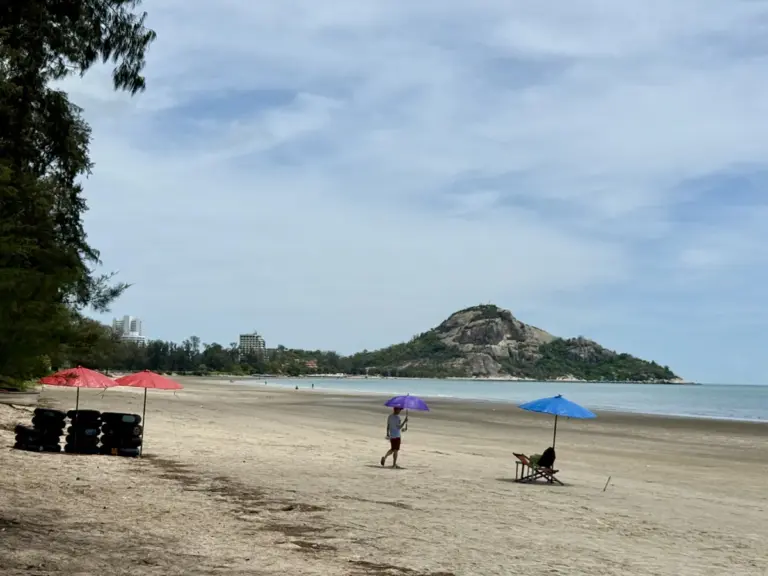
- Ao Yai (Long Beach). The busiest beach, about 3 to 4 km long according to Wikivoyage and Visit Thailand Today. It faces the open sea and has real waves, so Visit Thailand Today says it has the island's best waves for learning to surf. The same source warns that stingers can appear on some days, so check with locals before you swim.
- Ao Khao Kwai (Buffalo Bay). A calmer bay on the north-west coast, split by rocks into two beaches.
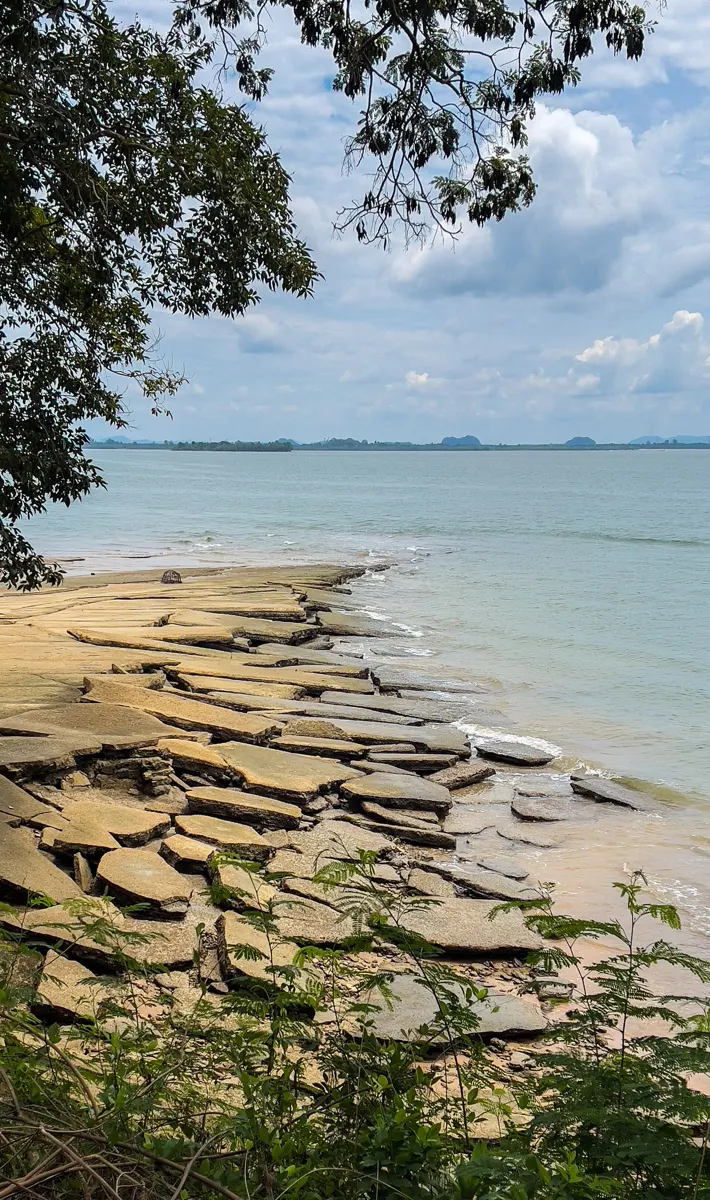
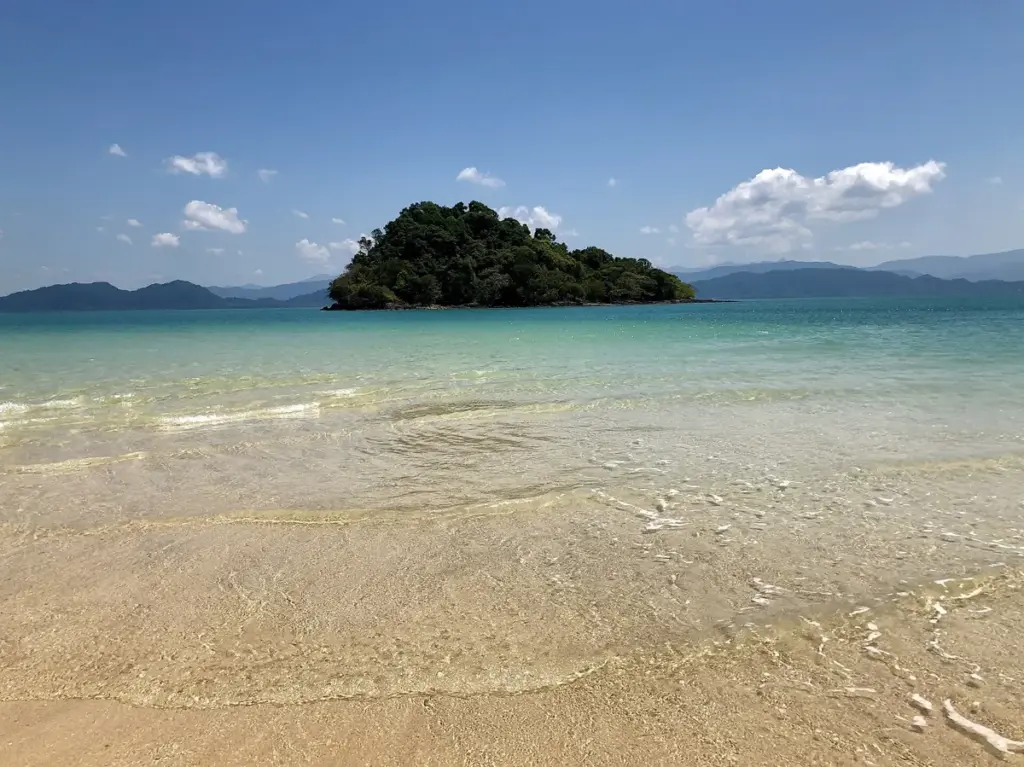
- Hin Talu. A rock arch and a sandbar you can walk at low tide, near the quiet end of Buffalo Bay.
- Ao Kwang Peeb. At the northern tip, where Visit Thailand Today lists the clearest water and the best snorkeling, with no facilities.
Visit Thailand Today says the sand ranges from golden to grey, and the water is often green or cloudy. So do not expect the postcard turquoise of the limestone islands. For a calm island in Krabi, see our guide to Koh Jum, or read about quiet beaches in Thailand.
Buffalo Bay Koh Phayam: calmer water and sunsets
Buffalo Bay Koh Phayam is where most guides send families and swimmers. Visit Thailand Today describes a long, calmer northern bay that suits swimming, paddleboarding and kayaking. Meanwhile, visit-thailand.org says it has smaller waves than Ao Yai and is better for families.
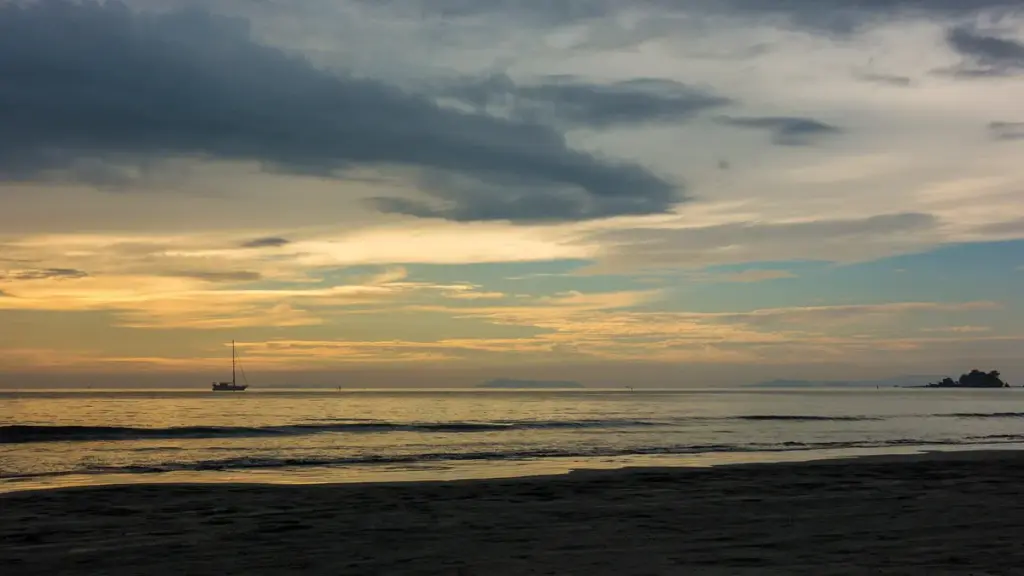
Many visitors come to Buffalo Bay Koh Phayam for the calm water and the quiet. Also check the tide, because the sandbar and rock arch near Hin Talu are best at low tide, while swimming is better at mid to high tide, according to Visit Thailand Today. Wear reef shoes on rocky sections, and carry water, because Visit Thailand Today says Ao Kwang Peeb, further north, has no facilities.
Things to do on Koh Phayam
There is little to tick off, and that is the point. Instead, guides mention a few simple activities.
- Swim and relax at Buffalo Bay.
- Learn to surf on Ao Yai in the right season.
- Kayak or paddle on calm days.
- Snorkel at Ao Kwang Peeb, if the sea is calm.
- Ride to the pier area for restaurants and shops.
- Join a boat or liveaboard trip to nearby marine parks, which Wikivoyage mentions.
For another marine park trip in the same sea, read Koh Surin day trip.
When to visit, and when places close
Visit Thailand Today lists November to April as the dry season with calm seas and everything open, and December to February as the busiest. Visit-thailand.org gives December to March as the best months. Meanwhile, May to October brings the southwest monsoon, according to Visit Thailand Today, with fewer speedboats and many bungalows, bars and restaurants closed. Wikivoyage adds that monsoon tides wash plastic onto the beaches.
So visit in the dry season for a smooth trip, especially if you want the Koh Phayam beaches calm and open. In the low season, confirm with your guesthouse that it is open before you book boats. For the wider picture, see the Andaman Sea best time to visit.
Money, power and safety
First, bring enough cash from Ranong, because visit-thailand.org advises not to count on a card-accepting cash machine on the island. Read about ATM fees in Thailand before you withdraw. Also, Visit Thailand Today says power cuts and limited food choice are common in the rainy season.
For safety, take it slowly on the roads, because the tracks are narrow. Dirt and sand tracks turn slippery in rain, according to Visit Thailand Today. Also check your travel insurance covers scooter use. This is general information, not medical or safety advice.
How long to stay
Visit Thailand Today suggests four or five nights, and at least four for a slow trip. Some visitors stay for weeks, since the pace is slow. A shorter stay still works if you only want a beach break. Still, remember the boat can be cancelled, so avoid a tight connection on the day you leave.
Where to stay after Koh Phayam
Koh Phayam sits far north on the Andaman coast, so treat Krabi as the next leg of a longer trip. From Ranong, buses run to Khao Lak and Phuket, according to Wikivoyage. From Phuket you can continue by road to Krabi, so read Phuket to Krabi by car. If you fly into Krabi airport instead, Ao Luek is about 54 to 71 minutes by road, depending on traffic. Read Krabi airport to Ao Luek for that transfer.
At a glance: 17 houses from 1,200 to 2,000 baht per night, air conditioning in every house, free breakfast, free Wi-Fi and a swimming pool, at 97/1 Moo 1, Ao Luek Nuea, Krabi.
We recommend Ban Kamnan Resort in Ao Luek Nuea as a calm first base near Krabi. For two people, House #E, #F and #G each have one 6 ft bed, one bathroom and 35 m², and they sleep two for 1,350 baht per night. Like every house, they have air conditioning. Also, guests share the resort's swimming pool, and breakfast of toast, fried eggs and hot coffee is free. Prices match the resort's listing, so check your dates on Booking.com.
Frequently asked questions
Take a speedboat of about 35 to 40 minutes or a slow ferry of about 2 hours from Ranong. Check the timetable with the operator, since schedules change by season.
No. Visit-thailand.org says there are no cars or trucks. Visitors use motorbikes, bicycles or motorbike taxis, and walk.
Guides most often point to Ao Khao Kwai, known as Buffalo Bay, for calmer water. Ao Yai has bigger waves and suits surfing.
Most places are open from about November to April. In the monsoon, from about May to October, many bungalows and restaurants close.
Yes. Bring enough from Ranong, because card machines on the island are not reliable.
Final thoughts
Koh Phayam is a quiet, car-free island for people who like simple days. To sum up: take the boat from Ranong, rent a scooter carefully, choose Buffalo Bay for calm water and visit in the dry season. Then continue south to Krabi for limestone and springs. Check availability at Ban Kamnan Resort on Booking.com and plan your next leg.