


 Krit Ariyathiti
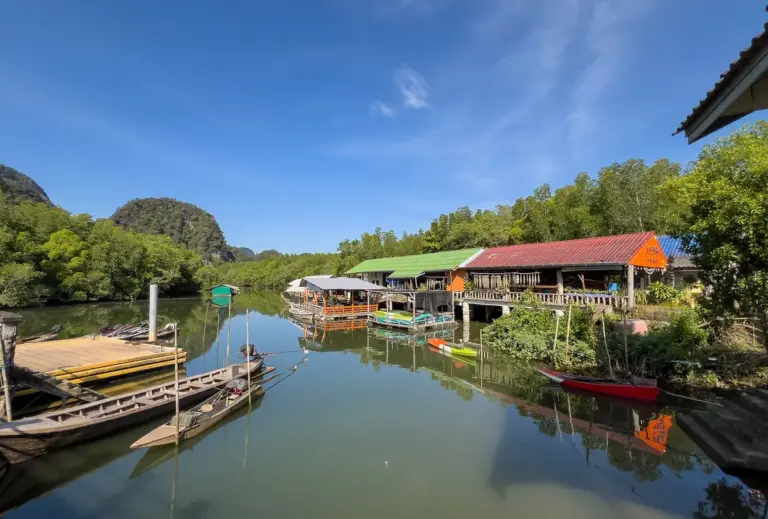
The Ao Luek mangrove forest is one of the calmest wild places in Krabi, and most visitors only see a small part of it. This guide explains where the mangroves are, how to explore the Tha Pring mangrove river and the Bor Thor mangroves by boat or kayak, what makes the Laem Sak mangroves different, and which mangrove wildlife in Krabi you can hope to see.
Quick answer: The Ao Luek mangrove forest covers the river mouths and bays of northern Krabi, between limestone cliffs and the edge of Phang Nga Bay. The easiest ways in are a longtail boat along the Tha Pring canal, a guided kayak trip from Bor Thor pier to the Tham Lod and Phi Hua To caves, or a community visit at Laem Sak. Go in the drier months of about November to April, start early, and ask your guide about the tide, because low water shows the crabs and mudskippers while higher water opens more channels.
What is the Ao Luek mangrove forest?
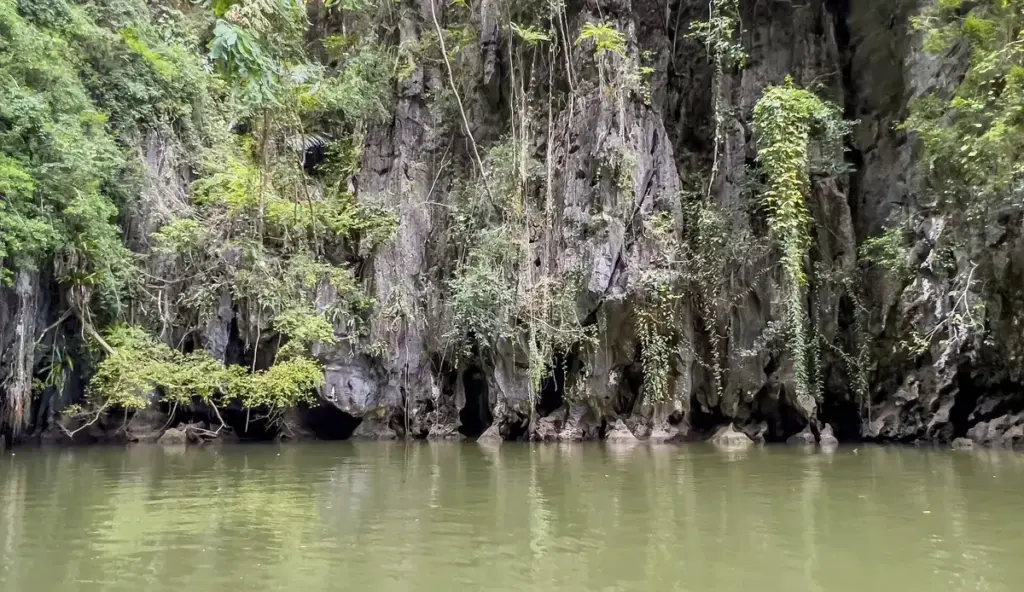
Mangroves are salt-tolerant trees that grow where rivers meet the sea. Their tangled roots hold the mud in place, shelter young fish and crabs, and protect the coast from storms. In Ao Luek, these forests line the winding channels that flow out towards Phang Nga Bay, with limestone towers rising straight out of the water.
So, the Ao Luek mangrove forest is not one park with a gate. Instead, it is a network of rivers, inlets, lagoons and small islands spread across the district. Thailand's mangroves as a whole cover roughly 1.73 million rai, about 278,000 hectares, according to Department of Marine and Coastal Resources figures for 2022, and neighbouring Phang Nga holds the largest share of any province. Ao Luek sits right on that rich coastline.
Our Ao Luek travel guide explains the wider district, and things to do in Ao Luek lists the parks and caves nearby.
Tha Pring mangrove: the river by longtail boat
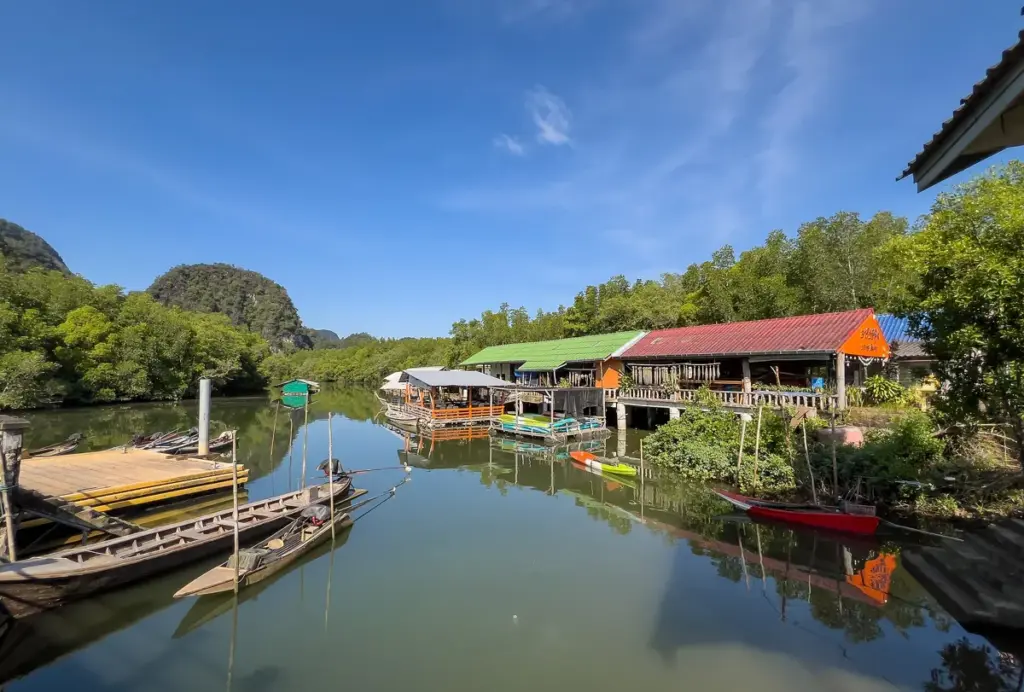
The Tha Pring mangrove river is the most photogenic way into the forest. Longtail boats leave from the Tha Pring canal, near a small pier with wooden houses on stilts. From there, the boat winds between mangrove walls and limestone cliffs, and then slips through a low cave entrance into a hidden lagoon.
The trip feels peaceful because the engine slows down in the narrow parts. In addition, you can ask the boatman to stop near the roots so you can look for crabs. Most trips are short, so it pairs well with a morning at Than Bok Khorani National Park, which is also in Ao Luek.
Prices are set locally and change with the season and group size. Therefore, agree on the route and the price before you board, and carry cash.
Bor Thor mangroves: kayaking to the caves
The Bor Thor mangroves are the best known part of the Ao Luek mangrove forest. Kayak tours and longtail boats leave from Bor Thor pier and follow mangrove channels to two famous sights. First, Tham Lod is a sea cave tunnel you paddle straight through. Then, Phi Hua To cave holds prehistoric red and black paintings on its walls.
Tour listings describe full-day versions of about 6 to 8 hours with roughly 8 to 12 km of paddling, while half-day trips cover the two caves only. However, operators set the start time by the tide, so let them choose. Read our guides to Tham Lod cave kayaking and Phi Hua To cave for the details, and see our Ao Luek day trips for a week of ideas.
Laem Sak mangroves: a community visit
The Laem Sak mangroves feel very different from the cave tours. Laem Sak is a cape in Ao Luek where, according to Tourism Authority of Thailand material, Thai Buddhist, Thai Muslim and Thai Chinese families have lived side by side in a group of fishing villages for generations. A local community enterprise runs visits, so your money stays in the villages.
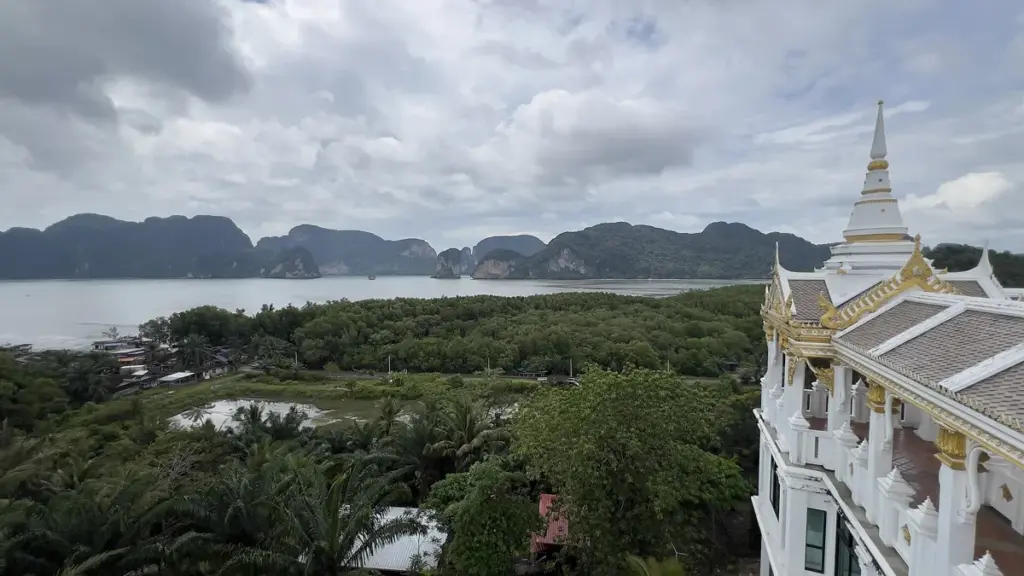
Community programmes include kayaking along the mangrove shore, watching fish and lobster farming in floating cages, and walking through the mangroves at Khao Chang Mop. In addition, the hilltop temple of Wat Maha That Laem Sak looks out over the forest and the islands of Phang Nga Bay. As a result, Laem Sak combines nature, food and culture in one easy half day. Opening times vary between listings, so contact the community or your hotel before you go.
Mangrove wildlife in Krabi: what you might see
Mangrove wildlife in Krabi is small and easy to miss, so slow down and look closely. Guides on Krabi mangrove trips regularly mention these animals:
- Fiddler crabs. The males wave one oversized claw on the mud at low tide.
- Mudskippers. These fish breathe air and hop across the mud on their fins.
- Kingfishers and herons. Look along the edges of the channels, especially in the morning.
- Crab-eating macaques. They live along the shore, so keep food out of sight.
- Monitor lizards. Large ones often rest on branches or swim across the channels.
Sightings are never guaranteed, of course. Still, a quiet group, an early start and low water give you the best chance. Never feed the monkeys, and do not pick up crabs or shells.
When to visit the Ao Luek mangrove forest
| Factor | What to know |
|---|---|
| Season | About November to April is usually drier and calmer; the rainy months can bring cancellations |
| Time of day | Early morning is cooler, quieter and better for birds |
| Low tide | Mud banks show crabs and mudskippers; some caves are easier to reach |
| Higher tide | More channels open for kayaks and boats |
| Crowds | Christmas and New Year are the busiest weeks |
Sources disagree on the single best tide, so trust your local guide. In other words, the tide decides the route, not the clock. Our Andaman Sea best time to visit guide explains the seasons in more detail.
Tips for exploring the Ao Luek mangrove forest
- Choose a guide. The channels look alike, and tides change quickly, so go with a local operator.
- Protect yourself from the sun. Bring a hat, reef-safe sunscreen and water, because shade is patchy on open water.
- Use insect repellent. Mosquitoes can bite near the roots, especially around dusk.
- Pack a dry bag. Phones and cameras get splashed on kayak trips.
- Leave no trace. Take all plastic back with you and keep your voice down near wildlife.
- Respect the villages. Dress modestly in Laem Sak and ask before taking photos of people.
If you already paddled once, the cliffs in our Ao Thalane kayaking guide and the clear water of Khlong Root kayaking make good second trips. Families can also read Krabi with kids and eco tourism Krabi.
How to get to the Ao Luek mangroves
Ao Luek is in the north of Krabi, on the road towards Phang Nga. Hotel and transfer listings put it at roughly 54 to 71 minutes by road from Krabi airport, as our Krabi airport to Ao Luek guide explains. Public transport to the piers is limited, so most visitors rent a car or scooter, or book a tour with a hotel pickup. See Krabi car rental if you want your own wheels.
Where to stay near the Ao Luek mangrove forest
At a glance: 17 houses from 1,200 to 2,000 baht per night, air conditioning in every house, free breakfast, free Wi-Fi and a swimming pool, at 97/1 Moo 1, Ao Luek Nuea, Krabi.
To reach the piers early, stay in Ao Luek itself. We recommend Ban Kamnan Resort in Ao Luek Nuea, a short drive from Than Bok Khorani and the mangrove piers. For a small family, House #4 and #9 each have one 5 ft bed and one 3.5 ft bed, one bathroom and 32 m², and sleep three for 1,350 baht per night. Like every house, they have air conditioning. Also, guests share the swimming pool, and breakfast of toast, fried eggs and hot coffee is free. Prices match the resort's listing, so check your dates on Booking.com. For other options, read where to stay in Ao Luek.
Frequently asked questions
Take a longtail boat on the Tha Pring canal, join a kayak tour from Bor Thor pier to Tham Lod and Phi Hua To, or book a community visit at Laem Sak. A local guide is the easiest and safest option.
Low tide shows the mud banks, crabs and mudskippers, while higher water opens more channels for kayaks. Guides set the time by the tide, so follow their advice.
Yes. Longtail boat trips are calm and short, and many kayak tours use stable two-person kayaks. Bring sun protection, water and life jackets that fit.
Common sightings include fiddler crabs, mudskippers, kingfishers, herons, crab-eating macaques and monitor lizards. Sightings depend on the tide, the time of day and how quiet your group is.
Final thoughts
The Ao Luek mangrove forest rewards slow travellers. Glide through the Tha Pring lagoon, paddle the Bor Thor channels to the caves, and spend a morning with the fishing families of Laem Sak. Then rest by the pool and plan your next trip. When you are ready, book your stay at Ban Kamnan Resort on Booking.com and wake up close to the mangroves.








