

 Krit Ariyathiti
Chinese New Year in Thailand turns old Chinatowns red and gold, with lion dances, firecrackers, shrine visits and food stalls that run late into the night. This guide covers the date of Chinese New Year 2027, where to celebrate, from Yaowarat Chinese New Year in Bangkok to Chinese New Year Phuket and Krabi, what the customs mean and how to plan a trip around the busy week.
Quick answer: Chinese New Year 2027 falls on Saturday 6 February 2027, which starts the Year of the Goat, and New Year's Eve is Friday 5 February. It is not a nationwide public holiday in Thailand, so most shops, banks and transport run as normal. However, Thai-Chinese neighbourhoods celebrate in a big way. The best places are Bangkok's Chinatown, Phuket Old Town, Nakhon Sawan and Hat Yai, while smaller towns such as Krabi and Maenam on Koh Samui hold their own street events. Book rooms and transport early, because the week is busy across Asia.
What is Chinese New Year in Thailand?
Thailand has one of the largest ethnic Chinese communities in Southeast Asia. Many families trace their roots to southern China, and their traditions have blended with Thai life over generations. As a result, Chinese New Year in Thailand feels both familiar and local. For example, you will see Thai Buddhist temples and Chinese shrines side by side, and many families visit both.
The festival follows the lunar calendar, so the date moves every year. In general, it falls between late January and mid February. In Thai, people call it Trut Chin, and Thai-Chinese families often keep three key days:
- Shopping day. Families buy food, fruit, paper offerings and new clothes, so markets get very busy.
- Worship day. On New Year's Eve, families make offerings to their ancestors and to the household gods.
- Visiting day. On New Year's Day, people visit relatives, give red envelopes and wear new clothes, often in red.
When is Chinese New Year 2027?
Chinese New Year 2027 falls on Saturday 6 February 2027, according to several calendar sources, and it begins the Year of the Goat. New Year's Eve is Friday 5 February. Furthermore, the Lantern Festival, which closes the season, falls about two weeks later.
| Event | Date, according to guides | What happens |
|---|---|---|
| New Year's Eve | Friday 5 February 2027 | Family offerings, reunion dinner |
| Chinese New Year's Day | Saturday 6 February 2027 | Red envelopes, visits, lion dances |
| Lantern Festival | About 20 February 2027 | End of the New Year season |
| Chinese New Year 2028 | About 26 January 2028 | Year of the Monkey begins |
Local events often run for several days around the main date. So, check the exact programme with the Tourism Authority of Thailand closer to the time.
Is Chinese New Year a public holiday in Thailand?
No. As of November 2026, Chinese New Year in Thailand is not a nationwide public holiday in Thailand. Therefore, government offices, banks and most shops stay open. However, many family-run shops in Chinatown areas close for a day or two, and some restaurants change their hours. In addition, flights and buses fill up, because visitors from China, Malaysia and Singapore also travel during their own holidays.
Chinese New Year Bangkok: Yaowarat and beyond
Chinese New Year Bangkok centres on Yaowarat Road, the heart of the city's Chinatown. In normal years, the Bangkok Metropolitan Administration closes the road to traffic and holds a large street festival with stages, lion and dragon dances and long rows of food stalls. Meanwhile, shrines in the area fill with incense and worshippers.
Yaowarat Chinese New Year: what to know
The Yaowarat Chinese New Year street festival is not held every year. For example, news reports say the main event did not take place in 2026, although malls, shrines and foundations across Bangkok still hosted celebrations. As of November 2026, the official plan for 2027 had not been announced. So, check the Bangkok Metropolitan Administration and the Tourism Authority of Thailand in January.
Even without the main stage, Chinatown is worth a visit. First, take the MRT Blue Line to Wat Mangkon station, because road closures make taxis slow. Then walk along Yaowarat Road and the side lanes, where shops sell red lanterns, gold decorations and dried goods. Our Bangkok Chinatown guide maps the main streets and food lanes. Also, the Bangkok night markets guide lists other evening food spots nearby.
Chinese New Year Phuket and the south
Chinese New Year Phuket has a special feel, because the island has a long Hokkien heritage. In past years, the celebrations have joined the Phuket Old Town Festival, with performances and food fairs among the old shophouses. In addition, the Chinese shrines around Phuket Town are busy with worshippers. Our Phuket Old Town guide explains how to walk the historic streets.
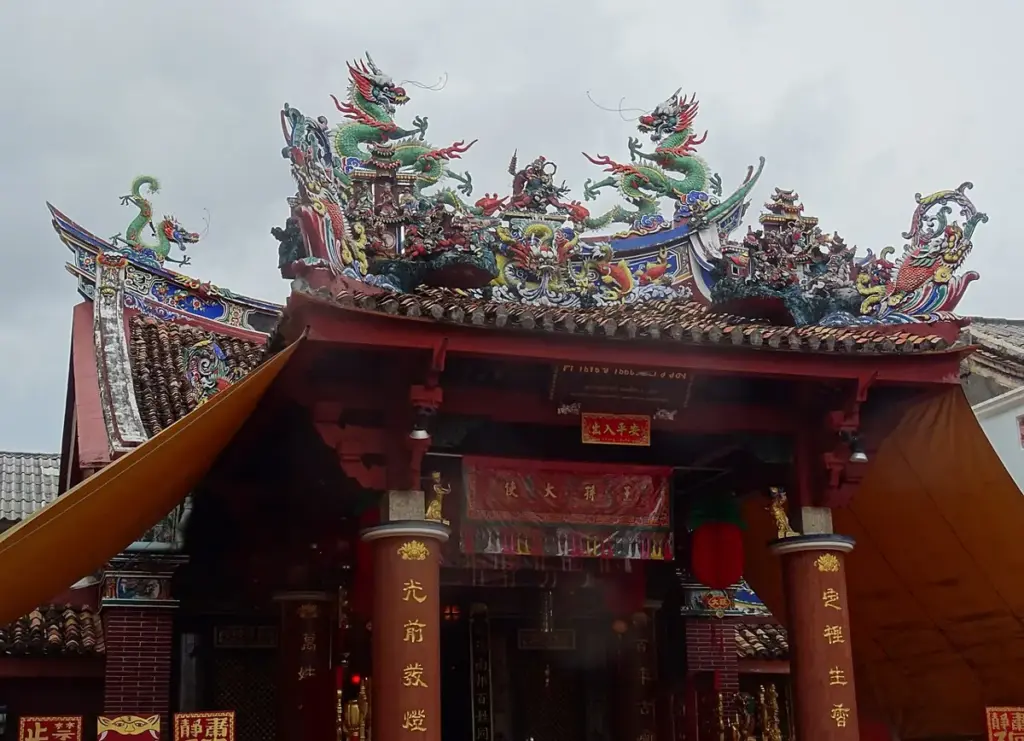
Krabi Town also celebrates, and it held street celebrations with costumed performers in 2025. Expect lion dances, red lanterns and shrine visits rather than a huge festival. As a result, the mood is relaxed and local. Trang, south of Krabi, has a strong Chinese heritage too, and its breakfast culture is famous, as our Trang food guide explains.
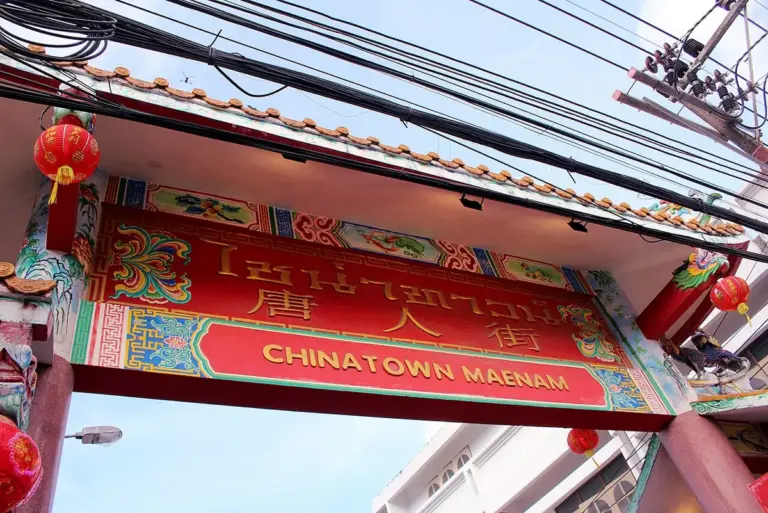
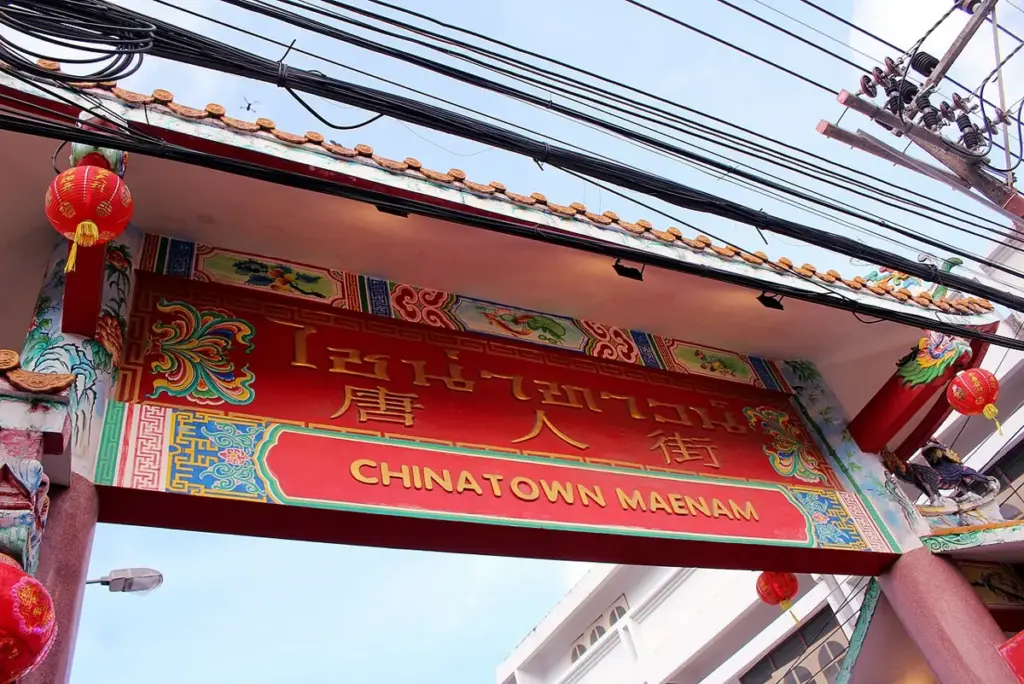
On the Gulf coast, the Chinatown of Maenam on Koh Samui held street parades with lion dances in both 2020 and 2026. Further south, Hat Yai is known for a large celebration, and past listings describe lion dances, contests and fireworks.
Nakhon Sawan: the biggest show outside Bangkok
Nakhon Sawan, in central Thailand, is often called the home of the biggest celebration of Chinese New Year in Thailand outside Bangkok. Its Pak Nam Pho festival includes a famous parade honouring the local Chinese deities. Dates vary by year, and some editions have run for more than a week. Therefore, check the provincial programme before you plan a detour.
Chinese New Year customs and etiquette
Knowing a few customs helps you enjoy Chinese New Year in Thailand with respect:
- Wear red. Red stands for luck and happiness, so a red shirt is always welcome. On the other hand, avoid wearing all black or all white to family events.
- Red envelopes. Elders give red envelopes of money, called ang pao, to children and younger relatives. As a visitor, you do not need to give one.
- Offerings. Families offer roast meats, fruit, sweets and paper gifts at home altars and shrines. Do not touch the offerings.
- Firecrackers. Firecrackers scare away bad luck, so keep a safe distance and cover children's ears.
- Greetings. People often say "Sawasdee Trut Chin" in Thai or "Sin Jia Yu Ee" in Teochew.
At shrines, dress modestly and move quietly around worshippers. Our guide to Thai temple etiquette covers the same basic rules.
Food to try during Chinese New Year in Thailand
The festival is a great time to eat. For example, you will find roast duck, steamed buns, noodles and sweet sticky rice cakes in Chinatown stalls. Oranges and tangerines are everywhere, because their colour stands for gold. In addition, many Thai-Chinese families eat vegetarian food on certain days. Our Thai street food guide explains how to order and what to pay.
Tips for travelling during Chinese New Year in Thailand
- Book early. Hotels in Bangkok, Phuket and Chiang Mai fill up, and prices often rise.
- Expect crowds. Chinatown streets can become very slow around the main stages, so go early in the evening.
- Use trains and boats. In Bangkok, the MRT and river boats beat taxis during road closures. Our Grab in Thailand guide explains ride-hailing for the rest of your trip.
- Check the weather. February is dry in most of the country, as our guide to the best time to visit Thailand shows.
- Watch your bag. Big crowds attract pickpockets, so read our tips on Thailand travel scams.
Where to stay for Chinese New Year in Krabi
If you prefer a quieter New Year, combine the festival in Krabi Town or Phuket with calm days in the countryside. Ao Luek is about 54 to 71 minutes by road from Krabi airport, depending on traffic, so it suits travellers who want one lively night and peaceful mornings. For things to do nearby, see our Ao Luek travel guide.
At a glance: 17 houses from 1,200 to 2,000 baht per night, air conditioning in every house, free breakfast, free Wi-Fi and a swimming pool, at 97/1 Moo 1, Ao Luek Nuea, Krabi.
We recommend Ban Kamnan Resort in Ao Luek Nuea. For families, House #A, #B, #C and #D each have two 5 ft beds, one bathroom and 40 m², sleep up to four and cost 1,700 baht per night. Like every house, they have air conditioning. Also, guests share the swimming pool, and breakfast of toast, fried eggs and hot coffee is free. Prices match the resort's listing, so check your festival dates on Booking.com.
Frequently asked questions
Chinese New Year 2027 falls on Saturday 6 February 2027, and New Year's Eve is Friday 5 February. Local events often run for several days, so check the programme with the Tourism Authority of Thailand.
Not nationwide. As of November 2026, it is not a national public holiday, so most shops and offices stay open. However, many family shops in Chinatown areas close for a day or two.
Bangkok's Yaowarat Road is the most famous place, while Nakhon Sawan holds the biggest show outside the capital. Phuket Old Town and Hat Yai are the main choices in the south.
Wear something red if you can, because red stands for good luck. At shrines, cover your shoulders and knees, and avoid all black or all white outfits at family events.
Yes, in most regions. February is part of the dry season in much of the country. However, hotels and transport get busy, so book early.
Final thoughts
Chinese New Year in Thailand is colourful, noisy and very welcoming. So, check the date, wear something red and choose your city: Bangkok for the classic Chinatown scene, Phuket for Hokkien heritage or Krabi for a relaxed local version. Then spend a few quiet days in the south. For the rest of the year's events, see our Thailand festivals calendar, and for the next big celebration read our guide to Songkran festival.