

 Krit Ariyathiti
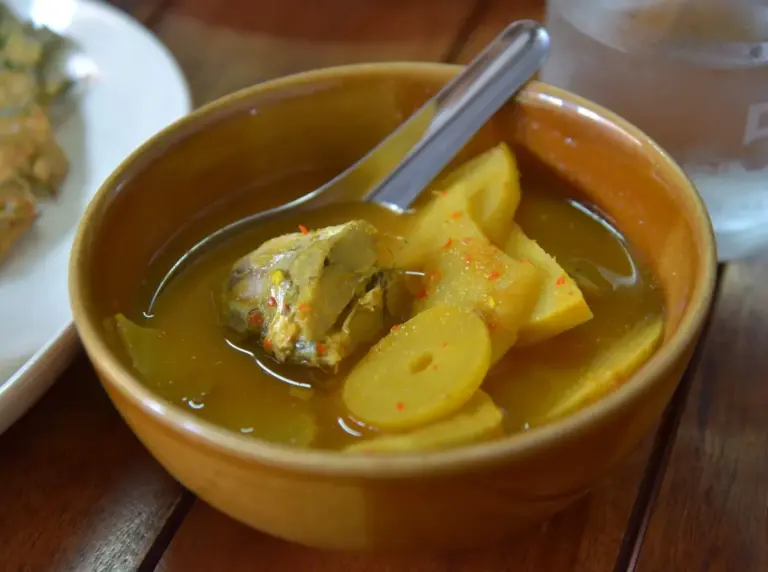
If you like food with real heat and a sharp sour edge, gaeng som is the southern Thai dish to try. This guide explains what makes the southern Thai sour curry different from the central version, why fish is the classic choice in gaeng som pla, how it relates to gaeng leuang, and how to order a Thai sour curry with the spice level you can handle. It also shows where in the south to eat it at its best.
Quick answer: Gaeng som is a sour, spicy curry made without coconut milk. In southern Thailand it is bright yellow from fresh turmeric and very hot from chillies, with sourness from tamarind or lime, and it is usually cooked with fish and vegetables such as green papaya, bamboo shoots or pineapple. In Bangkok and central Thailand, the same southern dish is often called gaeng leuang, while central gaeng som is a milder, orange-red sour curry.
What is gaeng som?
Gaeng som means "sour curry" in Thai. It is a thin, soupy curry, so you eat it with rice, spooning the broth over each mouthful. Unlike green or red curry, gaeng som contains no coconut milk. As a result, it tastes clean, sharp and light, even when it is very spicy.
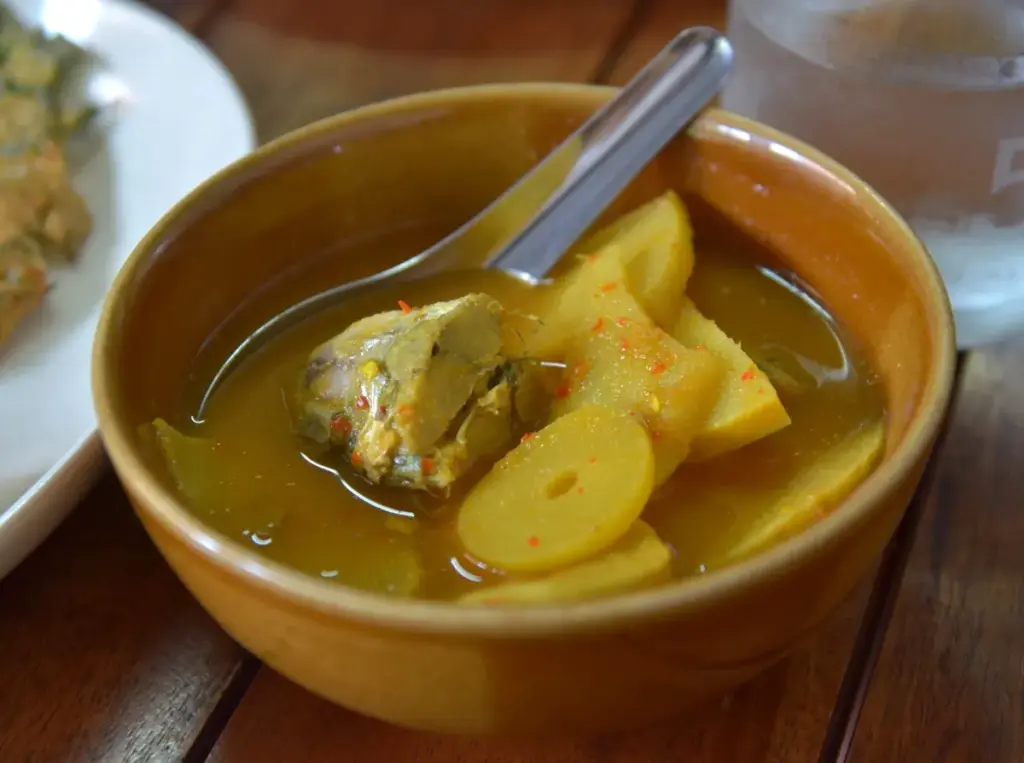
There are two main styles, which can confuse visitors. In the south, gaeng som is yellow, fiery and rich with turmeric. In central Thailand, it is an orange-red curry that is sour and slightly sweet, made with tamarind and dried chillies. Both share the name, but they taste quite different. Our guide to southern Thai food explains the wider cuisine, which is famous for its heat.
What makes the southern Thai sour curry different?
The southern Thai sour curry is built on a paste of fresh chillies, garlic, shrimp paste and plenty of fresh turmeric. Recipe writers stress that fresh turmeric is essential. It gives the curry its deep yellow colour and an earthy, slightly mustard-like flavour.
In addition, the southern paste uses more chillies than most central curries. So, expect a strong burn that builds with each spoonful. Sourness comes from tamarind, lime or sour fruit, and the cook balances it with a little salt and sometimes palm sugar. Meanwhile, the broth stays thin and bright rather than creamy.
Here is how the two styles compare, based on recipe guides:
| Feature | Southern gaeng som | Central gaeng som |
|---|---|---|
| Colour | Bright yellow | Orange to red |
| Main spice | Fresh turmeric and fresh chillies | Dried chillies |
| Taste | Very spicy, sour, earthy | Sour, slightly sweet, milder |
| Coconut milk | None | None |
| Typical protein | Fish | Shrimp, fish or omelette |
Why is gaeng som pla the classic version?
Gaeng som pla means sour curry with fish, and it is the version you will meet most often in the south. Coastal provinces have plenty of fresh sea fish, so cooks use what the boats bring in. Recipe guides say almost any firm ocean fish works, because the fish is simmered in the broth and must hold its shape.
Also, the vegetables change with the season and the cook. For example, common additions include green papaya, bamboo shoots, pineapple, long beans and young coconut shoots. Pineapple, for example, adds a fruity sourness. In contrast, a version with shrimp is also common and slightly sweeter.
So, if you see "gaeng som pla" on a menu, expect a hot yellow broth with pieces of fish and one or two vegetables. Our guide to seafood in Krabi shows other ways the south cooks its catch.
How does gaeng leuang relate to gaeng som?
Gaeng leuang means "yellow curry", and in Bangkok and central Thailand it is the usual name for the southern sour curry. In other words, southern gaeng som and gaeng leuang are mostly the same dish with different names. However, do not confuse it with the mild, coconut-based yellow curry sold in many restaurants abroad. That dish is completely different.
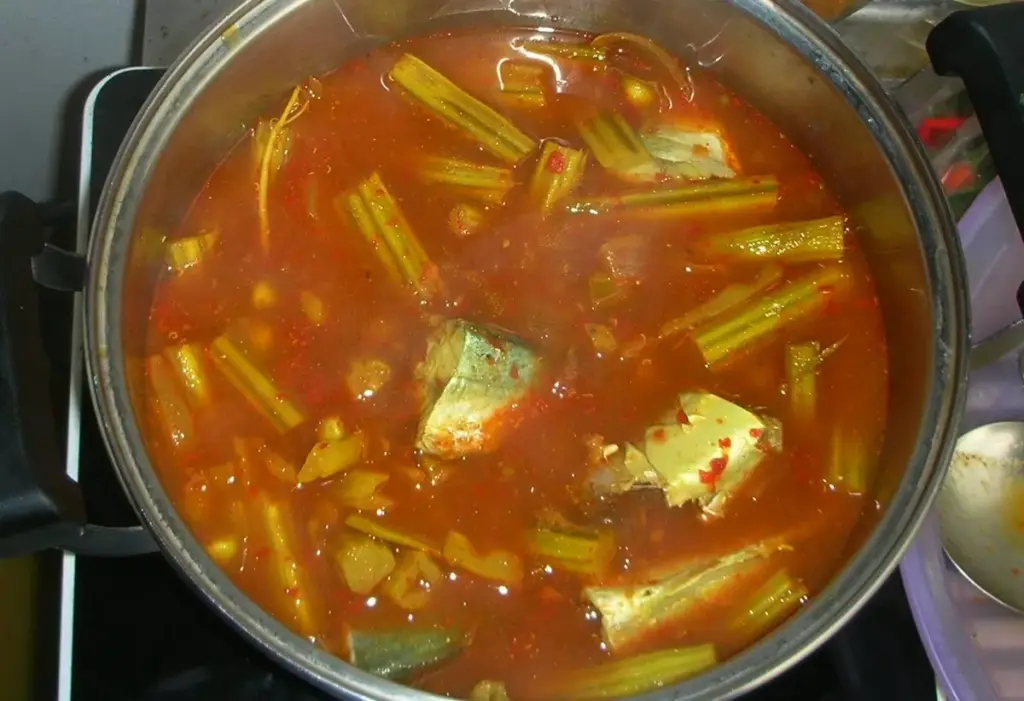
Therefore, if you are in Bangkok and want the southern style, ask for gaeng leuang or "gaeng som tai" (southern sour curry). In the south itself, simply ask for gaeng som. Our guide to Bangkok Chinatown covers other dishes to try in the capital.
How spicy is a Thai sour curry?
A southern Thai sour curry is one of the hottest dishes in Thai cooking. Many visitors find it spicier than tom yum or green curry. As a result, it is wise to ask for less heat on your first try.
Here are a few useful phrases and tips:
- Say "mai phet" for not spicy, or "phet nit noi" for a little spicy. The cook may still add some heat, because the paste itself is hot.
- Order rice. Plain jasmine rice softens each bite and is the normal way to eat it.
- Add a mild side dish. For example, a plain omelette or stir-fried vegetables balance the meal.
- Drink water, not beer, if it burns. Cold drinks help, but plain rice works better.
Also, gaeng som is often sold from curry-and-rice shops, where trays of curries sit on the counter. You simply point at the tray, and the cook spoons it over rice. Prices at these shops are usually low, so you can try several curries in one meal. Our Thai street food guide explains how ordering works.
Where can you eat the best gaeng som?
The best gaeng som is in the south, from Chumphon down to the Malaysian border. In particular, Krabi, Trang, Phuket and Nakhon Si Thammarat are known for strong southern curries. Morning markets and curry-and-rice shops are the most reliable places to find it.
For example, curry-and-rice shops across Krabi province usually set out their trays in the morning, and gaeng som is a common choice for breakfast and lunch. Our guides to khua kling, the southern dry curry, and Krabi street food list more dishes to try. In Trang, a morning food tour is a great way to compare curries; see our Trang food guide.
Can you cook gaeng som at home?
Yes, and the method is simple. First, you pound or blend the paste. Then, you boil it in water or stock, add the vegetables, and finally add the fish and the souring agent. Most recipes take about 30 minutes.
However, finding fresh turmeric outside Asia can be hard, and recipe writers say dried turmeric is a poor substitute. So, look in Asian grocers for fresh roots. Alternatively, a Thai cooking class lets you taste the real thing first; our guide to a Thai cooking class in Krabi explains what to expect.
Where to stay in Krabi for southern Thai food
Ao Luek, north of Krabi, is a good base for eating like a local. It is about 54 to 71 minutes by road from Krabi airport, depending on traffic, and it has village markets and curry shops rather than tourist menus.
At a glance: 17 houses from 1,200 to 2,000 baht per night, air conditioning in every house, free breakfast, free Wi-Fi and a swimming pool, at 97/1 Moo 1, Ao Luek Nuea, Krabi.
We recommend Ban Kamnan Resort in Ao Luek Nuea. For a couple, House #E, #F or #G has one 6 ft bed, one bathroom and 35 m² for 1,350 baht per night. Every house has air conditioning. In addition, guests share the swimming pool, and breakfast of toast, fried eggs and hot coffee is free. Prices match the resort's listing, so check your dates on Booking.com.
Frequently asked questions
Southern gaeng som is sour, very spicy and earthy from fresh turmeric. The central version is sour, slightly sweet and milder.
No. Both the southern and central versions are made without coconut milk, so the broth is thin and light.
Mostly, yes. In Bangkok and central Thailand, gaeng leuang is the usual name for the southern yellow sour curry.
Almost any firm sea fish works, according to recipe guides. Cooks usually use what is fresh at the market that day.
The southern version is one of the hottest Thai dishes. Ask for less spice and eat it with plenty of rice.
Final thoughts
Gaeng som is the taste of the southern coast: bright yellow, sour and fiery. To sum up: order it with rice, ask for less heat at first, look for gaeng som pla at morning markets, and remember the gaeng leuang name in Bangkok. Then head south to eat it where it is made. Check availability at Ban Kamnan Resort on Booking.com and taste real southern curries in Ao Luek.