

 Krit Ariyathiti
Hin Daeng and Hin Muang are two lonely pinnacles in the far south of the Andaman Sea, and big fish such as mantas and whale sharks are reported around them, so divers travel far to see them. This guide explains the Hin Daeng dive depth and what each rock looks like, the Hin Daeng manta rays and Hin Daeng whale sharks you may see, how a Hin Daeng day trip from Koh Lanta works and the experience you need before you book.
Quick answer: Hin Daeng (Red Rock) and Hin Muang (Purple Rock) sit inside Mu Ko Lanta National Marine Park, far from any island. One Koh Lanta dive operator puts them about 55 km away, or a 60 to 75 minute speedboat ride. Both walls drop past recreational limits, and currents are moderate to strong, so they suit experienced divers. Trips run from about mid-October to mid-May, and mantas are most often seen from November to April. For the wider region, read our Krabi diving guide first.
What are Hin Daeng and Hin Muang?
Hin Daeng and Hin Muang are submerged rock pinnacles that rise from deep water, so they act like a reef in the middle of an open sea. According to Sunrise Divers, Hin Daeng is about 40 nautical miles south of Phi Phi, toward the Malaysian border. Meanwhile, a dive operator in Koh Lanta describes both rocks as part of the far south of Mu Ko Lanta National Marine Park.
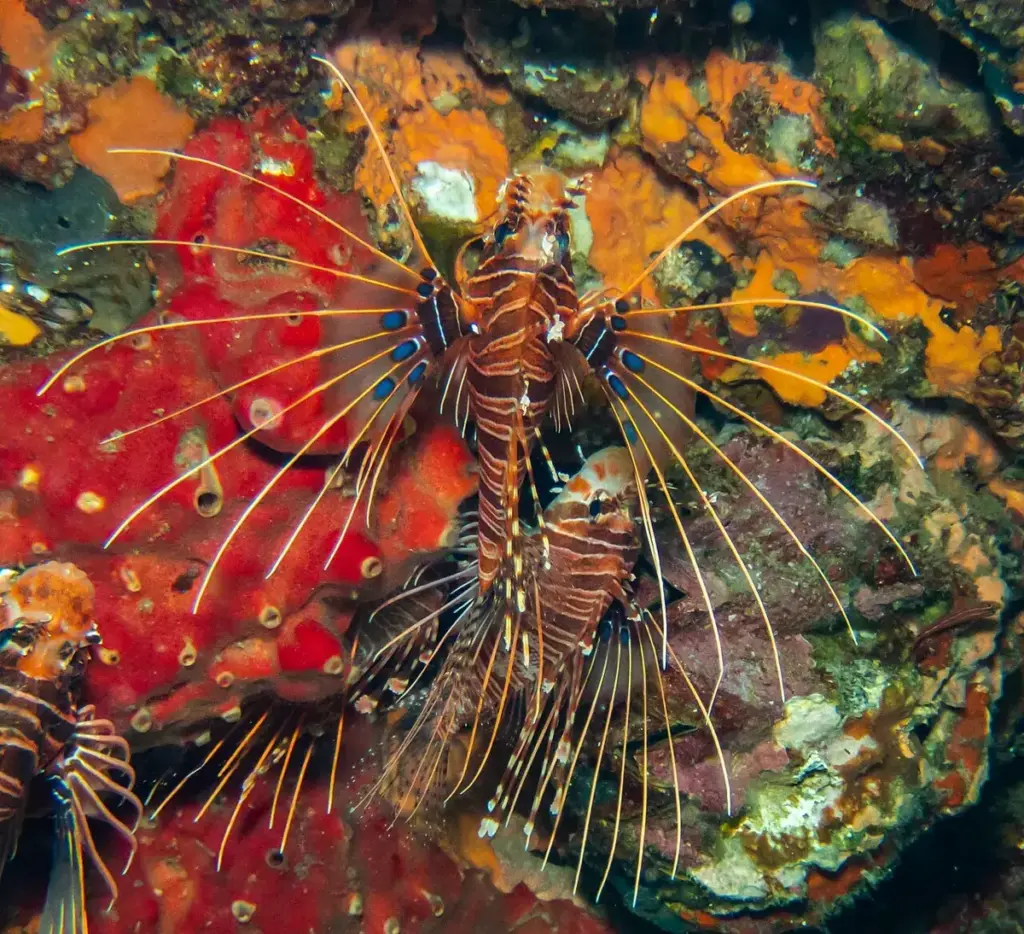
The names describe the colour. Hin Daeng means Red Rock, and its east side is known for soft coral, according to Sunrise Divers. Hin Muang means Purple Rock, and the same source mentions purple soft corals, anemones and schools of silversides and jacks. In fact, a ridge about 40 m deep links the two pinnacles, but the depth means divers do not swim between them.
Hin Daeng dive depth and what the walls are like
The Hin Daeng dive depth is the first thing to understand, because it decides who can go. Sources disagree on exact numbers, which is normal for walls that fall into open water. For example, one Koh Lanta operator lists Hin Daeng at about 5 to 45 m and Hin Muang at about 8 to 70 m. Another site guide says the southwest side of Hin Daeng drops to more than 60 m.
| Site | Typical top | Reported bottom | Notes |
|---|---|---|---|
| Hin Daeng | About 5 m | 45 m to 60 m+ | Soft coral on the east side |
| Hin Muang | About 8 to 12 m | 60 m to 70 m | Purple soft coral and anemones |
| Ridge between them | About 40 m | Not for recreational diving | Links the two rocks |
Visibility is often good. According to one operator, it ranges from about 10 m to more than 30 m. However, the open sea also brings change, so conditions can shift within a day. Therefore, treat every number here as a guide and ask your operator for the plan on the morning of your dive.
Currents and what they mean for you
Currents are moderate to strong at both rocks, according to two different Koh Lanta dive operators. Because there is no land nearby, a diver who drifts away from the wall may have no reference point. As a result, one operator asks guests to be comfortable with a mid-water ascent and safety stop without a physical reference in strong current. Good air consumption also matters, since a short air supply can cut a dive short.
Hin Daeng manta rays and when to see them
Hin Daeng manta rays are the main reason many divers make the trip. One operator says giant oceanic mantas are most often seen from November to April, around cleaning stations on the rock. Another operator lists mantas as gathering to feed but does not give a season. So, treat the November to April window as a good bet rather than a promise.
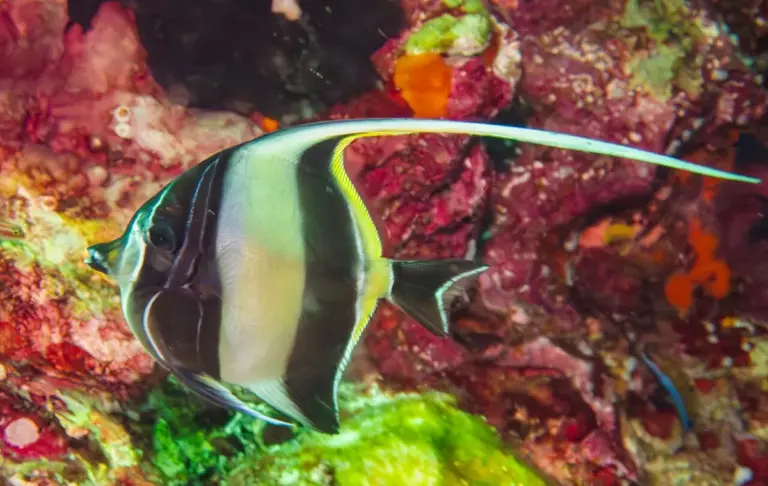
Wildlife is never guaranteed. Besides mantas, sources list leopard sharks, jacks, trevallies, barracuda, moray eels, nudibranchs and shoals of fusiliers and snappers. Meanwhile, even without a big animal, one site guide calls Hin Muang visually appealing even without large fish.
Hin Daeng whale sharks: season and etiquette
Hin Daeng whale sharks are the other headline. According to one operator, whale sharks can appear all year, and sightings are most common from February to May. A second operator says Hin Daeng's peak is usually early February to late April. In short, late dry season is the likeliest time, but luck still rules.
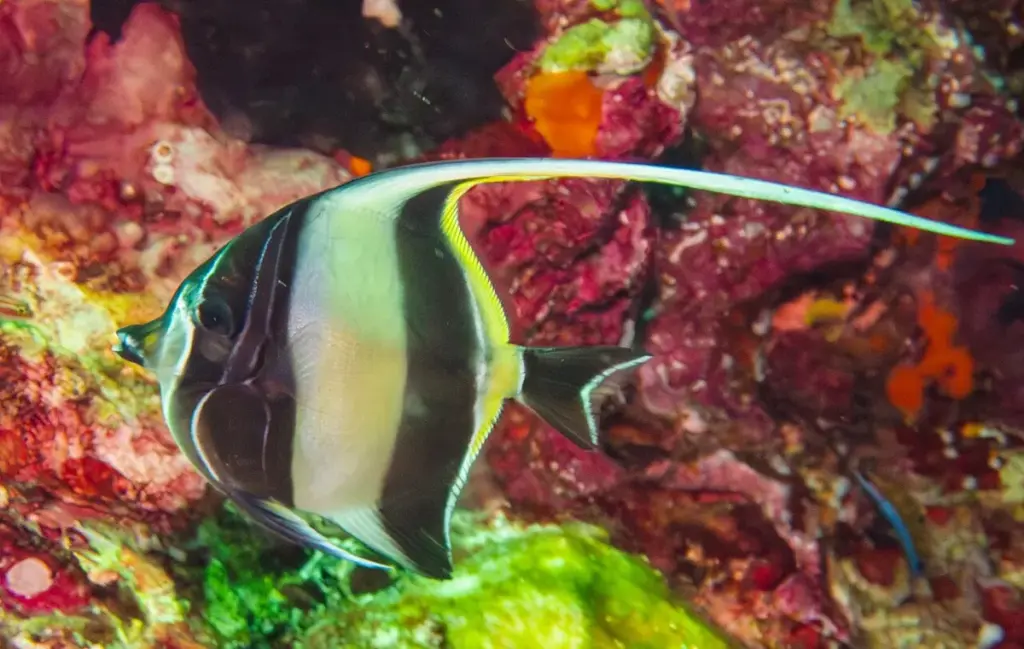
Please keep your distance from any large animal. Do not touch, chase or block the path of a whale shark or manta, because stressed animals leave the site. Also keep your buoyancy steady near the coral, and never take anything from the reef.
Hin Daeng day trip from Koh Lanta
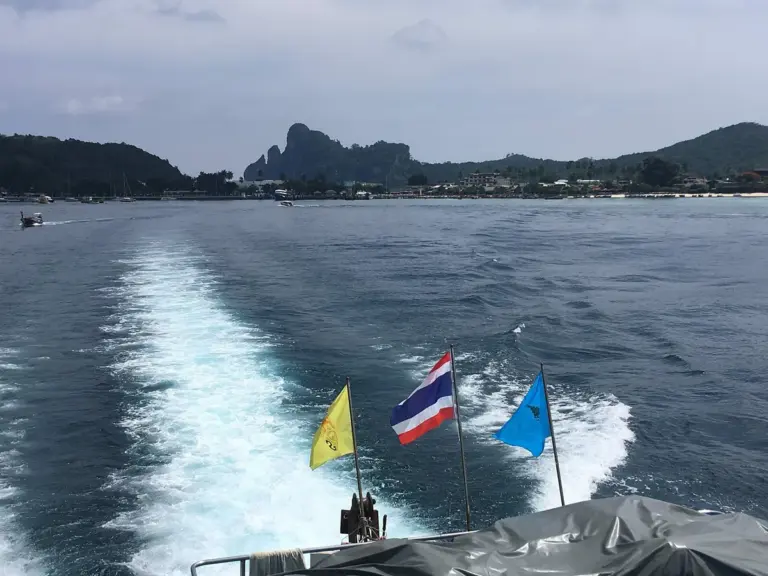
A Hin Daeng day trip from Koh Lanta is the most direct way to dive here, since dive shops on Koh Lanta run the trips. The Andaman Sea is calm from late autumn, and one Koh Lanta operator says its Hin Daeng trips run from mid-October to mid-May. Outside that window the sea is rougher, so boats may not go. For the island itself, see our Koh Lanta guide.
- Boat ride: About 60 to 75 minutes by speedboat from Koh Lanta, according to one operator.
- Dives: Day trips usually combine two dives, and some add a stop at Koh Haa.
- Price: One Koh Lanta operator listed 4,330 baht online for two dives with guide, equipment, lunch and drinks, in November 2026. Prices vary by company and season.
- Park fee: The same operator lists a marine park fee of 600 baht per day for foreign adults on top of the price. Other sources give no fee, so confirm with your boat.
- Liveaboards: Some Phuket liveaboards include the site on a weekend or multi-day route.
Operators may adjust dates and rules, so use these numbers only as a starting point.
Who can dive Hin Daeng and Hin Muang?
Both sites are for experienced divers. One Koh Lanta operator says the sites are not suitable for Open Water divers and are suitable for Advanced Open Water divers. Another lists a minimum of Open Water certification but recommends an advanced course first for less experienced divers. So, the safest plan is to hold an Advanced Open Water certificate, log some dives in current and speak honestly with your guide.
Nitrox and training
Nitrox can extend no-decompression time on deep walls. One operator notes that enriched air certification is available locally. Likewise, a short advanced course on the way south can add confidence. Still, training does not replace judgement, so call a dive if the current or your air feels wrong.
Safety, insurance and flying after diving
Deep diving carries real risk, and open-sea sites add current and boat traffic. First, use a reputable, licensed operator and ask about oxygen on board, guide ratios and emergency plans. Second, check that your travel insurance covers diving to your depth. Our Thailand travel insurance guide explains what to look for.
Flying after diving also needs care. According to the Divers Alert Network, a workshop recommended a minimum 12-hour surface interval before flying after a single no-decompression dive, and 18 hours after multiple dives or multi-day diving. DAN adds that these rules reduce risk but do not guarantee safety, and DAN Europe suggests 24 hours after repetitive diving. General information only, so follow your own agency and doctor.
Best time for Hin Daeng and Hin Muang
For Hin Daeng and Hin Muang, the best time is the dry season, from about November to April, when the sea is calm enough for boats and mantas are most often seen. Whale shark sightings are listed from February to May. By contrast, the southwest monsoon brings waves, and trips usually stop outside mid-October to mid-May. For the weather by month, see Andaman Sea best time to visit.
Where to stay: continue south to Krabi
Hin Daeng and Hin Muang are a day trip from Koh Lanta, so they fit a Krabi dive holiday. Many divers fly into Krabi airport, which is about 54 to 71 minutes by road from Ao Luek, depending on traffic. Therefore, a calm base inland can balance the boat days. If you are new to the area, our Krabi airport to Ao Luek guide explains the transfer, and learn to dive in Thailand covers the first certificate.
At a glance: 17 houses from 1,200 to 2,000 baht per night, air conditioning in every house, free breakfast, free Wi-Fi and a swimming pool, at 97/1 Moo 1, Ao Luek Nuea, Krabi.
We recommend Ban Kamnan Resort in Ao Luek Nuea as a trial slow stay or a first base near Krabi. For two divers, House #E, #F and #G each have one 6 ft bed, one bathroom and 35 m², and they sleep two for 1,350 baht per night. Like every house, they have air conditioning. Also, guests share the resort's swimming pool, and breakfast of toast, fried eggs and hot coffee is free. Prices match the resort's listing, so check your dates on Booking.com.
Frequently asked questions
Sources differ. Operators list Hin Daeng at about 5 to 45 m or deeper and Hin Muang at about 8 to 70 m, and some say the walls drop past 60 m. Recreational divers stay within their certification limits.
One operator says giant oceanic mantas are most often seen from November to April. Sightings are never guaranteed.
Operators describe the sites as unsuitable for newly certified Open Water divers because of depth and current. An Advanced Open Water certificate and some experience are the usual advice.
One Koh Lanta dive operator gives about 55 km and a 60 to 75 minute speedboat ride. The time depends on the boat and the sea.
Final thoughts
Diving Hin Daeng and Hin Muang rewards divers who prepare. To sum up: hold an advanced certificate, dive in the November to April window, ask about currents and fees, and respect big animals. Then relax inland. Check availability at Ban Kamnan Resort on Booking.com and plan your Krabi dive trip.
General information only, not safety, medical or insurance advice. Fees, seasons and park rules change, so confirm with your dive operator and the Department of National Parks.