


 Krit Ariyathiti
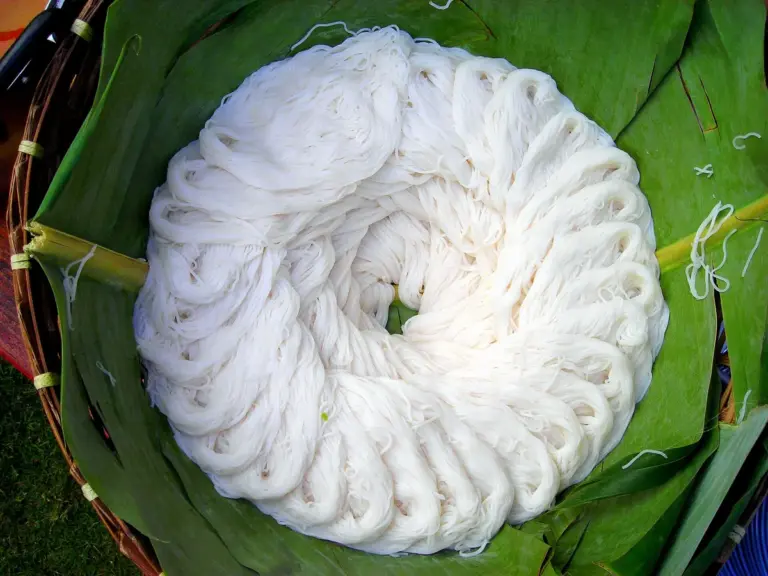
Kanom jeen is Thailand's soft, white rice noodle served with curry, and it is a breakfast staple across the south. This guide explains what fermented rice noodles are, how southern kanom jeen nam ya differs from other versions, why kaeng tai pla is the one to approach with care, how the kanom jeen toppings work, and how to order it on a trip to Krabi and the Andaman coast.
Quick answer: Kanom jeen (also spelled khanom chin or khanom jeen) is made from rice that is fermented for about three days, then pressed into boiling water and coiled into small nests. You pour a curry over the noodles and add raw vegetables and herbs from the side. In the south, shops usually offer several curries, such as nam ya, nam prik and kaeng tai pla. The last is a very spicy fish-viscera curry, so ask about heat first.
General information, not medical advice. If you have a food allergy or a health condition, check the ingredients with the seller or your doctor.
What is kanom jeen?
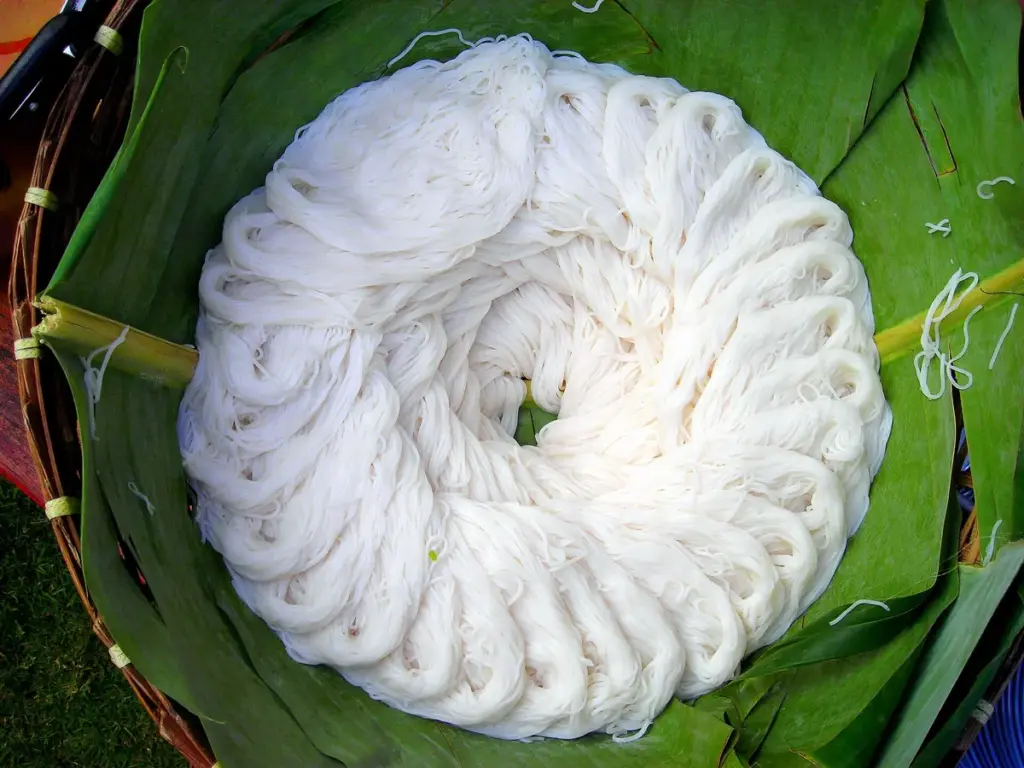
Kanom jeen is a fresh rice noodle, thin, soft and pale. According to Wikipedia, the rice is fermented for about three days, then boiled and pressed through a sieve into boiling water. The noodles are then served with a sauce or broth. Thai Food Paradise says the same three-day fermentation gives the noodles a slight tang.
The name is a small puzzle. The word jeen means Chinese in Thai, yet Wikipedia says the noodle came from the Mon people. Nation Thailand adds that linguists think the name comes from a Mon phrase, so the dish is not Chinese at all. In short, the name misleads, and the food is deeply Thai.
You will see several spellings on menus and maps. Kanom jeen, khanom chin and khanom jeen all mean the same thing. In the north the noodles may be called khanom sen, and in the northeast khao pun.
Fermented rice noodles: how the dish works
Unlike a bowl of noodle soup, kanom jeen is built at the table. First, you take a nest of noodles. Next, you ladle a curry over it. Finally, you add vegetables and herbs. Because the noodles are mild, the sauce carries the flavour.
Fermented rice noodles also come in two styles, according to Wikipedia. The traditional style uses fermented flour and gives brown, stickier noodles that keep longer. The other style uses fresh flour and gives white, softer noodles that are easier to make. Most of what tourists eat today is the white kind.
Also, the dish is eaten at many times of day. Nation Thailand notes it appears at breakfast, at temple fairs and at festivals. Therefore, you will find it at morning markets as well as in small shops.
Southern kanom jeen: nam ya, nam prik and more
Southern shops usually offer a choice of curries. Phuket101's guide to Phuket shops lists a long menu that includes fish, crab, beef, chicken and a sweet nut curry. The three you will see most often are these.
Kanom jeen nam ya
Kanom jeen nam ya is a fish curry with ground fish, coconut and aromatics. Nation Thailand describes the southern version, nam ya kati pak tai, as having creamy coconut milk, turmeric and intense spice. Be aware that sources disagree on where nam ya began. Wikipedia places it in Central Thailand, while other food writers tie it to the south. So, treat the regional label as contested.
Nam prik curry
Nam prik is the sweeter option. One guide describes it as made with toasted peanuts, and another lists a version with prawns and nuts. It is a good first choice if you want gentler heat.
Kaeng tai pla
Kaeng tai pla is a curry made with fermented fish viscera. One guide calls it the king of southern Thai curries, and Thai Food Paradise says it is very spicy. In practice, it is salty, sharp and fiery. If you are new to southern food, try nam ya first, then taste a spoonful of tai pla from a friend's plate.
A crab curry also appears in coastal towns, and one Phuket guide lists it among the choices. Availability varies by shop, so look at what the pots hold when you arrive. For a wider tour of the region's dishes, read our southern Thai food guide.
Kanom jeen toppings: the vegetable side
The vegetables are half the fun. In the south, shops commonly set out a tray of raw and lightly boiled greens and pickles next to the pots. Phuket101's guide lists bean sprouts, cucumber, long beans, banana blossoms, morning glory, grated radish and basil. Wikipedia lists parkia, white popinac, olives and pickles as typical southern accompaniments.
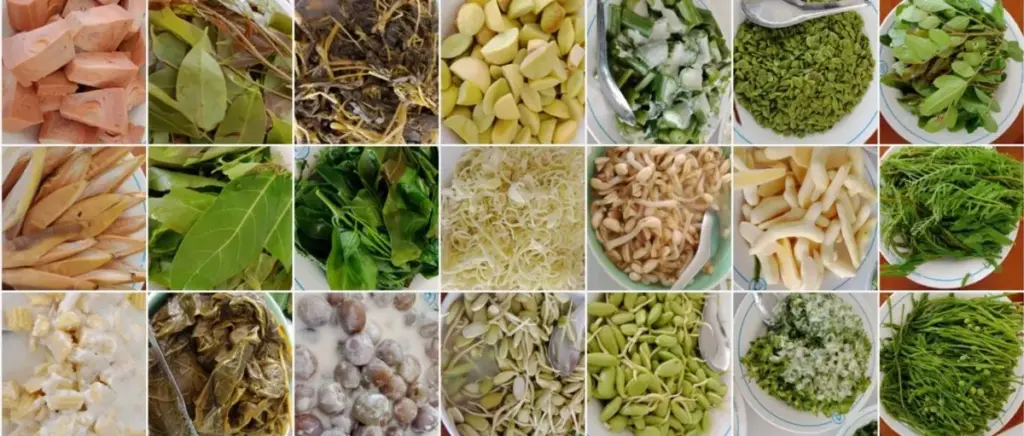
A simple way to build a plate:
- Pick one curry and ask about the heat.
- Add two or three vegetables. For example, shredded banana blossom, cucumber and a few long beans.
- Add something sour or crunchy. Pickles and fresh herbs balance a rich sauce.
- Order a side if you like. Fried fish, grilled chicken or a steamed fish cake are common companions, though menus differ.
- Use a fork and spoon. Mix everything together before you eat.
One guide says shops let you mix several curries on one plate. Ask first, and watch what other customers do. Whether the vegetables are free varies by shop, so check before you pile your plate high.
When and where to eat kanom jeen
Kanom jeen is mainly a morning dish. Phuket101 lists several Phuket Town shops with hours that start between 5:30 and 9 am and often finish around midday, and it warns that ingredients become scarce after about 10 am. Opening times vary by shop and season, so go early.
We do not name shops here, because we have not confirmed any in Krabi or Ao Luek. Instead, look for these signs:
- Pots of curry on the counter with the lids open.
- A tray of raw vegetables by the door.
- A queue of locals before 9 am.
- Plastic stools and a small menu, often in Thai only.
For a first try in Krabi, ask your host or driver where locals eat breakfast. Our Krabi street food guide and Thai street food guide cover other morning habits. We found no firm 2026 price for a plate in Krabi, so ask before you order, and expect a low to mid street-food price.
Eating kanom jeen with care
Southern curries can be very hot. Therefore, order small and add chilli slowly. Also, if you have a shellfish allergy, ask about crab and shrimp paste before you eat, because these appear in several sauces. Raw vegetables are normal in Thai kitchens, but if your stomach is sensitive, choose the boiled greens first.
Where to stay: a base near Krabi
If you want to try southern breakfast habits for yourself, a calm stay near Krabi makes mornings easy.
At a glance: 17 houses from 1,200 to 2,000 baht per night, air conditioning in every house, free breakfast, free Wi-Fi and a swimming pool, at 97/1 Moo 1, Ao Luek Nuea, Krabi.
We recommend Ban Kamnan Resort in Ao Luek Nuea as a trial slow stay. For a couple, House #5 and #6 each have one 5 ft bed, one bathroom and 28 m², and they sleep two for 1,200 baht per night. Like every house, they have air conditioning. In addition, guests share the swimming pool, and breakfast of toast, fried eggs and hot coffee is free. Prices match the resort's listing, so check your dates on Booking.com. Breakfast at the resort is toast, fried eggs and coffee, so ask locally where the morning kanom jeen shops are. From Krabi airport, expect about 54 to 71 minutes by road, depending on traffic.
Frequently asked questions
Kanom jeen is made from rice that is fermented for about three days, then boiled and pressed through a sieve into boiling water. It is served in small nests with a curry or sauce.
It depends on the curry. Southern nam ya and especially kaeng tai pla can be very spicy, while nam prik is sweeter. Ask the seller about heat before you order.
It is a southern Thai curry made with fermented fish viscera. Guides describe it as intense, salty and very spicy, so try a small taste first.
Often, yes. It is common at morning markets and breakfast shops in the south, though it is also eaten at fairs and festivals. Many shops sell out by late morning.
Despite jeen meaning Chinese, sources say the word is probably from a Mon phrase, and the noodle itself is linked to the Mon people.
Final thoughts
Kanom jeen rewards curious eaters. To sum up: start with nam ya, add a handful of fresh vegetables, treat kaeng tai pla with respect and eat early. Then pair your breakfast hunts with a calm base in the south. Check availability at Ban Kamnan Resort on Booking.com and plan a slow stay near Krabi.








