

 Krit Ariyathiti
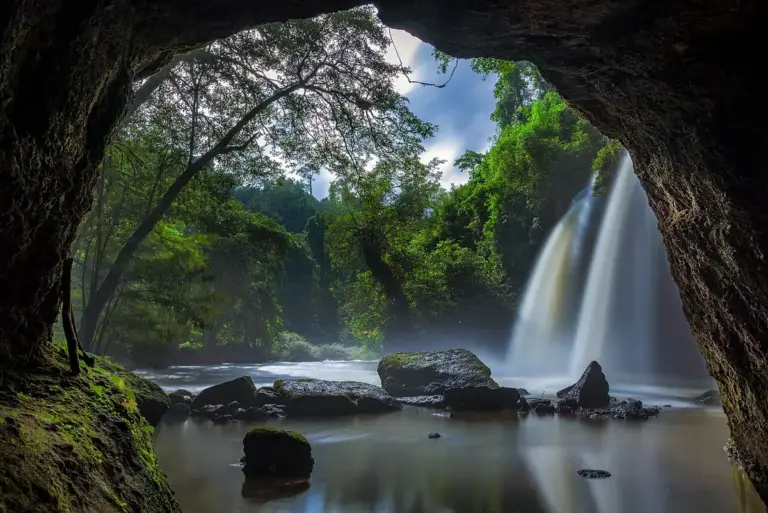
Khao Yai National Park is Thailand's oldest national park and one of the easiest places near Bangkok to see wild elephants, hornbills and gibbons. This guide covers the Khao Yai entrance fee, the best ways to get from Bangkok to Khao Yai, what to know about Khao Yai wildlife, and how to visit Haew Suwat Waterfall, the park's most photographed spot.
Quick answer: Khao Yai National Park lies about 2.5 to 4 hours north-east of Bangkok by road and opens daily from about 06:00 to 18:00. As of November 2026, recent guides list the entrance fee at about 400 baht for foreign adults and 200 baht for children, but the park's own page still shows older rates, so check at the gate. The easiest way in is a car or a tour; by public transport, take a bus, minivan or train to Pak Chong and then a local ride to the gate. So, stay at least one night, start early, and look for wildlife at dawn and dusk.
Where is Khao Yai National Park?
First, Khao Yai National Park covers forested hills across four provinces, with most visitors arriving through Nakhon Ratchasima province near the town of Pak Chong. In fact, it was declared Thailand's first national park in 1962. Later, in 2005, it became part of the Dong Phayayen-Khao Yai Forest Complex, a UNESCO World Heritage site.
The park is large, so a car makes a big difference. Also, roads link the main gate, the visitor centre, viewpoints and waterfalls. However, distances inside the park are long, and the speed limit is low to protect animals on the road.
Khao Yai entrance fee and opening hours
The Khao Yai entrance fee is the most confusing part of planning. As of November 2026:
- Recent guides and news reports list about 400 baht for foreign adults and about 200 baht for children.
- The park's own website still shows an older table with 200 baht for foreign adults at the main gate, dated from 2022.
- Vehicles pay an extra fee, which guides list at about 50 baht for a car.
In addition, Wikivoyage notes that you pay the fee for each day you enter, but not again if you leave and return on the same day. The park opens daily from about 06:00 to 18:00. Because the figures conflict, check the current rate at the gate or with the Department of National Parks before you go, and carry cash.
How to get from Bangkok to Khao Yai
In general, there are three main ways to travel from Bangkok to Khao Yai.
- Car or private driver. This is the simplest choice, especially for families. Guides put the drive at about 2.5 to 3 hours, depending on traffic, and a car also lets you move around inside the park.
- Bus or minivan to Pak Chong. First, buses and minivans leave from Mo Chit bus terminal. Guides list about 2.5 to 3 hours and about 150 to 200 baht. Then take a songthaew or taxi to the park gate, and note that local rides thin out in the early evening.
- Train to Pak Chong. Also, trains on the north-eastern line stop at Pak Chong. Guides list about 3 to 4 hours, depending on the train; see our train travel in Thailand guide for booking tips.
Without a car, it is hard to reach the waterfalls and viewpoints. Therefore, many visitors join a day tour from Pak Chong or hire a driver for the day.
Khao Yai wildlife: what you might see
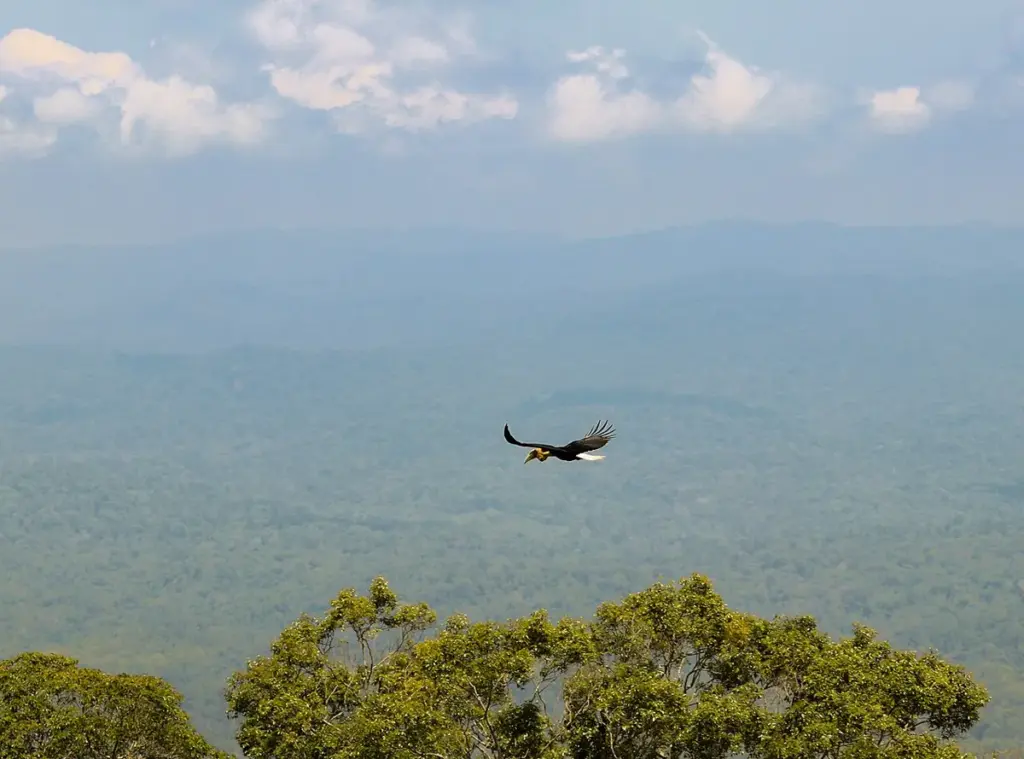
Above all, Khao Yai wildlife is the main reason to visit Khao Yai National Park. In fact, the park is home to wild Asian elephants, several hornbill species, gibbons, macaques, deer and many birds. Most animals are shy, so patience pays off.
- Elephants. Often seen near roads at dusk. Stay in your car, keep your distance and never block their path.
- Hornbills. Great, wreathed and oriental pied hornbills live here, so look up often. Listen for the loud whoosh of their wings.
- Gibbons. You often hear their calls in the morning before you see them.
- Deer and macaques. Also common near grassland and the visitor area. Do not feed the macaques.
Early morning and late afternoon are the best times. Also, a local guide improves your chances, because guides know where animals have been seen recently.
Haew Suwat Waterfall and other highlights
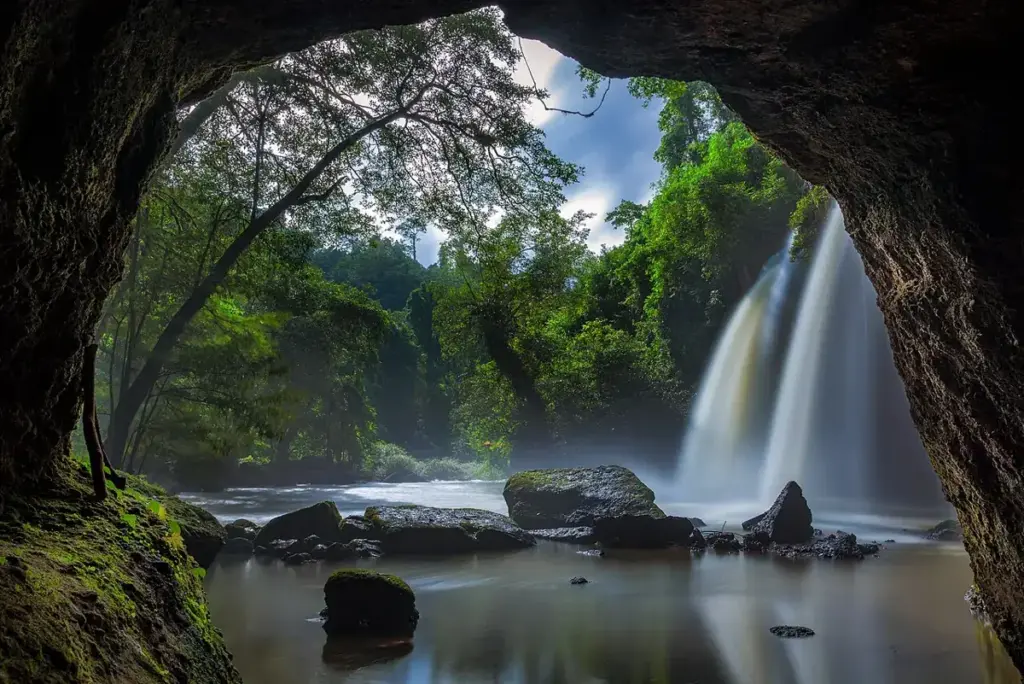
Of course, Haew Suwat Waterfall is the park's most famous sight. The water drops over a wide rock ledge into a pool surrounded by forest, and the falls appeared in the film The Beach. A short walk with steps leads down to a viewing area. Swimming is generally not allowed, so follow the signs.
Other highlights include:
- Viewpoints. Hilltop lookouts give wide views over the forest, best at sunrise or sunset.
- Grasslands and observation towers. Good places to watch for deer and birds.
- Short nature trails. Some trails need a ranger or registered guide, so ask at the visitor centre first.
In the wet season, leeches are common on trails. So, wear long socks and closed shoes.
When is the best time to visit Khao Yai National Park?
Khao Yai is open all year, but each season feels different.
| Season | What to expect |
|---|---|
| — | — |
| Cool season (about November to February) | Cool mornings, clear skies, busy weekends |
| Hot season (about March to May) | Warm days, lower waterfalls, good wildlife at water sources |
| Rainy season (about June to October) | Lush forest, strong waterfalls, leeches and some trail closures |
Above all, avoid Thai holiday weekends if you want quiet roads. For the bigger picture, read best time to visit Thailand.
Where to stay near Khao Yai
Overall, you can camp inside Khao Yai National Park at designated campsites, or stay in the many hotels and guesthouses along the road to Pak Chong. Staying overnight is the best way to be at the gate when it opens. In addition, a night nearby lets you return for a second wildlife drive at dusk.
Rules and safety
- Drive slowly. Animals cross the roads, especially at dawn and dusk.
- Keep your distance from elephants. Turn off loud music and give them space.
- Do not feed animals. It harms them and makes macaques aggressive.
- Take all rubbish out. The park is a protected forest.
- Use a guide for longer trails. Some routes require one.
How does Khao Yai compare with other Thai parks?
Khao Yai is the best choice near Bangkok for wildlife. In contrast, Erawan National Park is best for swimming in turquoise pools, and Doi Inthanon National Park offers cool mountain air in the north. In the south, Khao Sok National Park has rainforest and a famous lake. For a full route that includes Khao Yai, see our Thailand itinerary 7 days.
Continue south to Krabi
After the forests of the north-east, many travellers head south for the sea. The quickest way is to return to Bangkok and fly to Krabi; our Bangkok to Krabi guide compares flights, buses and trains. In Krabi, the green Ao Luek district has its own park, Than Bok Khorani National Park, with emerald pools and forest walks.
At a glance: 17 houses from 1,200 to 2,000 baht per night, air conditioning in every house, free breakfast, free Wi-Fi and a swimming pool, at 97/1 Moo 1, Ao Luek Nuea, Krabi.
For the Krabi leg of your trip, we recommend Ban Kamnan Resort in Ao Luek Nuea. If you travel as a family of four, House #7 has two 5 ft beds, two bathrooms, 50 m² of space and costs 1,800 baht per night. Every house has air conditioning, guests share the swimming pool, and breakfast of toast, fried eggs and hot coffee is free. Krabi airport is about 54 to 71 minutes away by road, depending on traffic. Prices match the resort's listing, so check your dates on Booking.com.
Frequently asked questions
As of November 2026, recent guides list about 400 baht for foreign adults and 200 baht for children, plus a vehicle fee. The park's website still shows older rates, so check at the gate.
Yes, but it is a long day of about 5 to 8 hours on the road. An overnight stay near Pak Chong gives you much better wildlife chances.
Many visitors do, especially near roads at dusk, but sightings are never guaranteed. Stay in your vehicle and keep a safe distance.
Swimming is generally not allowed at Haew Suwat. Follow the signs and the rangers' instructions.
Guides list about 06:00 to 18:00 daily. Hours and rules can change, so check before you go.
Final thoughts
Khao Yai National Park is the best wildlife trip within easy reach of Bangkok. To sum up: stay at least one night, arrive when the gate opens, carry cash for the fee, drive slowly and watch for elephants at dusk. Then continue south to Krabi and the quiet forests and waters of Ao Luek. Check availability at Ban Kamnan Resort on Booking.com.