

 Krit Ariyathiti
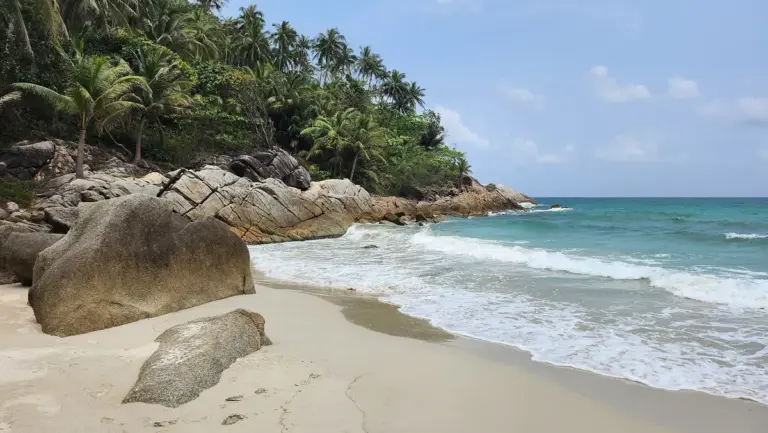
Koh Phangan beaches are far more varied than the island's party reputation suggests, with long white bays, boat-only coves and shallow sandbars. This guide sorts them by coast and mood, with notes on Thong Nai Pan, Bottle Beach Koh Phangan, Haad Salad and Haad Tien, so you can pick the right bay for the season and skip the wrong one.
Quick answer: For easy swimming, look at the northeast bays of Thong Nai Pan, which Wikivoyage calls safe all year except in the November monsoon. For a remote beach, take a longtail to Bottle Beach on the north coast. For a calm cove with simple access, try Haad Salad on the northwest corner. Seas are roughest from about October to December, and the best weather runs from about December to March.
If you are still choosing between islands, start with our Koh Phangan guide, then come back here for the beach detail.
How the Koh Phangan beaches are arranged
Koh Phangan covers about 125 km² and has no airport, according to Wikipedia, so every visitor arrives by boat. Most beaches sit on the edges of a hilly interior, and the roads between them are steep. As a result, the island splits into a few clear zones.
- Southeast. Haad Rin, Haad Yuan and Haad Tien, near the Full Moon Party area.
- Northeast. Twin bays at Thong Nai Pan, reached by a bad road.
- North. Chalok Lam, Haad Khom and Bottle Beach.
- Northwest and west. Haad Salad, Haad Yao and Mae Haad.
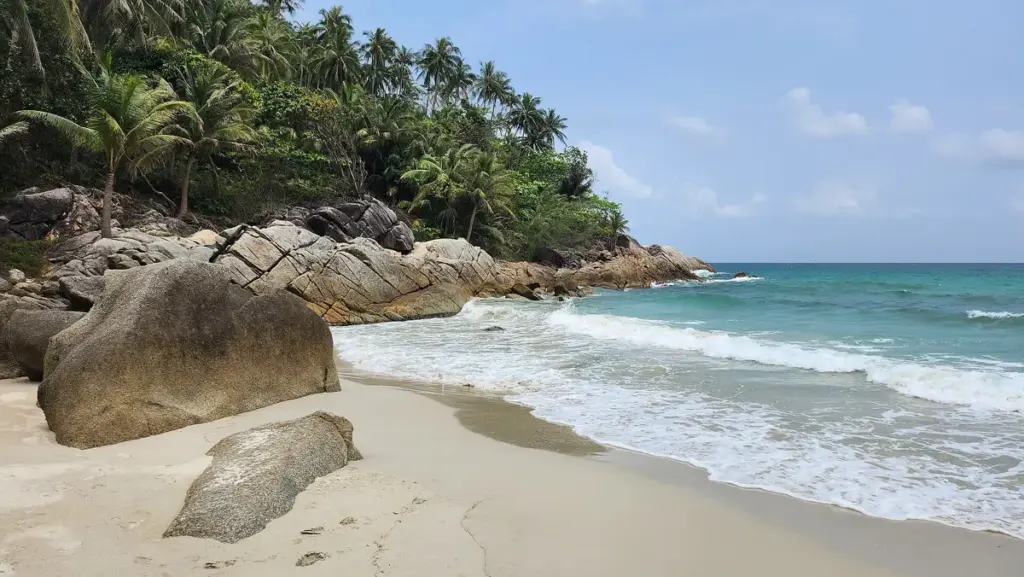
In short, the beach you want decides where you sleep, because crossing the island takes time. For the party side, read our Full Moon Party Koh Phangan guide.
Thong Nai Pan: twin bays for swimming
Thong Nai Pan is a pair of bays on the northeast coast, called Noi and Yai, and Wikivoyage describes Yai as the bigger one. The page says it suits families and couples who want peace, and that swimming is safe all year except during the November monsoon, which normally ends around mid-December.
However, the road in is poor. Wikivoyage describes it as in bad condition and quotes a taxi fare from Thong Sala of about 250 baht per person, an older figure that has probably risen. Also, other guides say the water is very shallow near the shore at the Yai end, so you may need to wade out a little before you can swim properly.
Bottle Beach Koh Phangan: the remote one
Bottle Beach Koh Phangan is also called Haad Khuat, and Wikivoyage lists it among the island's most isolated beaches. It is long and wide with soft white sand, few places to stay and clean water even in the dry season, according to the same page.
Getting there is half the point. Longtail boats leave from Chalok Lam, and Wikivoyage also mentions a hike of two to three hours from Haad Khom. It adds that the road is one of the island's worst and that the beach has no ATMs, no 7-Eleven and few places to eat. So, carry cash and food, and check the return boat time before you settle in. In the rough monsoon months, guides say longtail trips to remote coves are the first to stop.
Haad Salad: a calm cove on the northwest
Haad Salad is a cove on the northwest corner, and Wikivoyage describes it as a quiet spot with several high-end resorts. It is reached by road, with an older taxi quote of about 150 baht per person from Thong Sala. Other guides recommend it for snorkelling when the sea is calm, but conditions vary, so ask locally on the day.
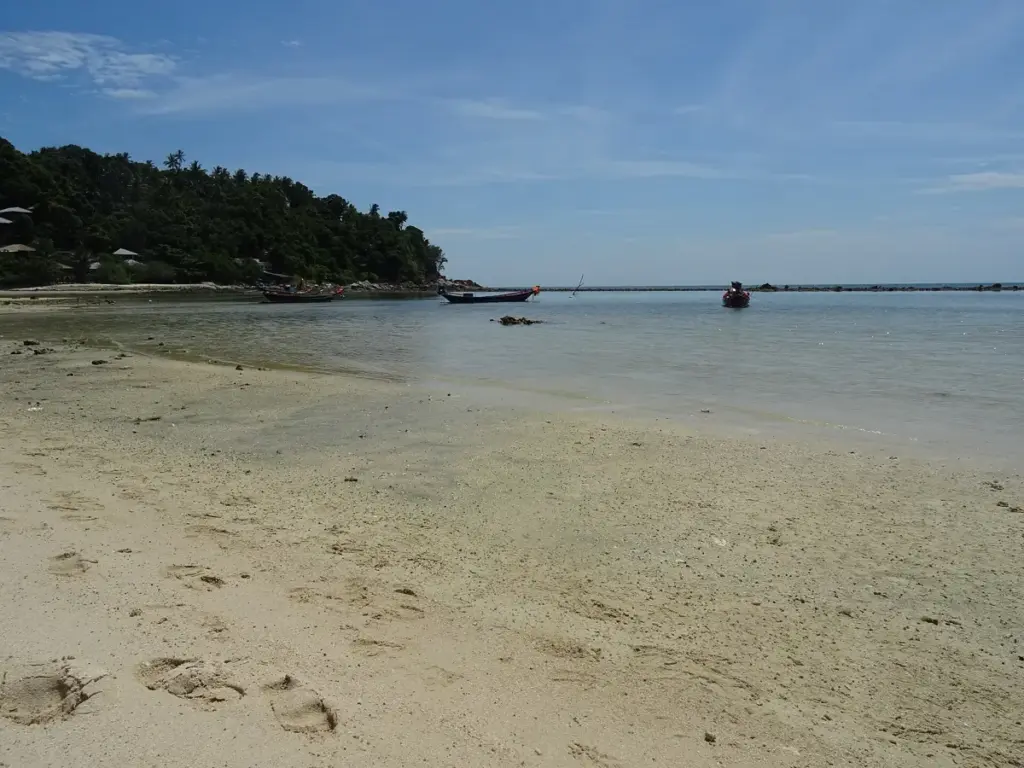
Nearby, Mae Haad is joined to the small island of Ko Ma by a sand spit. Wikivoyage says the snorkelling is good, but you must cross a dead reef, so enter and leave at high tide when the water is deeper. Haad Yao, further south, is longer and more developed, with shops, ATMs and restaurants.
Haad Tien and the southeast coast
Haad Tien is a small bay on the east side, also spelled Haad Thien. Wikivoyage calls the area upmarket and says it is hard to find rooms there, and an older note says it has weak phone signal. Next door, Haad Yuan is a sandy beach a short hop from Haad Rin, which Wikivoyage recommends for escaping the party crowd.
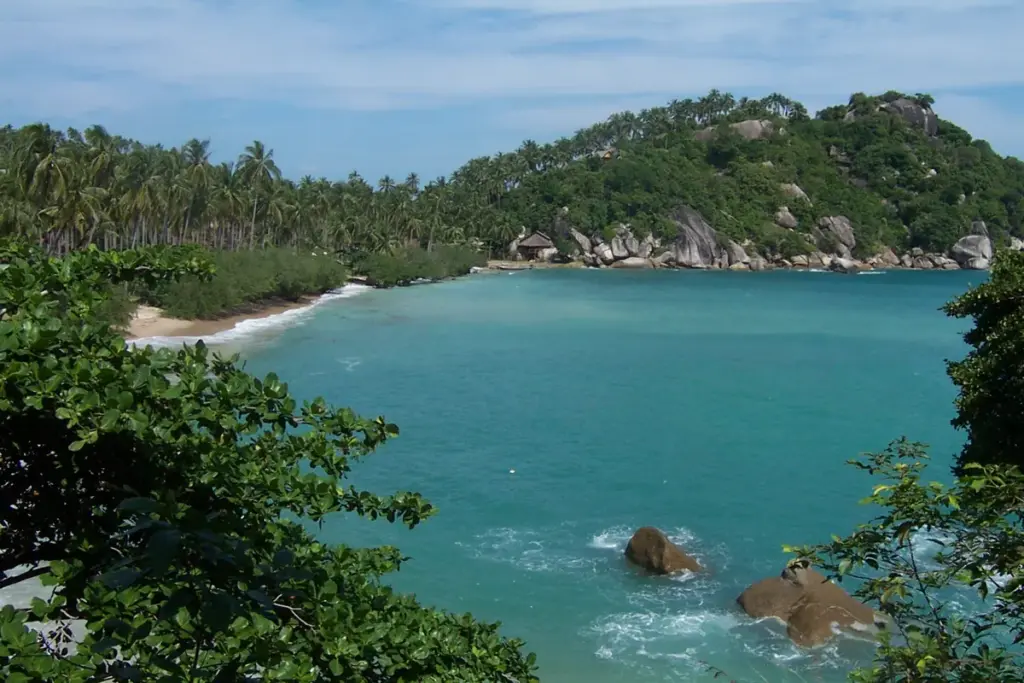
Haad Rin is the most developed village, and it hosts the Full Moon Party. In contrast, the calmer bays nearby give you beach time without the noise. Our Koh Phangan guide covers the party in more detail.
Which of the Koh Phangan beaches suits you?
The table below matches the main Koh Phangan beaches to common travel styles.
| You want | Look at | Notes |
|---|---|---|
| Calm swimming | Thong Nai Pan | Best outside the November monsoon |
| A remote day | Bottle Beach | Longtail or long hike |
| Snorkelling | Haad Salad, Haad Khom, Mae Haad | Mind tides and reefs |
| Facilities | Haad Yao, Haad Rin | Shops, ATMs and food |
| Quiet near parties | Haad Yuan, Haad Tien | Short hop from Haad Rin |
When to visit and sea conditions
Wikivoyage gives December to March as the best and busiest time, with a second, smaller high season in July and August. Meanwhile, several guides say the northeast monsoon from about October to December brings the roughest seas, with November often the worst, and that Samui to Phangan ferries can be delayed or cancelled. So, check your operator on the day, especially if you are catching a flight afterwards.
Getting to Koh Phangan and getting around
Ferries from Koh Samui take roughly 20 to 45 minutes, and the route from Phangan on to Koh Tao takes about 1 to 2 hours, depending on the boat. Our Koh Samui things to do and ferries in Thailand guides cover the crossings, and our best beaches in Koh Samui guide helps if you split your trip.
Motorbikes are common, but the steep, sandy roads cause many crashes. Wikivoyage warns that some policies exclude motorcycle accidents, especially without a Thai licence. Also, Thai police enforcement from April 2026 lists fines of up to 2,000 baht for riding without a helmet. For rules and checks, see our guide on renting a scooter in Thailand.
Tips for the Koh Phangan beaches
- Check the flags and the tide. Shallow bays can be too thin to swim at low tide.
- Carry cash. Remote beaches have no ATMs.
- Wear reef shoes. Dead coral and rocks line several shores.
- Book the return boat. Longtails stop when the weather turns.
- Travel light. Hills and bad roads punish heavy bags.
Where to stay after the Gulf: continue to Krabi
After the Koh Phangan beaches, think about the next coast. Koh Phangan sits in the Gulf of Thailand, while Krabi is on the Andaman coast. Many travellers add Krabi afterwards, and our Krabi to Koh Samui guide shows how the two sides connect. From Krabi airport, Ao Luek is about 54 to 71 minutes by road, depending on traffic.
At a glance: 17 houses from 1,200 to 2,000 baht per night, air conditioning in every house, free breakfast, free Wi-Fi and a swimming pool, at 97/1 Moo 1, Ao Luek Nuea, Krabi.
We recommend Ban Kamnan Resort in Ao Luek Nuea as a calm first base. For a small group, House #8 has three 5 ft beds, two bathrooms and 50 m², and sleeps six for 2,000 baht per night. Like every house, it has air conditioning. Also, guests share the swimming pool, and breakfast of toast, fried eggs and hot coffee is free. Prices match the resort's listing, so check your dates on Booking.com.
Frequently asked questions
Thong Nai Pan is often recommended for swimming outside the November monsoon, according to Wikivoyage. Conditions change by season and tide, so ask locally.
Take a longtail from Chalok Lam, or hike two to three hours from Haad Khom. The road is poor, so boats are the usual choice.
Several guides say so on calm days. Check the sea state and visibility before you go.
The northeast monsoon from about October to December brings the roughest weather, with November often the worst. December to March is the best and busiest time.
Some neighbours are close, such as Chalok Lam and Haad Khom, but the island is hilly. Most visitors use a taxi, a boat or a motorbike.
Final thoughts
Koh Phangan beaches range from lively to almost empty. To sum up: choose Thong Nai Pan for swimming, Bottle Beach for a remote day, Haad Salad for a calm cove and the southeast bays for a quieter base near the party. Then continue to Krabi and check availability at Ban Kamnan Resort on Booking.com.