 Krit Ariyathiti
Krabi safety tips start with the sea, because most of the real risks here are about water, boats and roads, not crime. This guide covers Krabi rip currents, boat rules in the monsoon, Krabi jellyfish season, Krabi monkeys, Krabi scooter safety, common scams, health basics and the emergency numbers to save. For the wider country, read our is Thailand safe guide first, because this page covers Krabi only.
Quick answer: In Krabi, obey the beach flags, never swim when a red flag is up and wear a life jacket on every boat. The southwest monsoon runs from about May to October, according to TAT, and island trips can be cancelled at short notice then. GOV.UK says jellyfish can approach the shore from May to October. Helmets are required by law, and the numbers to save are 1155 for the Tourist Police, 191 for police and 1669 for an ambulance, as of November 2026.
Krabi safety tips at the beach: what do the flags mean?
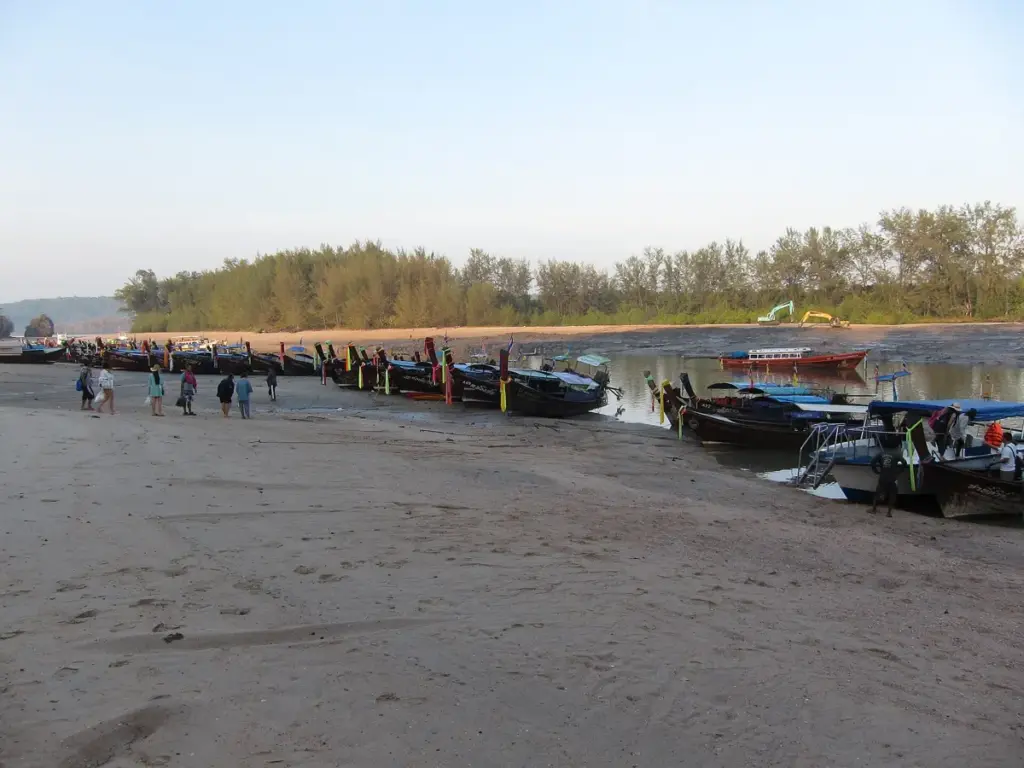
Flags are the first of the Krabi safety tips to learn. TAT's newsroom explained in 2018 that a red flag means do not swim, a yellow flag means swimming with medium risk and a green flag means calm conditions. GOV.UK adds that lifeguards and a flag system operate only at some designated beaches, so you cannot count on cover everywhere.
Krabi has used flags often in rough weather. For example, The Nation reported in September 2018 that heavy rain led the province to ban sea swimming, with red flags at Phra Nang Bay, Nopparat Thara, Koh Phi Phi and other places. That report is old, but it shows how fast rules can change. So, ask your hosts or the beach staff each morning.
Also, avoid swimming near stream mouths. Wikivoyage warns against swimming near Khlong Haeng creek in Ao Nang, which it says carries raw sewage to the sea.
Krabi rip currents: how to spot and escape them
Krabi rip currents are strongest when the sea is rough. GOV.UK says rip currents have caused drownings in Thailand and urges extra care during the monsoon. The National Institute for Emergency Medicine, quoted on the Thai government's site, gives the escape rule: do not swim straight back against the current. Instead, swim parallel to the shore until you leave it.
The same page says rip currents do not pull people under. People drown because they tire from fighting the current. Its warning signs are brown, churned-up water, foam further out than the breaking waves, a gap in the breaking waves and debris moving out to sea. Not every sign appears every time.
- Stay calm and float if you are tired.
- Wave and shout once you are clear of the current.
- Do not swim alone when the sea looks rough.
In short, respect Krabi rip currents by reading the flags first and the water second.
Monsoon boat rules in Krabi
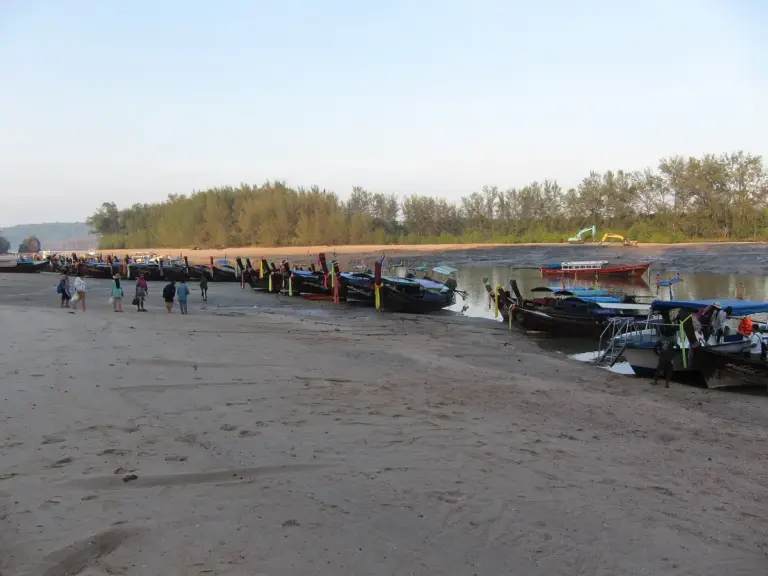
Boats are the second big risk. TAT's 2018 notice says island tours still run in the southwest monsoon, from May to October, but can be cancelled or delayed at short notice. The boat captain usually makes that decision. The same notice says the Department of National Parks closes several Andaman islands every year from May to October.
GOV.UK warns that passenger boats can sink or collide, often because of overloading, poor maintenance or rough seas. Similarly, The Nation reported in November 2023 that the Krabi marine park told boat operators to carry full safety gear and to make every passenger wear a life jacket at all times.
- Confirm the trip is running on the morning you plan to go.
- Ask about life jackets and how many people the boat carries.
- Choose bigger or covered boats for open crossings, as one Krabi guide suggests.
- Keep electronics in a waterproof bag. Wikivoyage recommends this for longtails.
Our Krabi rainy season guide explains what the wet months are like.
Krabi jellyfish season and what to do after a sting
The Krabi jellyfish season follows the rainy months, when seas are also at their roughest. TAT's newsroom said in August 2025 that box jellyfish are seen only occasionally and are linked to the rainy and monsoon months, and it lists Koh Lanta and Nopparat Thara among the Krabi areas with sightings. GOV.UK gives the window as May to October and warns that stings can be fatal.
To lower the risk, TAT advises you to follow posted notices, avoid swimming after heavy rain or at night, stay inside buoy-marked zones and wear a rash guard or long sleeves. Also, never touch a jellyfish stranded on the sand.
If someone is stung, TAT's steps are: get them out of the water, call 1669, keep them still, do not rub the wound or rinse it with fresh water, and pour vinegar over it for at least 30 seconds. If the person loses consciousness, start CPR. TAT also says hotels, beachside restaurants and dive operators must keep vinegar on hand. Seek hospital care for severe pain, confusion or trouble breathing.
Krabi monkeys: how to avoid a bite
Krabi monkeys are long-tailed macaques, and they bite and steal. Treat Krabi monkeys as wild animals, even when they look tame. The Nation reported in 2018 that officials caught monkeys around Tiger Cave Temple for sterilisation and warned visitors not to feed or play with them. Wikivoyage says monkeys on the Railay lagoon path can snatch glasses, wallets and food.
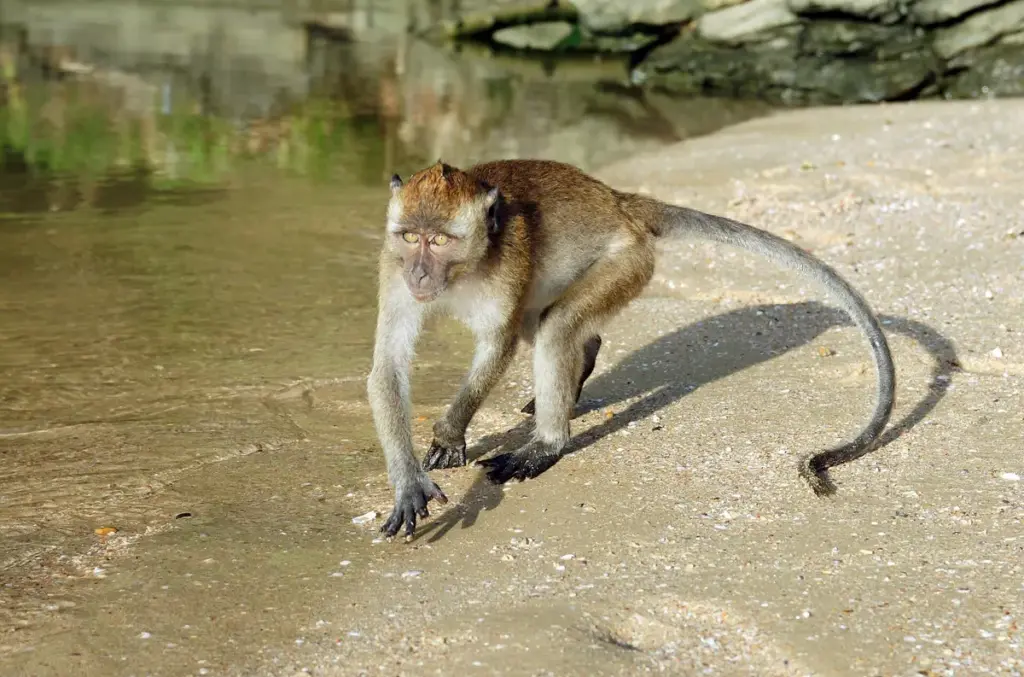
In May 2025 The Nation reported a 1,000 baht fine for feeding wild macaques at Monkey Beach on Phi Phi Don, with warning signs in Thai, English and Chinese. So, keep food out of sight, close your bag and never hold up a snack.
If you are bitten or scratched, the CDC advises washing the wound with soap and clean water and seeing a doctor right away. It adds that rabies vaccine is typically available in most of Thailand after an exposure. Do not wait to see if the wound heals.
Krabi scooter safety
Krabi scooter safety deserves its own section, because crashes are a common way for visitors to get hurt. GOV.UK says Thailand has many road accidents, especially involving motorcycles, and that helmets are required by law. TAT's newsroom (November 2024) says tourists may drive with a Thai licence, an International Driving Permit or an ASEAN licence, and should check registration and insurance. Your licence or IDP must include the motorcycle category. Without it you ride illegally, and GOV.UK and a local tour guide both warn that insurance may not cover you.
GOV.UK also warns that rented scooters in tourist areas are often unregistered, and that your insurer may not cover you on a vehicle you could not legally ride at home. The CDC goes further and advises avoiding motorbikes, especially motorbike taxis. So, if you are not an experienced rider, use a taxi, a songthaew or a tour instead.
- Wear a helmet every ride, and ask for one for any passenger.
- Photograph the bike before you leave the shop.
- Never leave your passport as a deposit. A Krabi guide suggests a photocopy plus cash instead.
Our renting a scooter in Thailand guide has the full checklist.
Common scams in Krabi
Scams in Krabi are mostly small and mostly about money. A Krabi scams guide lists a jet ski damage claim with a passport hold, tuk-tuk drivers quoting several times the normal fare near piers and cheap island tours that turn out to be overcrowded. Wikivoyage also warns against getting a tattoo on Railay because of overcharging and pressure.
The fix is simple. Agree every price first, pay for activities by card where you can, and read recent reviews before you book. Our Thailand travel scams guide covers the national list.
Health basics for Krabi
For health, the CDC says dengue spreads by mosquito bites and has no vaccine in its list. Use repellent with at least 20% DEET, cover your skin and sleep in air-conditioned or screened rooms. It also advises against swimming in fresh water such as rivers and ponds, because of leptospirosis. GOV.UK adds that currents near rivers and waterfalls can be extremely strong, and The Nation reported that Krabi closed three waterfalls after heavy rain in 2018.
Because a hospital visit can be costly, buy cover before you travel. Our Thailand travel insurance guide explains what to look for. Travelling with children? Read our Krabi with kids guide, and if you are on your own, see our solo travel in Krabi guide.
Emergency numbers in Krabi
The last of the Krabi safety tips is to save the numbers before you need them. GOV.UK lists these Thai numbers: police 191, ambulance 1669, fire 199 and Tourist Police 1155. The Thai government's tourist page lists 1672 for the Tourism Authority of Thailand information centre. That page also gives 1155 for a fire, which contradicts GOV.UK, so use 199 for fire. GOV.UK adds that the Thailand Tourist Police app works without a Thai SIM card. Our Thailand emergency numbers guide has more.
Where to stay for a calm, safe base
A quiet base makes many of these tips easier to follow, because you can plan boat days around the weather and return to a calm place. Ao Luek is in the north of Krabi, about 54 to 71 minutes by road from Krabi airport, depending on traffic. Our Ao Luek travel guide explains the area.
At a glance: 17 houses from 1,200 to 2,000 baht per night, air conditioning in every house, free breakfast, free Wi-Fi and a swimming pool, at 97/1 Moo 1, Ao Luek Nuea, Krabi.
We recommend Ban Kamnan Resort in Ao Luek Nuea. For a family or a group of friends, House #7 has two 5 ft beds, two bathrooms and 50 m², and it sleeps four for 1,800 baht per night. Like every house, it has air conditioning. Also, guests share the resort's swimming pool, and breakfast of toast, fried eggs and hot coffee is free. Prices match the resort's listing, so check your dates on Booking.com.
Frequently asked questions
Most visitors have no trouble, but the sea, boats and roads carry real risks. These Krabi safety tips help: follow the flags, wear a life jacket and be careful with scooters.
GOV.UK lists 191 for police, 1669 for an ambulance, 199 for fire and 1155 for the Tourist Police. Save them before you travel.
GOV.UK says jellyfish can approach the shore from May to October. TAT links box jellyfish to the rainy and monsoon months. Check posted notices on the day.
Wash the wound with soap and clean water and see a doctor right away, as the CDC advises.
Only when the flags allow it. Red means do not swim, and the sea can change quickly.
Final thoughts
The core Krabi safety tips are simple, because Krabi is a good place to travel when you respect the sea and the road. To sum up: obey the flags, wear a life jacket, keep food away from Krabi monkeys, follow Krabi scooter safety rules by avoiding scooters unless you are licensed, and save the emergency numbers. Then rest in a calm base such as Ao Luek. Check availability at Ban Kamnan Resort on Booking.com and plan your Krabi trip.