

 Krit Ariyathiti
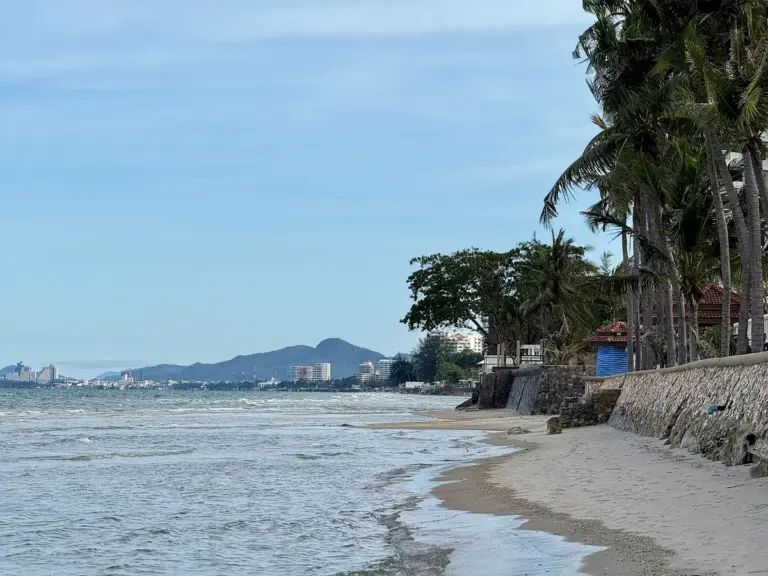
Many people plan to retire in Thailand for the warm weather, good healthcare and a lower cost of living. This guide explains the main Thailand retirement visa routes, what the O-A visa asks for, the best places to retire in Thailand, and how the 90-day report and yearly extensions work, with a slow-stay idea in Krabi at the end.
Quick answer: As of November 2026, most people who retire in Thailand use a retirement visa or extension for applicants aged 50 or over. The common money test is 800,000 baht in a Thai bank, or 65,000 baht a month in pension or income, or a combination. The O-A visa, applied for abroad, also needs health insurance of at least 3,000,000 baht. Retirees report their address every 90 days and renew their stay each year. Rules vary by embassy and immigration office, so always check official sources. This is general information, not legal or financial advice.
Thailand retirement visa options at a glance
| Route | Age | Money test (summary) | Length | Notes |
|---|---|---|---|---|
| Non-Immigrant O-A | 50+ | 800,000 baht, or 65,000 baht a month, or a mix | 1 year, renewable | Applied for abroad; health insurance required |
| Non-O plus retirement extension | 50+ | Similar money test | 1 year at a time | Converted and extended inside Thailand |
| Non-Immigrant O-X | 50+ | 3,000,000 baht deposit, or 1.8 million plus 1.2 million a year income | Up to 10 years | Only some nationalities; insurance required |
| LTR wealthy pensioner | 50+ | About USD 80,000 a year passive income, or a lower income plus investment | 10 years | Run by the Board of Investment |
Note that these are summaries from embassy pages and recent guides. Therefore, check the current list of documents with the embassy or consulate that handles your application.
The O-A visa: what it asks for
First, the O-A visa is the classic Thailand retirement visa applied for from your home country. According to recent guides and embassy information, applicants must be at least 50 years old on the day they apply. In addition, they show money in one of three ways: 800,000 baht in a Thai bank, at least 65,000 baht a month in pension or income, or a combination that adds up to 800,000 baht a year.
Besides the money, the O-A also needs:
- Health insurance for the stay. The amount differs by embassy: many pages list 3,000,000 baht (or USD 100,000), while some still list 40,000 baht outpatient and 400,000 baht inpatient, so check your own embassy.
- A police clearance from your home country.
- A medical certificate.
- Proof of address and other documents set by your embassy.
However, the O-A does not allow work. Furthermore, sources disagree on how long the money must sit in the bank before and after approval. So, ask your embassy directly.
Retire in Thailand step by step
Planning to retire in Thailand is easier when you split it into steps:
- Visit first. Spend a few weeks in the places you like, ideally in both the hot and rainy seasons.
- Choose your route. Compare the O-A, the in-country extension, the O-X and the LTR.
- Prepare documents. Bank letters, pension statements, insurance, police and medical certificates.
- Apply and arrive. Apply through the official e-Visa site or your embassy.
- Report and renew. File your 90-day reports and renew your stay each year.
For short scouting trips, read our Thailand entry requirements and Thailand visa for tourists guides first.
Best places to retire in Thailand
In reality, there is no single best place. Instead, the best places to retire in Thailand depend on climate, healthcare access, budget and community.
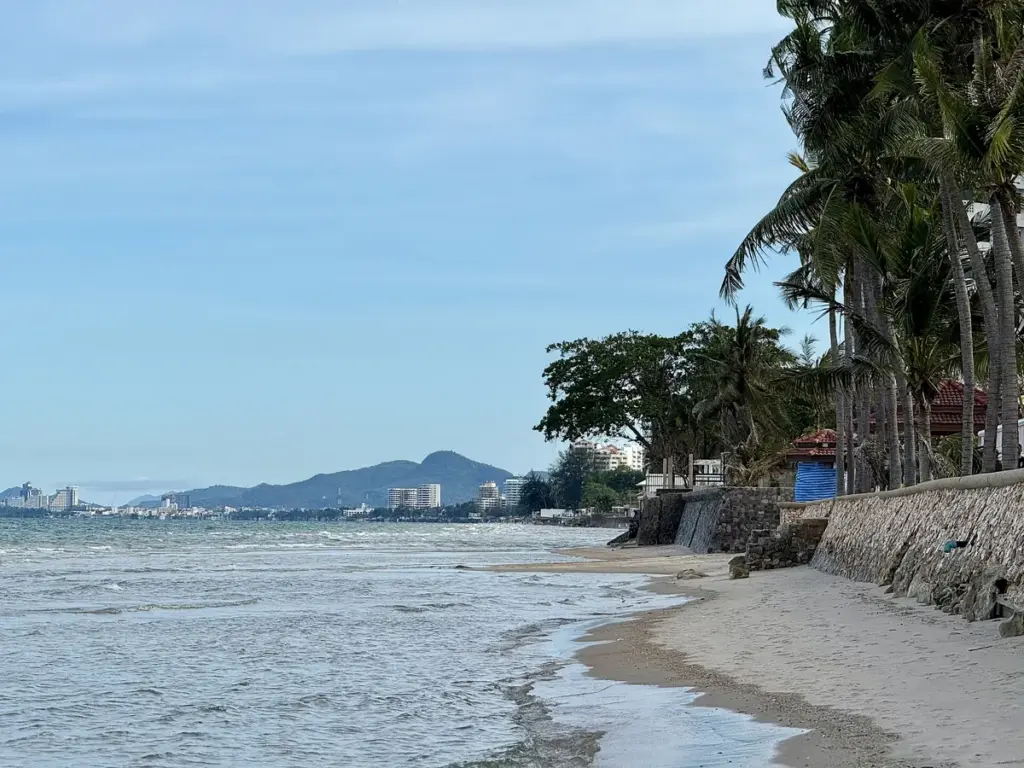
| Place | Why retirees choose it | Things to consider |
|---|---|---|
| Chiang Mai | Lower costs, culture, cooler months | Smoky season, usually around February to April |
| Hua Hin | Quiet beach town, close to Bangkok | Fewer international flights |
| Pattaya and Jomtien | Big expat community, services | Busy and noisy in parts |
| Phuket | Hospitals, airport, beaches | Higher prices |
| Krabi | Calm, nature, slower pace | Smaller expat community, fewer large hospitals |
For example, Hua Hin and Jomtien appeal to people who want the sea and city services, while Chiang Mai suits those who prefer mountains and lower rent. Our where to stay in Pattaya guide covers Jomtien and the quieter northern areas.
The 90-day report and yearly extensions
Once you live here, the 90-day report, filed on form TM47, is an address notice, not a visa extension. According to recent guides, your first report must be filed in person, and later reports can usually be filed online at tm47.immigration.go.th. However, some sources say certain visa holders must still report in person, so check with your local immigration office.
Meanwhile, the filing window opens 15 days before the due date, and guides put the late fine at about 2,000 baht. Separately, your permission to stay must be renewed each year at immigration. Also, if you leave Thailand, get a re-entry permit first, or your permission to stay may end. Our Thailand visa extension guide explains extensions in more detail.
Healthcare, insurance and money
Equally, healthcare is one of the main reasons people retire in Thailand. Private hospitals in big cities are well equipped, but costs for serious treatment can be high. Therefore, insurance matters, both for the O-A visa and for peace of mind. Our expat health insurance Thailand guide explains how cover works.
As for money, budget for rent, food, insurance and visa costs. Our cost of living in Thailand guide gives monthly ranges by city. Also, if you stay 180 days or more in a calendar year, you may become a Thai tax resident, so speak to a tax adviser about pension remittances.
Frequently asked questions
Generally, the retirement visa routes are for people aged 50 or over. You must meet the age on the day you apply.
The common test is 800,000 baht in a Thai bank, or 65,000 baht a month in pension or income, or a combination. The O-X and LTR routes have higher thresholds. Check current rules with your embassy.
For the O-A visa, yes: cover for the stay is required, but the amount differs by embassy (3,000,000 baht or USD 100,000 on many pages, 40,000 and 400,000 baht on some), so check your own embassy. Even when it is not required, insurance is strongly recommended.
No. In fact, retirement visas do not include work rights. Working usually needs a different visa and a work permit.
Usually not. Instead, retirees renew their permission to stay each year at a local immigration office. However, leaving without a re-entry permit can end your permission to stay.
Retire in Thailand: try a slow stay near Krabi first
At a glance: 17 houses from 1,200 to 2,000 baht per night, air conditioning in every house, free breakfast, free Wi-Fi and a swimming pool, at 97/1 Moo 1, Ao Luek Nuea, Krabi.
Ideally, before you commit, test life in a quiet place. Fly to Krabi, and from Krabi airport, Ao Luek is about 54 to 71 minutes by road, according to transfer listings. Our Ao Luek travel guide describes the area.
There, we recommend Ban Kamnan Resort in Ao Luek Nuea for a calm trial stay. For a couple, House #5 and #6 each have one 5 ft bed, one bathroom and 28 m², and sleep two for 1,200 baht per night. Like every house, they have air conditioning. Also, guests share the swimming pool, and breakfast of toast, fried eggs and hot coffee is free. Prices match the resort's listing, so check your dates on Booking.com.
Final thoughts
You can retire in Thailand with good planning. First, pick the visa route that fits your age, savings and nationality. Next, choose a place by visiting it in more than one season. Then, keep up with the 90-day report, your yearly extension and your insurance. In short, treat the paperwork as a yearly routine, and the warm, easy daily life is the reward.