

 Krit Ariyathiti
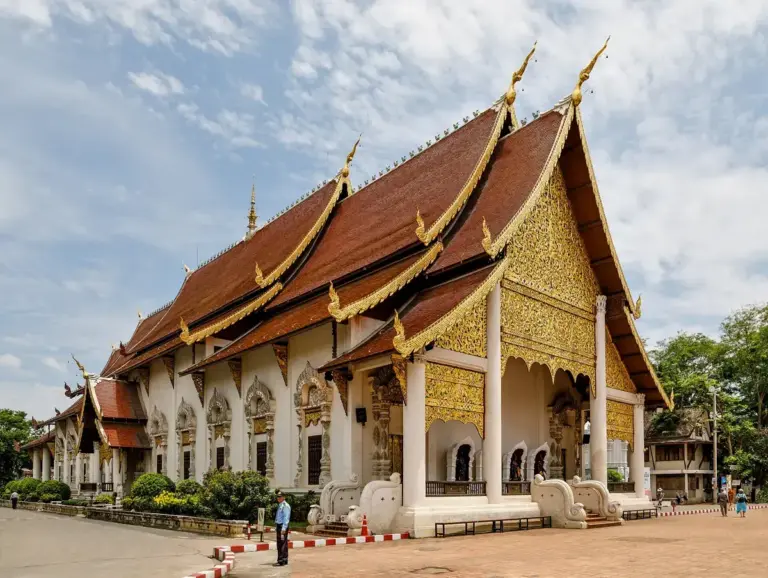
Chiang Mai Old City is the square of temples, lanes and cafes inside the moat at the heart of Chiang Mai, and it is where most first-time visitors spend their days. This guide explains what to see inside the walls, from Wat Chedi Luang and Wat Phra Singh to Wat Chiang Man and Tha Phae Gate, with a simple walking route, fees, the best time of day and tips for staying close by.
Quick answer: The old city is a square about 1.5 km on each side, ringed by a moat and the remains of brick walls, so you can cross it on foot in about 20 minutes. Start early at Wat Chiang Man, then walk to Wat Chedi Luang and Wat Phra Singh. Most guides put the temple fees for foreigners at about 20 to 50 baht each (as of November 2026), with Thai nationals free. In general, allow one full day, and stay for the Sunday Walking Street if your dates allow.
What is Chiang Mai Old City?
King Mengrai founded Chiang Mai in 1296 as the new capital of the Lanna kingdom. The square moat and walls protected the royal city. Today, the walls survive mainly at the corners and the gates, while the moat still runs all the way around.
Inside, the old city is a calm grid of small streets called soi. In fact, it holds dozens of temples, from famous royal sites to quiet neighbourhood wat. Meanwhile, guesthouses, coffee shops, massage studios and small restaurants fill the lanes between them. As a result, it is one of the easiest places in Thailand to explore on foot.
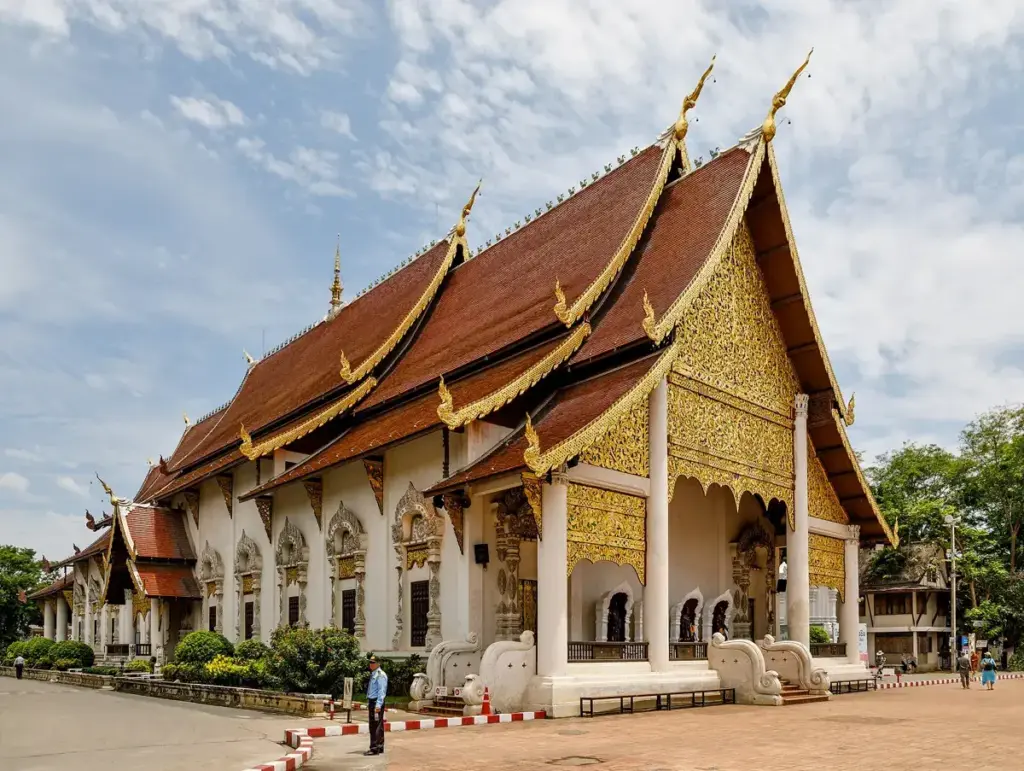
For the bigger picture, our guide to things to do in Chiang Mai covers the mountains, markets and day trips outside the walls.
Tha Phae Gate: the front door of the old city
Tha Phae Gate is the eastern gate and the best known entrance to the old city. It faces Tha Phae Road, which leads east toward the Ping River and the Night Bazaar. The open square in front of the gate is a meeting point, and it hosts events and markets on many evenings.
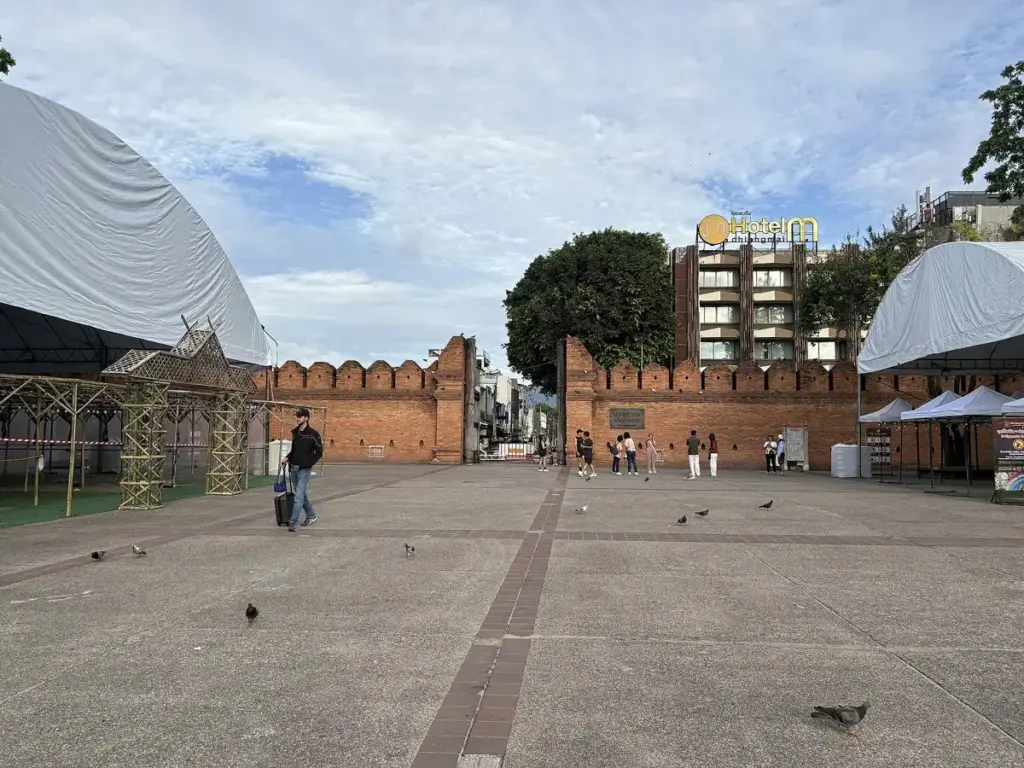
On Sunday afternoons, the Chiang Mai Sunday Walking Street starts here and runs west along Ratchadamnoen Road. So, if you arrive on a Sunday, plan your evening around it.
Wat Chedi Luang: the great ruined chedi
Wat Chedi Luang sits near the centre of the old city. Its huge brick chedi was once the tallest structure in Lanna. However, according to most histories, an earthquake in 1545 brought down the top section. Even in ruins, it is the most impressive sight inside the walls.
The temple also has deep history. For example, the Emerald Buddha, now in Bangkok, was kept here for part of the 15th and 16th centuries. In addition, the grounds hold the city pillar shrine, and many guides mention a "monk chat" area where monks talk with visitors in English. Most guides list the foreigner fee at about 50 baht (as of November 2026), while a few give 40.
Wat Phra Singh: the most revered temple
Wat Phra Singh stands at the western end of Ratchadamnoen Road, near Suan Dok Gate. It is the most important royal temple in the city. Above all, it holds the Phra Buddha Sihing image, which is carried through the streets during Songkran in April.
Do not miss the small Viharn Lai Kham, a classic Lanna hall with carved gables and murals inside. Guides disagree on the fee: most say about 40 to 50 baht for foreigners to enter the main halls, while some describe a 20 baht donation. Either way, the outer grounds are usually free to walk.
Wat Chiang Man: the oldest temple
Wat Chiang Man is in the north-east corner of the old city. It is said to be the oldest temple in Chiang Mai, built around the time the city was founded. Look for the chedi supported by rows of brick elephants. Also, it is usually quieter than the two big temples, so it is a good first stop of the day.
A one-day Chiang Mai Old City walking route
This Chiang Mai Old City route crosses the square from north-east to west, then back to the east gate. It is about 4 to 5 km in total, with plenty of stops.
| Time | Stop | Notes |
|---|
|—|—|—|
| 7:30 | Wat Chiang Man | Quiet in the morning; look for the elephant chedi |
|---|---|---|
| 9:00 | Coffee in the lanes | Many small cafes open early |
| 10:00 | Wat Chedi Luang | The great chedi and the city pillar |
| 11:30 | Three Kings Monument area | Statues of the founding kings, near the centre |
| 12:30 | Lunch | Try khao soi from our Chiang Mai food guide |
| 14:30 | Wat Phra Singh | The Viharn Lai Kham and its murals |
| 17:00 | Walk the moat to Tha Phae Gate | Cooler air and evening light |
Then, for the evening, walk east along Tha Phae Road to the Chiang Mai Night Bazaar, or see our guide to Chiang Mai nightlife for bars and live music.
Getting around the old city
Walking is the best way to see Chiang Mai Old City. However, the midday heat is strong for much of the year, so plan indoor stops after noon. Alternatively, red songthaew trucks run around the moat and across town, and ride-hailing cars work well for longer hops. Bicycles are another option, though traffic on the moat roads is busy, so stay inside the lanes where you can.
Best time to visit Chiang Mai Old City
The cool season, from about November to February, is the most pleasant time to walk. Also, it brings the big festivals: Yi Peng lantern festival and Loy Krathong light up the moat and the river in November. Meanwhile, March and April are hot, and smoke from seasonal burning can make the air poor, so check air quality before long walks. Then the rainy season, from about May to October, brings green trees and fewer crowds.
Temple etiquette in the old city
- Cover up. Shoulders and knees covered in every temple.
- Shoes off. Remove them before you enter halls; leave them by the steps.
- Mind the signs. Some halls ask women not to enter certain areas; follow them.
- Quiet voices. Many temples are working monasteries, not museums.
For the full list, read our guide to Thai temple etiquette.
Staying in or near the old city
Chiang Mai Old City is the most popular base for first visits, since you can walk to the temples and the Sunday market. However, some lanes near the bars can be noisy at night, so read reviews before you book. Our guide to where to stay in Chiang Mai compares the old city with Nimman and the riverside, and Chiang Mai on a budget shows how to keep daily costs low. Also, plan a morning for Doi Suthep, the golden temple on the mountain west of the city.
Continue south to Krabi after Chiang Mai
After the temples of the north, many travellers want the sea. Aggregator sites put a direct Chiang Mai to Krabi flight at about two hours, while other routes change in Bangkok. From Krabi airport, Ao Luek is about 54 to 71 minutes by road, depending on traffic. There, mangrove rivers, caves and limestone cliffs wait, as our guide to things to do in Ao Luek shows.
At a glance: 17 houses from 1,200 to 2,000 baht per night, air conditioning in every house, free breakfast, free Wi-Fi and a swimming pool, at 97/1 Moo 1, Ao Luek Nuea, Krabi.
We recommend Ban Kamnan Resort in Ao Luek Nuea as the next leg of your trip. For couples who like space to sleep, House #E, #F and #G each have one 6 ft bed, one bathroom and 35 m², for 1,350 baht per night. Like every house, they have air conditioning. Also, guests share the swimming pool, and breakfast of toast, fried eggs and hot coffee is free. Prices match the resort's listing, so check your dates on Booking.com.
Frequently asked questions
The old city is a square of about 1.5 km on each side, inside a moat. You can walk across it in about 20 minutes, though a full day of temples takes longer.
Most guides list about 50 baht for foreign adults (as of November 2026), with a few saying 40 baht. Thai nationals usually enter free.
Wat Chedi Luang is the most impressive for its giant ruined chedi, while Wat Phra Singh is the most revered. Wat Chiang Man is the oldest and the quietest.
For a first visit, yes, because you can walk to the temples and markets. However, Nimman suits travellers who want modern cafes and malls.
It runs every Sunday from late afternoon into the evening, from Tha Phae Gate west along Ratchadamnoen Road.
Final thoughts
Chiang Mai Old City rewards slow walking. To sum up: start early at Wat Chiang Man, stand under the great chedi of Wat Chedi Luang, spend the afternoon at Wat Phra Singh and end the day at Tha Phae Gate. Then swap the temples for the cliffs of the south. Check availability at Ban Kamnan Resort on Booking.com and plan the Krabi leg of your trip.