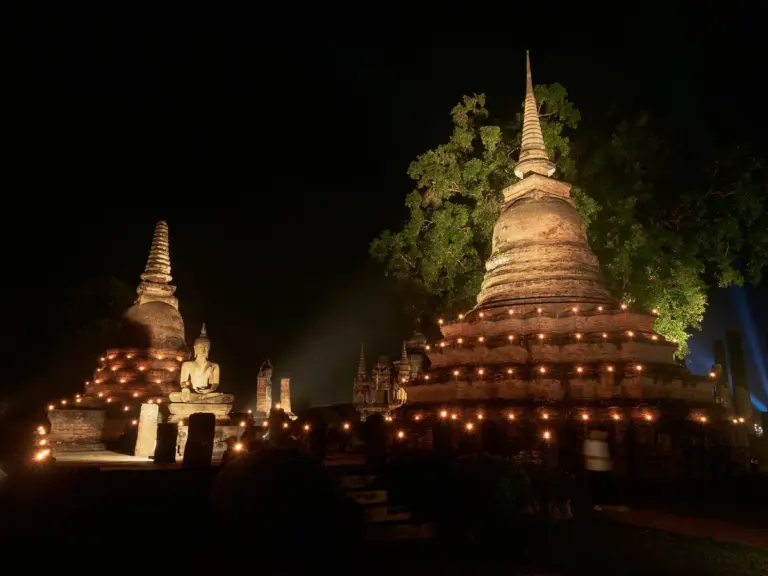


 Krit Ariyathiti
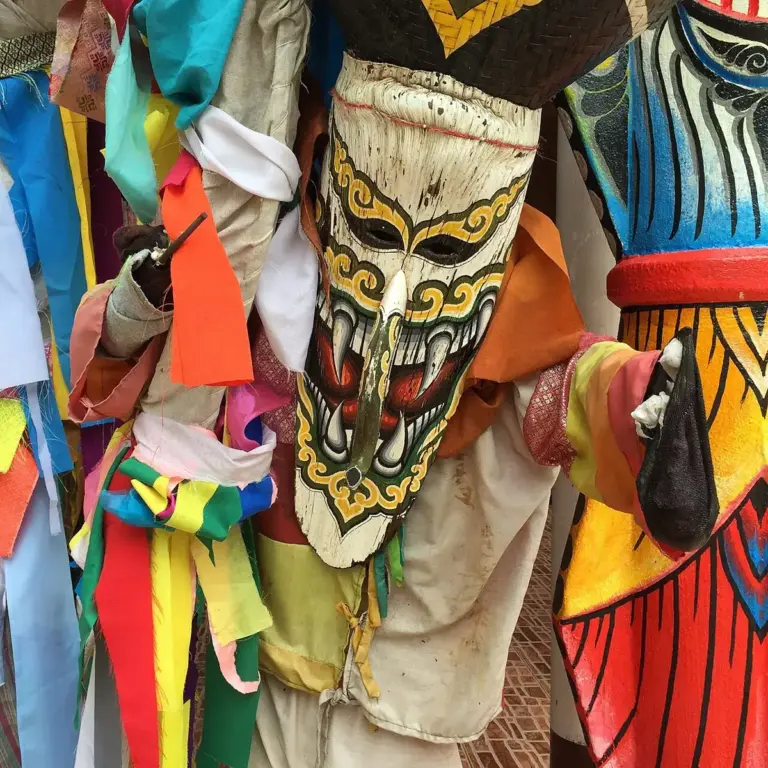
The Phi Ta Khon festival is Thailand's most colourful ghost festival, held once a year in the small town of Dan Sai in Loei province. This guide explains what the festival means, how the Phi Ta Khon masks are made, when the Bun Luang festival happens, how to reach Dan Sai Loei and how to plan a trip around Thailand's best-known Thailand ghost festival, as many visitors call it.
Quick answer: Phi Ta Khon is part of the Bun Luang merit-making festival in Dan Sai, Loei. It usually runs for three days between mid-June and early July. The dates are not fixed: a local spirit medium sets them each year, and the Tourism Authority of Thailand (TAT) announces them a month or two ahead. In 2026 it ran from 20 to 22 June, with the big parade on 21 June. The 2027 dates were not announced as of November 2026, so check TAT before you book.
What is the Phi Ta Khon festival?
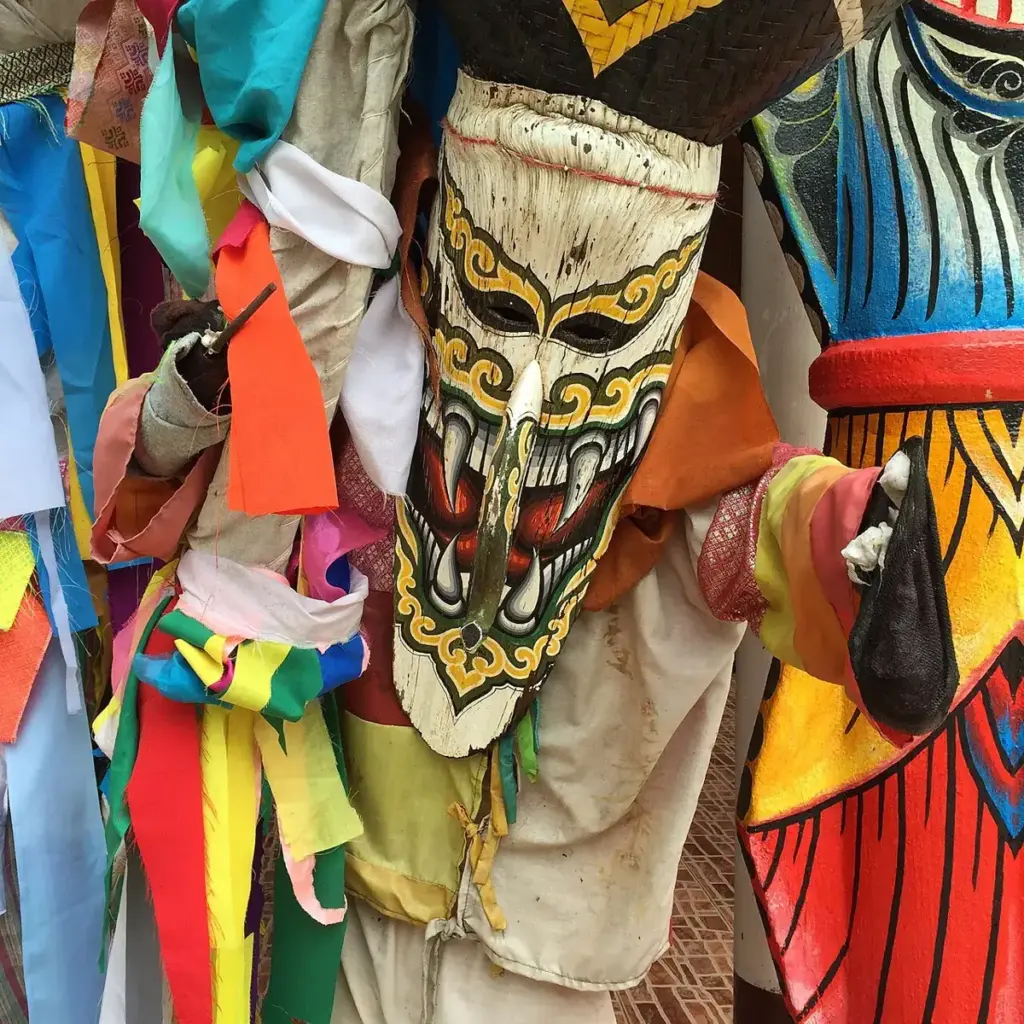
The Phi Ta Khon festival is a local Buddhist celebration with a playful spirit side. In Dan Sai, it forms part of Bun Luang, a merit-making event that blends Buddhism, older spirit beliefs and community pride. As a result, it feels like a mix of a temple fair, a street carnival and a village reunion.
According to the Thai government's public relations site, the festival reflects the faith and heritage of Dan Sai. Many activities centre on Wat Phon Chai, the main temple in town. During the parade, hundreds of people in ghost costumes and hand-painted masks dance along Kaew Asa Road, the town's main street. Meanwhile, monks, elders and families take part in the religious ceremonies that give the event its purpose.
In short, the Phi Ta Khon festival is not a show staged for tourists, and no Thailand ghost festival tour can replace being there. Instead, it is a living local tradition that visitors are welcome to watch. So, treat it with the same respect you would bring to any temple event.
What do the ghosts mean?
The word "phi" means ghost or spirit in Thai. The festival is linked to the story of Prince Vessantara, the Buddha's last life before enlightenment in Buddhist tradition, which is why Bun Luang is also known as Bun Phawet in Isan. In the most common telling, the prince returned home after a long exile in the forest, and the welcome was so loud that it woke the forest spirits, who followed him into town. However, versions differ from source to source, and these are folk traditions rather than history. So, the simple summary is this: the ghosts bring fun and mischief, while the temple ceremonies carry the serious meaning.
In addition, the festival includes rituals to invite protection from local guardian spirits. For example, residents invite Phra U-pakut, a protective river spirit, at the start of the event. These rituals are led by local spiritual leaders, not by visitors.
Phi Ta Khon masks: how they are made
The Phi Ta Khon masks are the stars of the festival. Each one has a tall top and a long nose, and each is painted in bright patterns. Descriptions of the costumes mention wicker work and woven sticky-rice steamers, the baskets Thai kitchens use to cook sticky rice, which are then painted by hand. In other words, everyday kitchen items become works of art.
Because every family paints its own designs, no two masks look alike. Some are scary, some are funny and many are simply beautiful. Moreover, dancers wear patchwork costumes and carry wooden props and cowbells that clank as they move.
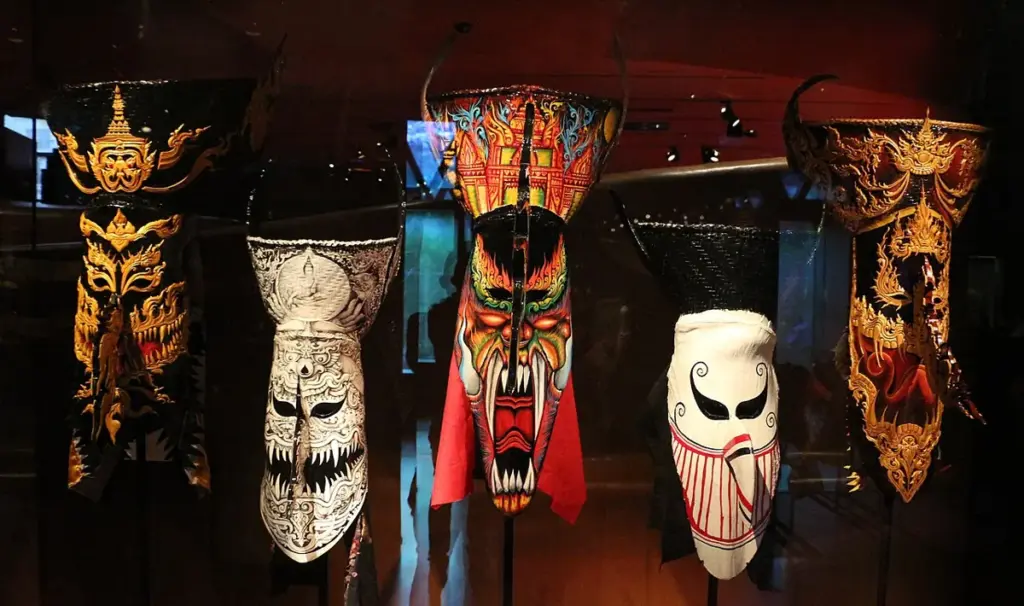
If you cannot visit in festival season, you can still see the masks. A collection of Phi Ta Khon masks is shown at the Phon Chai temple museum in Dan Sai. Similar masks are also held in museum collections abroad, such as the Musée du quai Branly in Paris. Local craft shops in Dan Sai sell smaller masks year round, which make a good souvenir.
When is the Bun Luang festival held?
The Bun Luang festival has no fixed date. Instead, a hereditary medium consults the spirits each year to choose the days. Most sources say it usually falls between mid-June and early July, which is the start of the rainy season. Then TAT confirms the dates, often one to three months ahead.
Here is how the 2026 programme ran, according to the Thai government's public relations site:
| Day | 2026 date | What happened |
|---|---|---|
| Day 1 | 20 June | Opening ceremony and rituals |
| Day 2 | 21 June | Grand Phi Ta Khon parade |
| Day 3 | 22 June | Merit-making and Buddhist activities, with no ghost performances |
So, if you want the parade and the masks, the first two days matter most. As of November 2026, the 2027 dates had not been published. Therefore, watch TAT news from about March 2027, and only book flights once the dates are confirmed.
How to get to Dan Sai Loei
Dan Sai Loei is a small town in the hills of north-eastern Thailand. It is about 80 to 83 km by road from Loei city, roughly 90 minutes by car. Travel guides give these main routes:
- By air via Loei. Fly from Bangkok Don Mueang to Loei airport, which takes about 1 hour 10 minutes. Then drive or take a local bus about 83 km to Dan Sai. Seats sell out in festival week, so book early.
- By air via Phitsanulok. Phitsanulok has a bigger airport about 140 km to the west. From there, buses, minivans or private cars run to Dan Sai.
- By bus from Bangkok. Buses leave Mo Chit for Loei and take about 7 to 10 hours, for roughly 350 to 600 baht. After that, take a local bus or minivan to Dan Sai.
In addition, buses between Loei and Phitsanulok stop in Dan Sai during the day. However, schedules change and festival crowds fill seats, so allow extra time. Within Thailand, our guide to Grab in Thailand explains ride-hailing, and our train travel in Thailand guide covers the rail network.
Where to stay for the Thailand ghost festival
Dan Sai has only a few small guesthouses and homestays, so the Phi Ta Khon festival fills them fast. As a result, rooms fill up months before the festival. Many visitors therefore stay in Loei city and drive in each morning. Others join organised trips from Bangkok or Phitsanulok.
Book as soon as TAT confirms the dates. Also, bring cash, because small places may not take cards. Our guide to money in Thailand explains ATMs and fees.
Tips for visiting the Phi Ta Khon festival
- Arrive early on parade day. The best spots along Kaew Asa Road fill quickly during the Phi Ta Khon festival.
- Ask before close-up photos. Most dancers enjoy the camera, but some ceremonies are sacred.
- Dress modestly for the temple. Cover shoulders and knees at Wat Phon Chai. Our guide to Thai temple etiquette explains why.
- Prepare for rain. The festival falls in early rainy season, so pack a light rain jacket.
- Respect the third day. The last day is for merit-making, so keep noise low.
- Stay hydrated. Days are hot and crowds are dense.
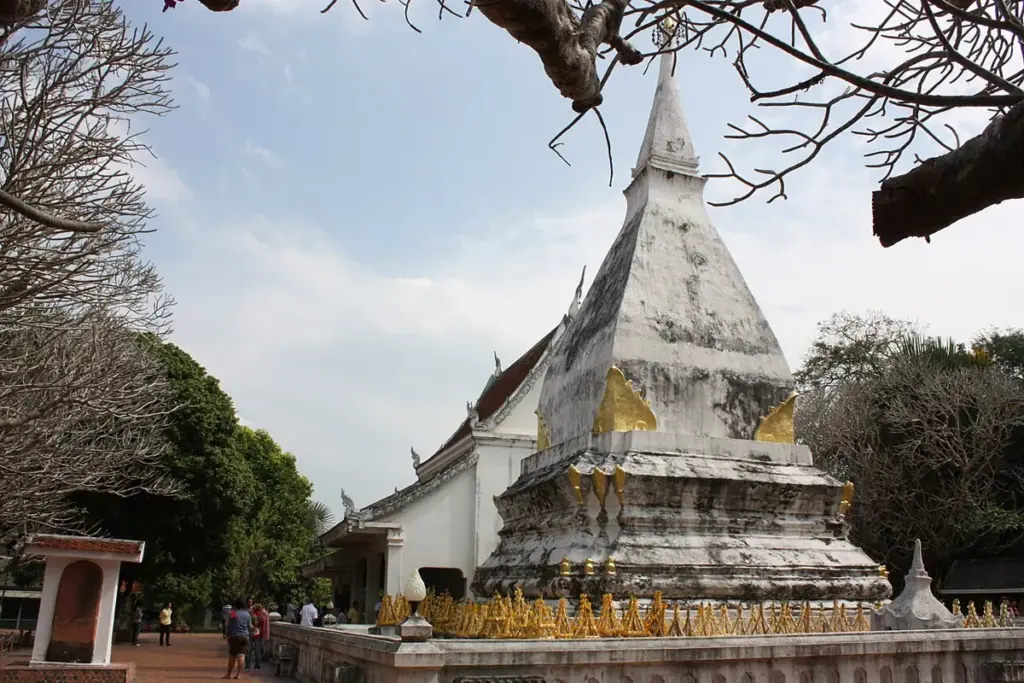
While you are in Dan Sai, visit Phra That Si Song Rak, a white stupa that is one of the most respected sites in Loei. Then explore the quiet hills and rice fields around town. For other big celebrations, see our Thailand festivals calendar, our guide to Loy Krathong and the Songkran festival.
How does Phi Ta Khon compare with other Thai festivals?
The Phi Ta Khon festival is smaller and more local than Songkran or Loy Krathong, yet it is the best-known Thailand ghost festival. However, that is part of its charm. Songkran is a nationwide water fight in April, and Loy Krathong fills rivers with floating offerings in November. In contrast, Phi Ta Khon happens in one town, and its masks exist nowhere else. So, it suits travellers who want culture over crowds, and who can plan around changing dates. Our guide to Chinese New Year in Thailand covers another festival that moves each year.
Continue south to Krabi after the festival
Loei is far from the beaches, so most travellers combine the Phi Ta Khon festival with a few days by the sea. The easiest route is to fly back to Bangkok and then on to Krabi. Our guide to Bangkok to Krabi compares flights, buses and trains. From Krabi airport, Ao Luek is about 54 to 71 minutes by road, depending on traffic and route. There, our things to do in Ao Luek guide covers kayaking, caves and viewpoints.
At a glance: 17 houses from 1,200 to 2,000 baht per night, air conditioning in every house, free breakfast, free Wi-Fi and a swimming pool, at 97/1 Moo 1, Ao Luek Nuea, Krabi.
For groups who travelled to the festival together, we recommend Ban Kamnan Resort in Ao Luek Nuea. House #8 has three 5 ft beds, two bathrooms and 50 m², and sleeps six, for 2,000 baht per night. Every house has air conditioning, guests share the swimming pool, and breakfast of toast, fried eggs and hot coffee is free. Prices match the resort's listing, so check your dates on Booking.com.
Frequently asked questions
The 2027 dates were not announced as of November 2026. A local spirit medium sets them each year, and they usually fall between mid-June and early July. Check TAT news before you book.
It is held in Dan Sai district, Loei province, in north-eastern Thailand. Most events take place around Wat Phon Chai and along Kaew Asa Road, the main street.
Descriptions of the costumes mention wicker work and woven sticky-rice steamers, painted by hand. Each family creates its own design, so no two masks are the same.
Visitors mostly watch, although dancers often invite people to dance along the route. The religious ceremonies are for the community, so watch those quietly and respectfully.
Usually three days. The first two days have the rituals and the ghost parade, while the third day focuses on merit-making and Buddhist activities.
Final thoughts
The Phi Ta Khon festival rewards travellers who plan ahead. So, follow TAT for the 2027 dates, book Loei or Phitsanulok flights early and arrive in Dan Sai before the parade. Then enjoy the masks, the music and the warm local welcome. Afterwards, fly south and rest in Krabi. For more ideas, read things to do in Bangkok and our guide to the best time to visit Thailand.