


 Krit Ariyathiti
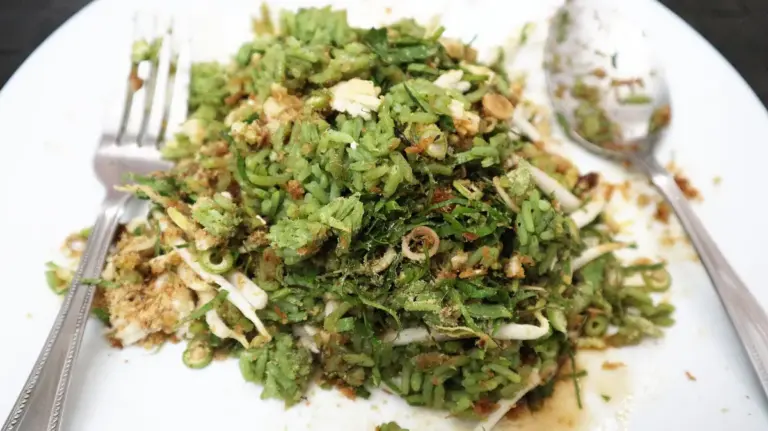
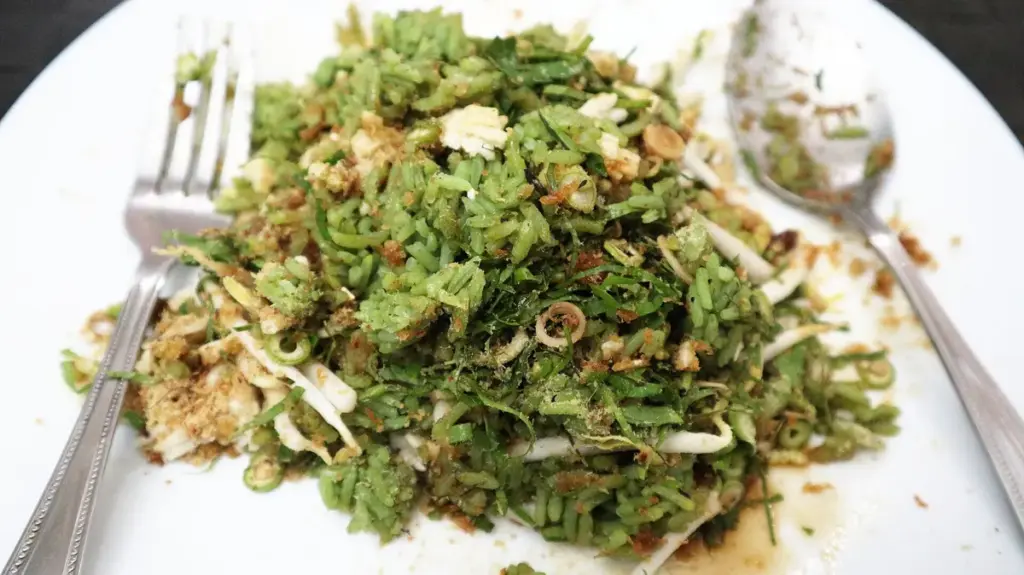
Khao yam is the southern Thai rice salad: cooked rice tossed with shredded herbs, toasted coconut, sour fruit and a salty-sweet fish sauce. This guide explains what khao yam is, the khao yam ingredients that matter, the nam budu sauce at its heart, a simple khao yam recipe outline and how it differs from other southern Thai rice salad cousins, so you know what to order and how to eat it. For the wider cuisine, start with our southern Thai food guide.
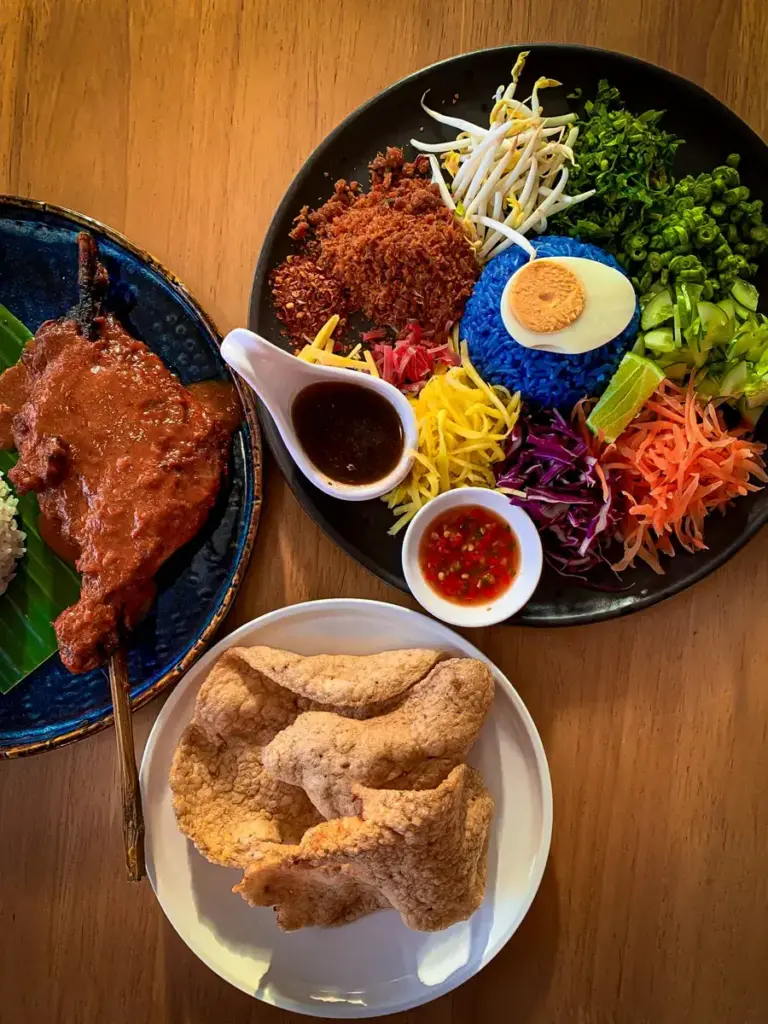
Quick answer: Khao yam (ข้าวยำ) is a cold or room-temperature rice salad from southern Thailand. According to the Michelin Guide Thailand, its four building blocks are rice (often coloured with butterfly pea flowers), fresh herbs and sour fruit, the fermented fish sauce nam budu, and side items such as dried shrimp, ground dried fish and roasted coconut. It is usually served with the ingredients arranged around the rice, and you mix it yourself. Recipes vary by cook and province.
What is khao yam?
In Thai, khao means rice and yam means a tossed, tangy salad. So, the name is literally "rice salad". Michelin describes it as a dish that balances sweet, sour and salty flavours, and says it is common across the southern provinces, from market stalls to restaurants.
Its origin is not settled. Michelin lists three theories and confirms none: that it came from royal cooking, that it was influenced by the Malay dish nasi kerabu, or that it grew out of local ways to use seasonal herbs and preserve food. In other words, treat any single origin story with care.
Khao yam ingredients: the four building blocks
The khao yam ingredients change with the season and the cook, but Michelin names four parts that can be swapped around:
- Rice. Often brown, riceberry or black rice, and sometimes coloured naturally with turmeric, butterfly pea or mulberry leaves. That is why you may see a bright blue plate.
- Herbs, flowers and sour fruit. For example, shredded lemongrass, kaffir lime leaf, long beans, edible flowers, and sour mango or pomelo.
- Nam budu. A thin sauce made from pickled fish and salt.
- Toppings. Also, dried shrimp, ground dried fish, eggs, crispy fish, roasted coconut or puffed rice.
Meanwhile, other cooks add bean sprouts or a squeeze of lime. As a result, no two plates look alike, and that is part of the fun.
Nam budu: the sauce that defines khao yam
Michelin calls nam budu the unique element of southern cooking. It is a watery sauce made from pickled fish and salt, and it tastes salty, a little sweet and strongly of fish. Because it is fermented, the smell is bold, so smell it before you pour.
However, not every version uses it. Michelin notes that in Nakhon Si Thammarat, some cooks replace budu with a curry made from lemongrass, kaffir lime peel, turmeric, galangal and chilli, fried with coconut milk. Also, a recipe published by The Splendid Table seasons its version with shrimp paste, soy sauce and lime instead. So, if a dish is called khao yam, expect variations.
Khao yam recipe: a simple outline
A true khao yam recipe depends on herbs you may not find abroad, so use this outline as a guide, not a rule. It follows the structure of the recipe published by The Splendid Table, which uses long-grain white rice, grated coconut, lemongrass, galangal, lime leaves and a tart green mango:
- Cook the rice. First, rinse it, simmer it, and let it cool to room temperature.
- Toast the coconut. Then stir grated coconut in a dry wok over medium-low heat until golden, then grind it coarsely.
- Pound the aromatics. Next, crush lemongrass, galangal and fresh chilli into a coarse paste.
- Slice the fresh parts. After that, shred herbs, long beans, shallots and sour fruit very thinly.
- Season. Instead of a fixed sauce, use nam budu, or a substitute such as toasted shrimp paste, soy sauce and lime.
- Toss gently. Finally, mix everything lightly so the rice grains stay whole, and serve at room temperature.
If you can buy nam budu at an Asian grocery, add it a little at a time. Then taste and adjust, because brands differ in saltiness.
Southern Thai rice salad vs nasi kerabu
A southern Thai rice salad looks a lot like nasi kerabu, the blue-rice dish of the Malaysian east coast. Sources even say the Thai name khao yam is also used for nasi kerabu around Pattani. Even so, the two are not identical.
| Point | Khao yam (southern Thailand) | Nasi kerabu (Malay peninsula) |
|---|---|---|
| Sauce | Nam budu or a regional substitute | Often sambal belacan, according to one food blog |
| Sour note | Sour fruit such as green mango or pomelo is common | Less usual, according to one food blog |
| Colour | Rice may be white, brown, black or blue | Famous for blue rice from butterfly pea |
| Toppings | Dried shrimp, ground dried fish, roasted coconut | Crackers and fried fish or chicken are common |
One food blog also notes that khao yam often includes a sour ingredient that nasi kerabu usually omits. Michelin simply says some people believe nasi kerabu influenced khao yam. So, think of them as cousins.
How to eat khao yam
Often the plate arrives with the rice in the middle and the herbs, toppings and sauce around it. So, the best method is simple:
- Admire it first. After all, the colours are part of the dish.
- Pour on the nam budu. Start with a little, because it is salty.
- Squeeze the lime. Then the sour note lifts the rice.
- Mix everything. Next, use a fork and spoon until the herbs coat the grains.
- Add heat last. Since chilli is usually on the side, add as much as you like.
Michelin suggests pairing khao yam with fried turmeric fish (pla tod kamin), grilled marinated chicken (kai golek) or a sour southern soup such as gaeng tai pla. For a sour curry, try gaeng som on another day.
Where to try khao yam in southern Thailand
Michelin calls khao yam "ubiquitous" in southern provinces and names Phuket, Phang Nga, Surat Thani and Samui, but it does not single out Krabi or Trang. So, ask at morning markets, curry-and-rice shops and southern food stalls, where it often appears at breakfast or lunch. Our Krabi street food and Thai street food guide pages show what to look for. If you want to learn to make it, see Thai cooking class Krabi.
A few tips help:
- Ask what is in it. Dried shrimp and fish sauces matter for shellfish and fish allergies, so check first.
- Go earlier in the day. Fresh herbs look best at breakfast and lunch, so aim for the morning.
- Start mild. Khao yam is usually gentler than a southern curry, so it is a good first order.
- Order a side. Fried fish or grilled chicken makes it a full meal.
Where to stay for a southern Thai food trip
Khao yam belongs to the south, so a base in Krabi puts you close to the markets and curry shops. From Krabi airport, the drive to Ao Luek takes about 54 to 71 minutes, depending on traffic. From there, our Ao Luek travel guide covers the springs and mangroves between meals.
At a glance: 17 houses from 1,200 to 2,000 baht per night, air conditioning in every house, free breakfast, free Wi-Fi and a swimming pool, at 97/1 Moo 1, Ao Luek Nuea, Krabi.
We recommend Ban Kamnan Resort in Ao Luek Nuea. For couples on a budget, House #5 and #6 each have one 5 ft bed, one bathroom and 28 m², and they sleep two for 1,200 baht per night. Like every house, they have air conditioning. Also, guests share the resort's swimming pool, and breakfast of toast, fried eggs and hot coffee is free. Prices match the resort's listing, so check your dates on Booking.com.
Frequently asked questions
Khao yam is a southern Thai rice salad made of rice, shredded herbs, sour fruit, toasted coconut, dried toppings and the fermented fish sauce nam budu. Cooks vary the recipe by season and province.
It is sweet, sour and salty at the same time, with fresh herbs and a mild chilli kick. The nam budu adds a fermented fish flavour.
They are close cousins but not the same dish. Sources say the Thai name khao yam is also used for nasi kerabu around Pattani, yet khao yam usually has a sour fruit and different toppings.
Cooks colour the rice with butterfly pea flowers. The colour is natural, according to Michelin, which also lists turmeric and mulberry leaves as colourings.
Usually not very. Chilli is often served on the side, so you control the heat.
Final thoughts
The dish is one of the freshest in southern Thailand. To sum up: look for herbs, sour fruit and nam budu, mix the plate yourself and add chilli to taste. Then pair it with fried fish or a sour curry for a full southern meal. Check availability at Ban Kamnan Resort on Booking.com and plan a southern Thai food trip from Krabi.








