


 Krit Ariyathiti
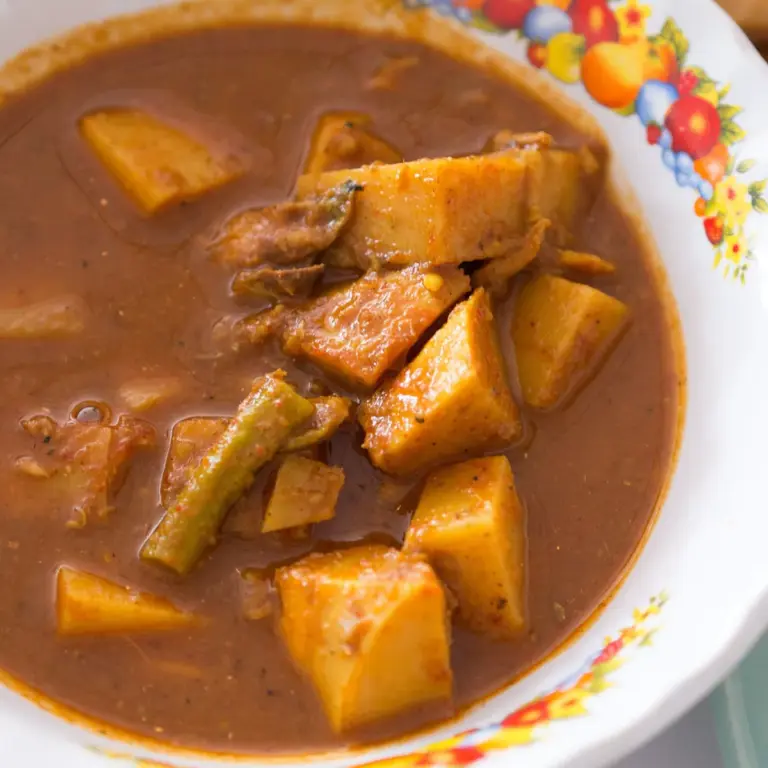
If you want to taste the real south of Thailand, order gaeng tai pla. This bold, salty curry is a southern classic that many visitors skip because of its strong smell. This guide explains what tai pla curry is made of, why it is linked to Phatthalung food, how to eat khanom jeen gaeng tai pla at a morning stall, and how this fermented fish curry compares with other southern dishes. By the end, you will know exactly what to expect.
Quick answer: Gaeng tai pla is a thick southern Thai curry built on tai pla, a salty sauce made from fermented fish innards. Cooks add a fiery paste of dried chillies, turmeric, lemongrass, galangal and shrimp paste, plus fish, pumpkin, eggplant, long beans and bamboo shoots. It is famous in Phatthalung and common across the south, usually eaten with rice or fresh rice noodles.
What is gaeng tai pla?
Gaeng tai pla is a curry named after its key ingredient, tai pla. The name simply means curry made with fish innards sauce. However, the result tastes far more complex than the name suggests: salty, smoky, sour, very spicy and full of vegetables.
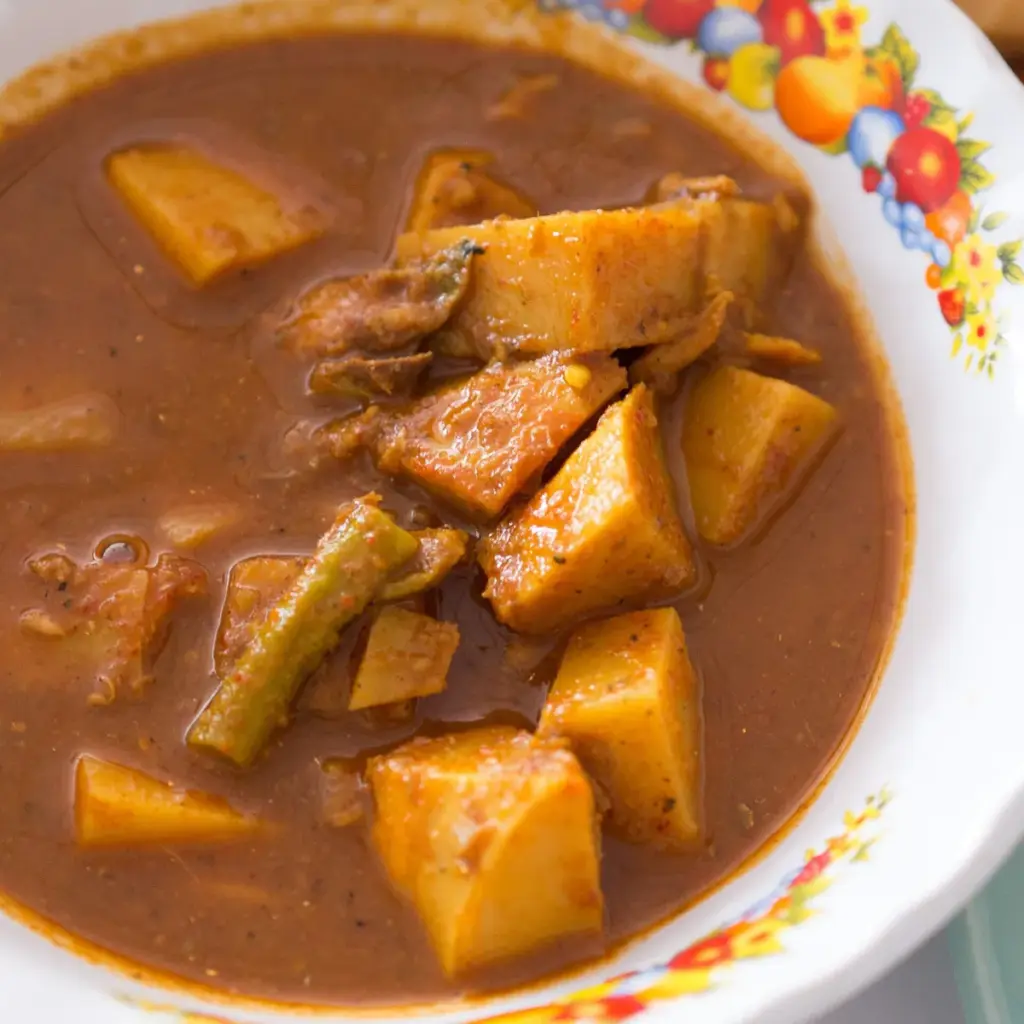
Unlike green or red curry, gaeng tai pla uses no coconut milk. Instead, the body comes from the curry paste, the vegetables and the tai pla itself. As a result, it looks brown and slightly rustic. Southern cooks often call it one of the most intense curries in Thailand, and even some Thais from other regions find it hard to love at first.
How is tai pla curry made?
The heart of any tai pla curry is the fermented sauce. According to food references, tai pla is made from the belly and intestines of small sea fish, often mackerel types. The innards are salted, bottled and set out in the sun to ferment. Afterwards, the liquid is strained and used as a seasoning, much like a stronger fish sauce.
Then the cook makes the paste. A typical southern paste includes:
- Dried chillies, often a lot of them, for heat.
- Turmeric, which gives the yellow-orange tone.
- Lemongrass, galangal, shallots and garlic for aroma.
- Shrimp paste for extra depth.
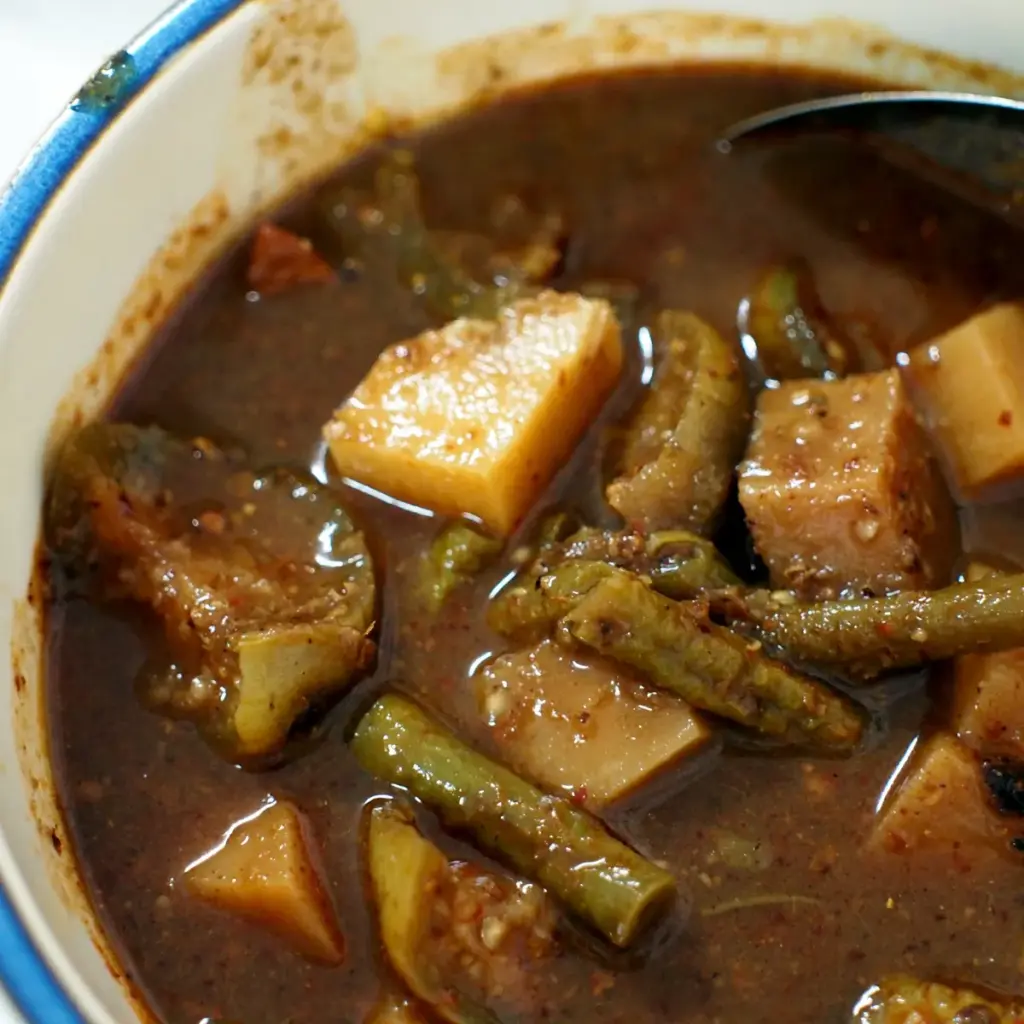
Next, the paste is boiled with water and tai pla. Finally, the cook adds grilled or smoked fish flakes, pumpkin, Thai eggplant, long beans and bamboo shoots. Recipes vary from house to house. For example, some cooks add a little palm sugar, while others prefer it sharp and salty.
Why is it linked to Phatthalung food?
Gaeng tai pla is often described as a signature of Phatthalung food, the province on the shore of Songkhla Lake. Nevertheless, you will find it all over the south, from Trang and Krabi to Nakhon Si Thammarat and Surat Thani.
Food writers link the dish to a practical idea: use every part of the fish and waste nothing. In addition, southern cooking in general uses more turmeric and dried chilli than central Thai food. So, gaeng tai pla fits neatly into the wider family of fiery southern curries. Our guide to southern Thai food explains that family, and our Trang food guide covers a nearby province with its own strong traditions.
How do you eat khanom jeen gaeng tai pla?
One of the best ways to try it is khanom jeen gaeng tai pla, a breakfast or lunch dish. Khanom jeen are soft, fresh rice noodles. Vendors place a nest of noodles in a bowl and ladle the curry on top.
Better still, the fun is in the free side plate. Many stalls put out a basket of fresh herbs and vegetables, such as cucumber, long beans, bean sprouts and local leaves. So, you add a handful to each bite. The cool greens balance the heat and salt.
Alternatively, many families eat gaeng tai pla with steamed rice. In that case, it often sits next to milder dishes, such as fried eggs or grilled fish. Also, a small spoonful is enough at first, because the flavour is concentrated.
What does fermented fish curry taste like?
Expect a fermented fish curry that tastes salty first, then hot, then sour. The smell is strong, a little like a deep fish sauce, but the cooked dish is less pungent than the raw sauce. Moreover, the pumpkin and eggplant soften the edges.
So, how spicy is it? Very. Southern cooks rarely hold back on chilli. If you are unsure, say "phet nit noi" (a little spicy) before ordering, although a stall may only have one pot. Meanwhile, keep plain rice and water nearby.
Where can you try gaeng tai pla?
The easiest place is a southern curry shop that sells rice with a choice of curries. These shops display trays of curries in the morning, and you simply point. In addition, night markets in Krabi and Trang often have a stall with gaeng tai pla among other curries.
Prices are low at simple shops. Most rice and curry plates at local shops cost far less than a hotel meal, although prices vary by town. Our guides to Krabi street food and the Krabi night market show where to look. If you also like sour curries, read our gaeng som guide, and try khua kling, the dry southern meat curry, too.
Tips for first-timers
First, start with a small portion next to milder dishes. Second, eat it with herbs and vegetables, not on its own. Third, ask whether the cook used fish only, because some versions add other ingredients. Finally, keep an open mind. Many travellers who hesitate at the smell end up ordering it again.
Where to stay: taste the south from Ao Luek
Gaeng tai pla tastes best close to its home region. So, base yourself in Krabi's quiet north. For example, you can fly to Krabi airport and drive about 54 to 71 minutes to Ao Luek, depending on traffic. Our guide to things to do in Ao Luek lists the parks and caves nearby, and seafood in Krabi covers more local food.
At a glance: 17 houses from 1,200 to 2,000 baht per night, air conditioning in every house, free breakfast, free Wi-Fi and a swimming pool, at 97/1 Moo 1, Ao Luek Nuea, Krabi.
We recommend Ban Kamnan Resort in Ao Luek Nuea. For couples, House #E, #F or #G has one 6 ft bed, one bathroom and 35 m² for 1,350 baht per night. Every house has air conditioning. In addition, guests share the swimming pool, and breakfast of toast, fried eggs and hot coffee is free, which leaves room for a curry lunch. Check your dates on Booking.com.
Frequently asked questions
It is made with tai pla, a fermented fish innards sauce, plus a paste of dried chillies, turmeric, lemongrass, galangal and shrimp paste, fish and vegetables such as pumpkin, eggplant and bamboo shoots.
Yes. It is one of the spicier southern curries. Eat it with rice or rice noodles and fresh vegetables to balance the heat.
No. It is a coconut-free curry, which is why it tastes sharper and saltier than green or red curry.
It is a southern Thai dish, often linked to Phatthalung province, and it is common across the whole south.
Steamed rice or khanom jeen rice noodles, with fresh herbs, cucumber and long beans on the side.
Final thoughts
Gaeng tai pla is the south of Thailand in one bowl: bold, salty, hot and generous with vegetables. To sum up: try it with khanom jeen for breakfast, start small, add plenty of fresh greens and pair it with milder dishes. Then explore the rest of southern cooking. Check availability at Ban Kamnan Resort on Booking.com and taste your way around Krabi.








