

 Krit Ariyathiti
Almost every visitor eats pad thai at least once, and many eat it every day. This guide explains the pad thai history behind Thailand's best-known noodle dish, the pad thai ingredients that make it taste right, how to order it at a street stall, and how to find the best pad thai in Bangkok and beyond. It also covers a pad thai vegetarian order for travellers who skip meat or fish.
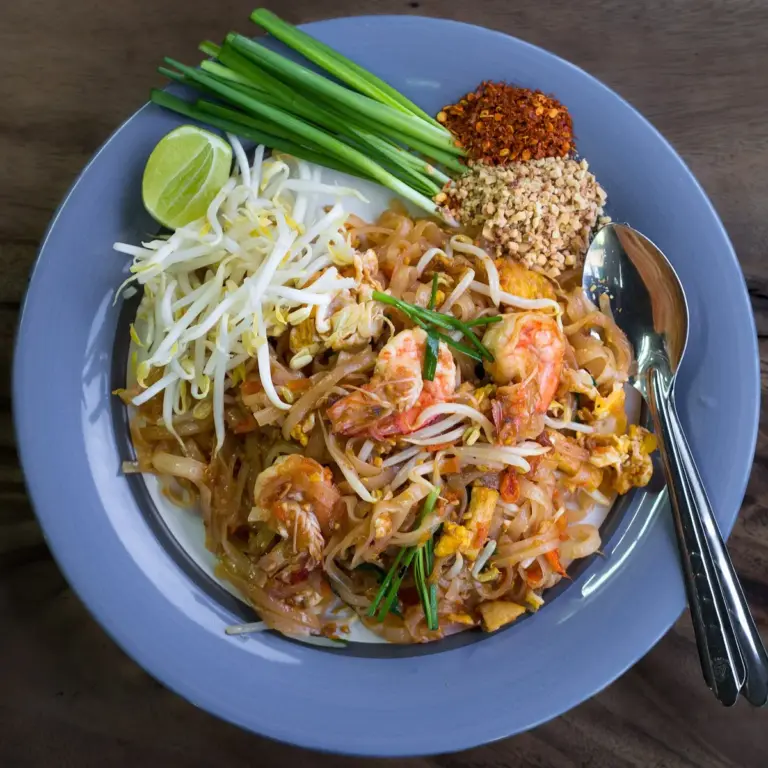
Quick answer: Pad thai is stir-fried rice noodles with egg, tofu, bean sprouts and garlic chives, flavoured with tamarind, fish sauce and palm sugar, and usually served with shrimp, crushed peanuts, chilli flakes and lime. It became a national dish in the late 1930s and 1940s, when Prime Minister Plaek Phibunsongkhram's government promoted it through street vendors. As of November 2026, a street plate usually costs about 40 to 80 baht, with shrimp versions costing more.
What is pad thai?
Pad thai means "Thai-style stir-fry". Cooks fry thin, flat rice noodles in a hot wok with egg, tofu and a sweet, sour and salty sauce. Then, they add bean sprouts and garlic chives for crunch. Finally, the plate arrives with peanuts, chilli and a wedge of lime, so you season it yourself.
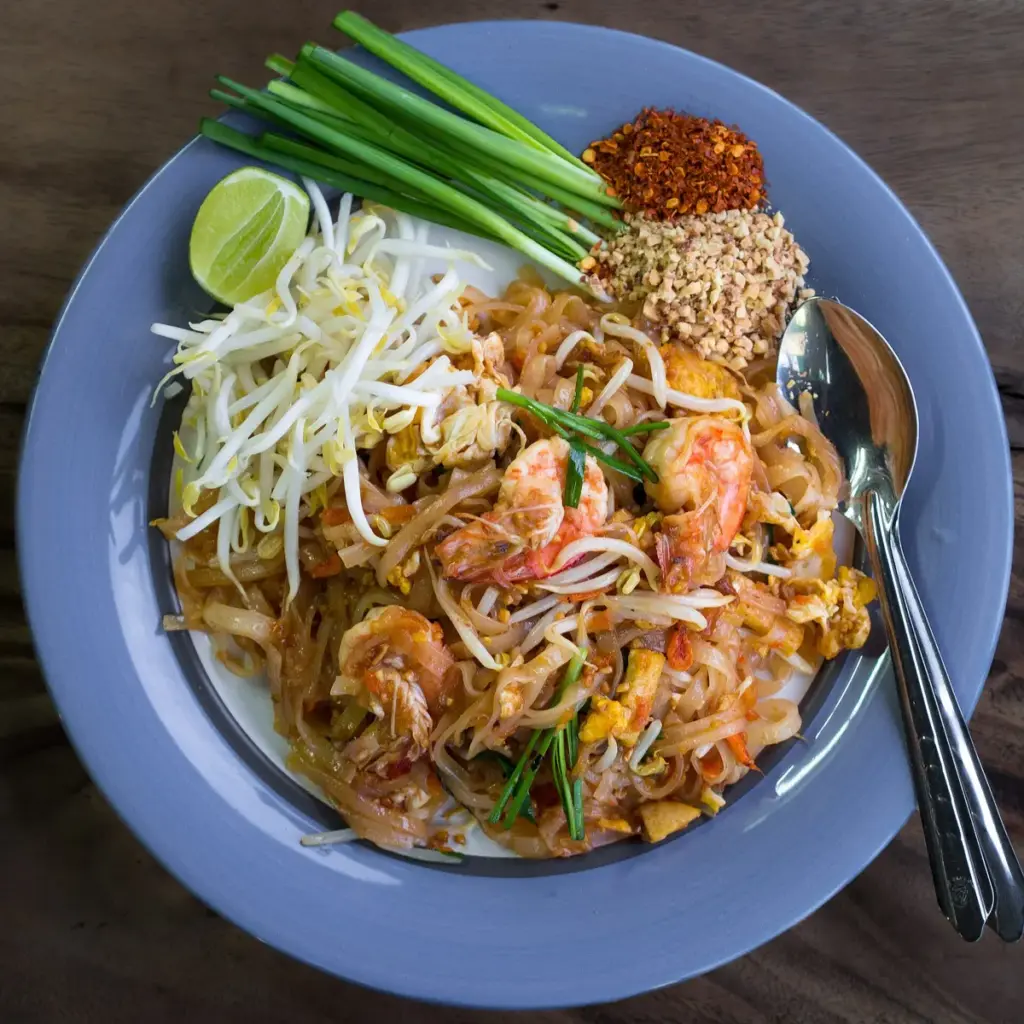
Because it is sweet, tangy and only mildly spicy, pad thai is a safe first dish for many visitors. In addition, it is cooked fresh in front of you, which makes it one of the safer street foods. Our Thai street food guide lists other easy first dishes.
What is the pad thai history?
The pad thai history is closely tied to national politics. In the late 1930s and 1940s, the government of Prime Minister Plaek Phibunsongkhram ran a nation-building campaign. The same period saw the country's name change from Siam to Thailand. As part of that campaign, the government promoted a noodle dish with a Thai name.
According to food historians quoted by Smithsonian and others, the Public Welfare Department standardised a recipe and helped vendors sell it from carts. By the late 1940s, the dish had spread from Bangkok carts to provincial markets. However, stir-fried rice noodles were not new. Chinese immigrants had long cooked fried noodles, so many historians say pad thai was codified and branded rather than invented from nothing.
Also, some details remain disputed. For example, accounts differ on who created the recipe, and one report says the name did not appear in a cookbook until the 1960s. So, treat any single origin story with care.
What are the pad thai ingredients?
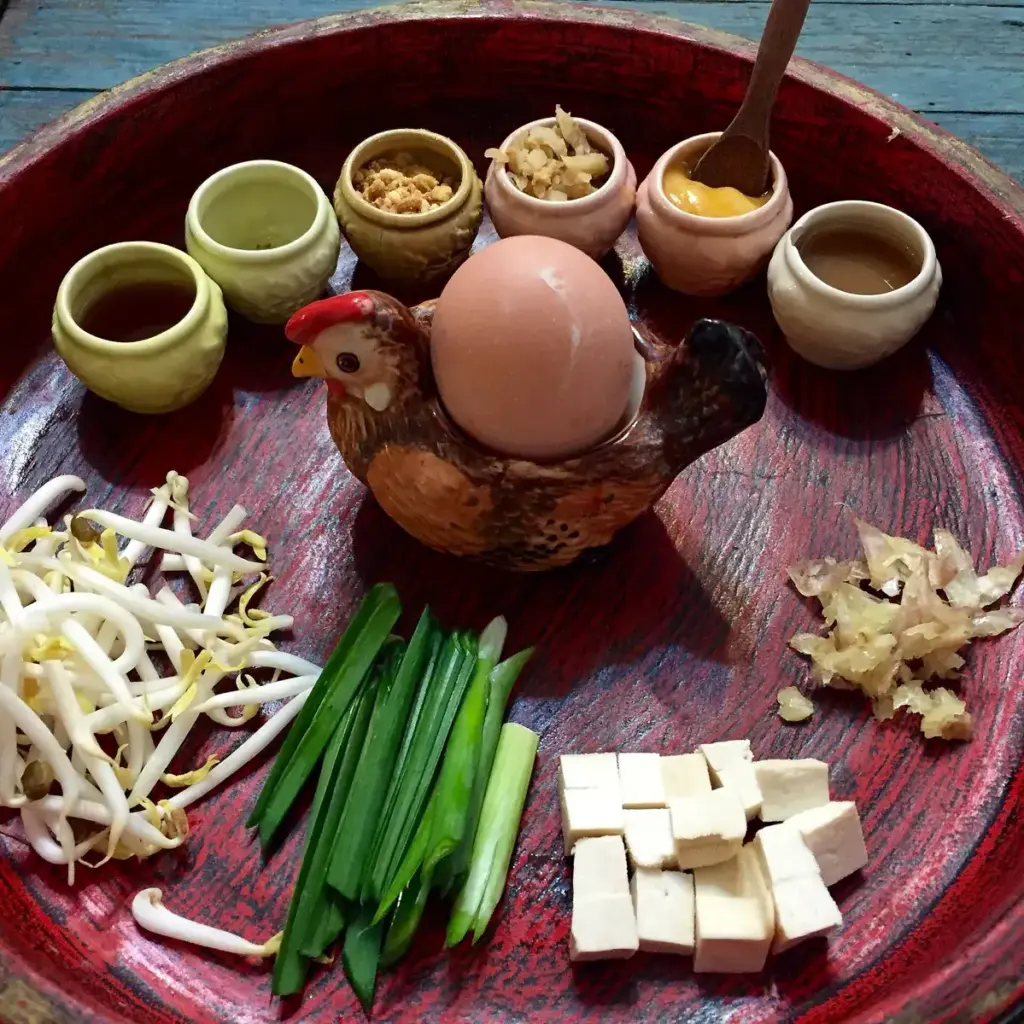
The core pad thai ingredients are simple, but the balance matters. Recipe writers agree on most of the list:
| Ingredient | What it does |
|---|---|
| Thin, flat rice noodles | The base, soaked and then stir-fried |
| Tamarind | Sour, fruity flavour |
| Fish sauce | Saltiness and depth |
| Palm sugar | Gentle sweetness |
| Egg | Richness, scrambled into the noodles |
| Firm tofu and dried shrimp | Texture and savoury flavour |
| Bean sprouts and garlic chives | Freshness and crunch |
| Crushed peanuts, chilli flakes and lime | Served on the side to season |
In addition, many stalls offer fresh shrimp or chicken. Some cooks wrap the noodles in a thin omelette, a style often called pad thai hor kai. Meanwhile, a glass-noodle version also exists in some places, such as the "ancient recipe" pad thai sold at temple markets in Ang Thong province, according to photo descriptions on Wikimedia Commons.
How do you order pad thai at a street stall?
Ordering is easy, even without Thai. First, look for a stall with a wok, a stack of noodles and a crowd. Then, point at the menu photo or say "pad thai". Most stalls ask which protein you want, so be ready to say shrimp, chicken or no meat.
Here are a few useful words:
- "Pad thai kung" means with shrimp. "Kai" means chicken.
- "Mai sai thua" means no peanuts, which matters if you have an allergy. Still, tell the cook clearly and consider skipping it, because shared woks and peanut bowls are common.
- "Mai phet" means not spicy, although pad thai is usually mild anyway.
- Season it yourself. Squeeze the lime, add peanuts and chilli, and taste before adding sugar from the condiment tray.
As for price, several 2026 guides put a street plate at roughly 40 to 80 baht, with higher prices in tourist areas. So, walk one street back from the main sights to pay less. Our guide to Bangkok on a budget has more tips like this.
Where can you find the best pad thai in Bangkok?
The best pad thai in Bangkok is a matter of taste, and famous names change. Instead of chasing one shop, look for busy stalls in food areas. For example, Chinatown along Yaowarat Road and the night markets near MRT Thailand Cultural Centre have many wok stalls.
Our guides to Bangkok Chinatown, Bangkok street food and Bangkok night markets explain where locals eat. Also, food courts in shopping malls are a good choice on hot days, because they are air-conditioned, clean and priced clearly.
In general, the best stalls cook each plate to order, soak their noodles fresh and use tamarind rather than ketchup. If the sauce looks bright red, the cook may be taking a shortcut for tourists.
Can you order pad thai vegetarian?
Yes, but it takes a few words. A true pad thai vegetarian dish needs no egg if you are vegan, no dried shrimp, and no fish sauce. Many stalls can leave out the meat and shrimp easily. However, the sauce often contains fish sauce, so say "jay" (the Thai word for vegan food, which excludes animal products) or "mangsawirat" (vegetarian).
Also, look for yellow flags with red letters, which mark "jay" food stalls in many towns. These are common during the Phuket Vegetarian Festival and in Chinese neighbourhoods all year. In tourist areas, many restaurants list a vegetarian pad thai on the menu.
Where else should you eat pad thai in Thailand?
Pad thai is everywhere, from Chiang Mai night markets to island beach stalls. However, regional food is often better outside Bangkok. So, in the south, try pad thai alongside local dishes such as mango sticky rice for dessert or a fiery southern curry. Our guide to Krabi street food shows what to order in Krabi, and the Krabi night market is a good place to compare stalls.
Where to stay after Bangkok: continue south to Krabi
After the city, many travellers fly south for a quieter end to their trip. Krabi airport is about 54 to 71 minutes by road from Ao Luek, depending on traffic. See our guide from Bangkok to Krabi for flights and buses.
At a glance: 17 houses from 1,200 to 2,000 baht per night, air conditioning in every house, free breakfast, free Wi-Fi and a swimming pool, at 97/1 Moo 1, Ao Luek Nuea, Krabi.
We recommend Ban Kamnan Resort in Ao Luek Nuea. For a couple, House #5 or #6 has one 5 ft bed, one bathroom and 28 m² for 1,200 baht per night. Every house has air conditioning. In addition, guests share the swimming pool, and breakfast of toast, fried eggs and hot coffee is free. Prices match the resort's listing, so check your dates on Booking.com.
Frequently asked questions
It is widely called a national dish. The government promoted it in the late 1930s and 1940s as part of a nation-building campaign.
As of November 2026, guides put a street plate at about 40 to 80 baht. Shrimp and tourist areas cost more.
Usually, yes. Crushed peanuts are served on top or on the side. Say "mai sai thua" for none, and take extra care if you have an allergy.
Not very. It is mostly sweet and sour, and you add chilli flakes yourself.
Mainly tamarind, fish sauce and palm sugar. Some cooks add a little vinegar or chilli.
Final thoughts
Pad thai is more than a tourist favourite: it is a piece of Thai history on a plate. To sum up: look for a busy stall, choose your protein, season it with lime and peanuts, and ask for "jay" if you eat vegan. Then try it again in the south to compare. Check availability at Ban Kamnan Resort on Booking.com and taste your way through Krabi.